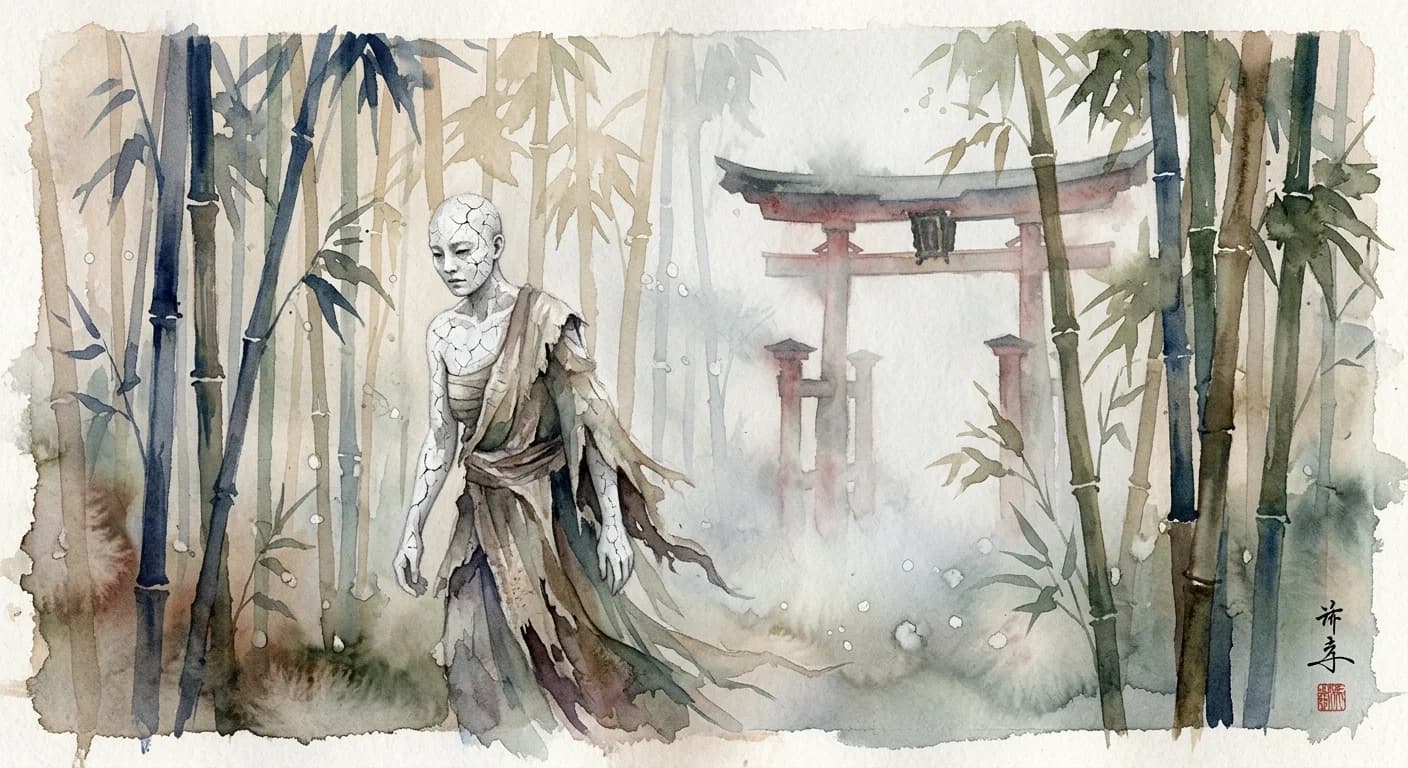
Butoh
/BOO-toh/
Meaning
Butoh, often called the "dance of darkness," is a post-WWII Japanese avant-garde dance form that shatters conventional aesthetics. It is characterized by intensely slow, controlled, and often grotesque movements, frequently performed with white body paint, exploring the raw, subconscious, and often unsettling facets of the human condition. Rather than narrative storytelling, Butoh delves into internal landscapes, embracing themes of transformation, decay, and the grotesque beauty inherent in existence to evoke primal emotions and existential contemplation.
Literal Translation
dance/step +
The Story Behind the Word
Butoh emerged from the ashes of post-war Japan in the late 1950s and early 1960s, a period of profound societal trauma and existential questioning. Its founders, Tatsumi Hijikata and Kazuo Ohno, rejected Western dance forms and sought to create a uniquely Japanese dance that could express the darkness, suffering, and spiritual void of the time. It drew inspiration from traditional Japanese performing arts like Noh and Kabuki, which often feature stylized, slow movements and masked or elaborately painted performers, as well as from esoteric spiritual practices and the concept of 'ma' (negative space/pause). Butoh reveals a cultural willingness to confront the uncomfortable, to find beauty not just in perfection, but in decay, transformation, and the primal aspects of humanity, reflecting a deep engagement with life's impermanence and the interconnectedness of beauty and grotesque.
Experience It
Butoh Performance
In a dimly lit theater, a performer, face obscured by white paint, moved with agonizing slowness. Every twitch of their body seemed to tell a story of ancient pain and profound transformation, captivating the audience in a silent, visceral dialogue.
Inspiring Art
The artist felt stuck, their canvas blank. Recalling a Butoh performance they'd seen, they began to sketch figures contorted in silent screams, inspired by the dance's raw exploration of human suffering and resilience.
The Deeper Meaning
Butoh embodies a deeply Japanese philosophical engagement with impermanence (mujo) and the grotesque (yugen or wabi-sabi applied to the human form). It posits that true beauty and understanding emerge not from polished perfection, but from confronting decay, transformation, and the raw, often unsettling truths of existence. It's a meditation on life and death, an affirmation of the body's primal wisdom, and a rejection of superficiality in favor of profound, embodied experience.
Did You Know?
Butoh was initially so radical and controversial that it was sometimes referred to as 'ankoku butoh' (dance of utter darkness), emphasizing its departure from traditional aesthetics and its embrace of the macabre.
How It's Used
Butoh is used to describe a specific genre of avant-garde performance art, originating in Japan, that emphasizes unique bodily expression and often explores profound psychological or existential themes.