U.
HomeRegionsLanguagesEmotionsCollections
Find Your Word

“The limits of my language mean the limits of my world.”

— Ludwig Wittgenstein, Philosopher

Untranslatable

A curated collection of the world's most beautiful expressions—words that remind us language is humanity's greatest invention.

  • Home
  • Collections
  • Regions
  • Countries
  • Emotions
  • Tags
  • Contexts
  • Finder
  • Europe
  • Asia
  • Americas
  • Africa
  • Middle East
  • About
  • Contact
  • Privacy Policy
  • Terms of Service

2026 © Untranslatable. All rights reserved.

    /
    /
    1. Home
    2. /
    3. Asia
    4. /
    5. Gandha
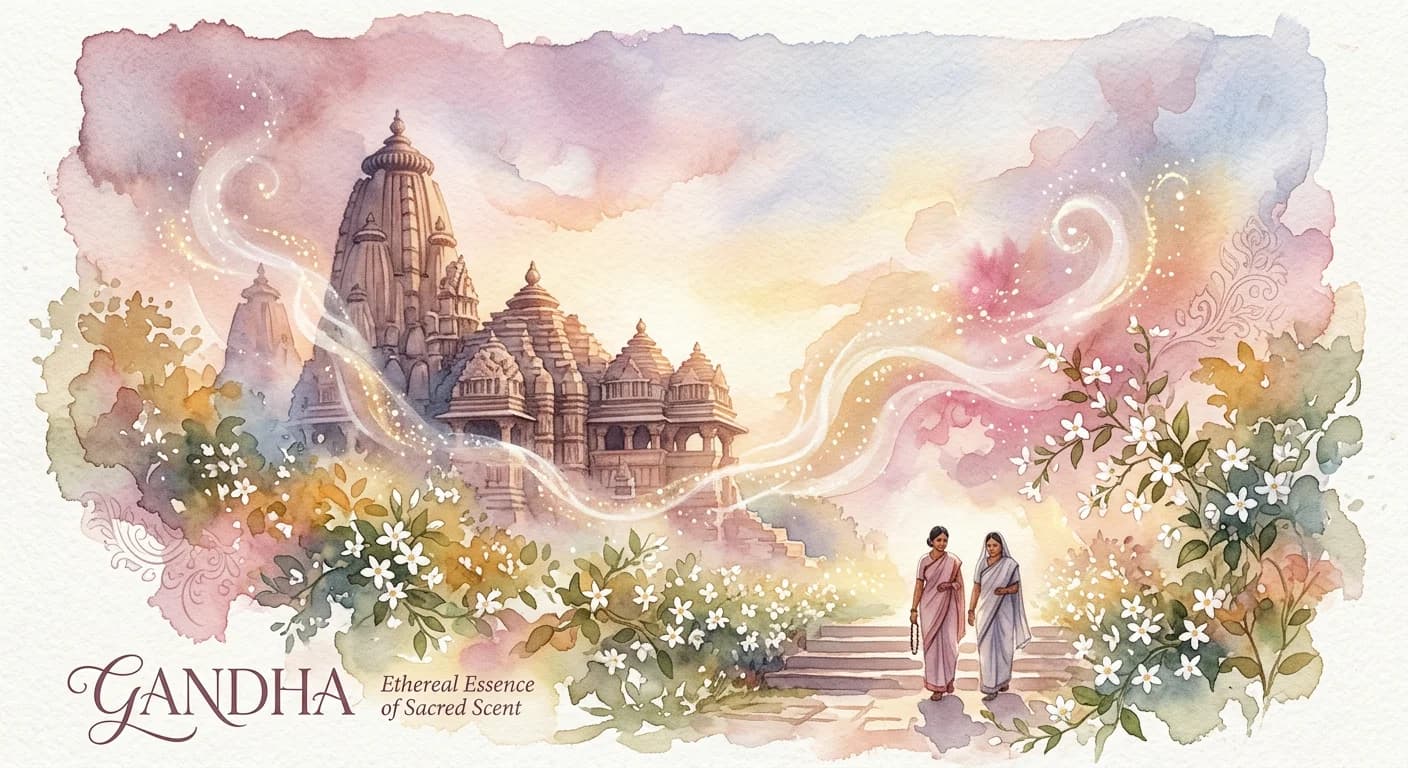
    Artistic representation of Gandha
    Sanskrit•
    🇮🇳India🇳🇵Nepal

    Gandha

    /GUN-dhuh/

    Meaning

    Gandha in Sanskrit transcends a mere scent, embodying a profound aromatic presence that is both delightful and spiritually significant. It refers to a fragrance, often sweet and pure, that elevates the senses and purifies the atmosphere, frequently associated with divine offerings, sacred rituals, and the inherent perfume of nature's most revered elements like sandalwood and jasmine. More than a smell, it is a subtle, invisible essence capable of evoking deep devotion, memory, and a connection to the sacred, weaving the material with the ethereal.

    Literal Translation

    scent, fragrance, aroma

    The Story Behind the Word

    The concept of 'gandha' is deeply woven into the fabric of Indian spiritual and daily life, reflecting a worldview where the sensory experience is a pathway to the divine. From ancient Vedic rituals to contemporary temple worship, the offering of fragrant substances (gandha) like incense, flowers, and sandalwood paste is central. This practice signifies reverence, purification, and the creation of an auspicious atmosphere, believing that the divine is pleased by and manifests through such pure aromas. It reveals a culture that perceives the world not just through sight and sound, but also through an acute appreciation of subtle essences, recognizing the profound impact of unseen forces and qualities on human experience and spiritual connection. The ephemeral nature of scent also mirrors the transient yet powerful nature of existence and devotion.

    Experience It

    Temple Offering

    As the devotee entered the sanctum, the rich 'gandha' of burning camphor and jasmine garlands enveloped her. This sacred aroma instantly transported her, deepening her meditation and sense of proximity to the deity, purifying her thoughts.

    Forest's Embrace

    Walking through the ancient forest, she inhaled deeply, recognizing the unique 'gandha' of damp earth, blooming wild flowers, and distant sandalwood trees. It was the pure, invigorating scent of nature's untouched sanctity, a reminder of life's vibrant essence.

    The Deeper Meaning

    Gandha embodies the philosophical idea that the unseen and ephemeral can be profoundly potent and sacred. It suggests that the material world, through its subtle qualities like scent, offers a direct sensory link to the divine and to deeper states of consciousness. This highlights a worldview where sensory perception is not just a physical act but a spiritual tool for connection and understanding the universe's inherent purity and interconnectedness.

    Did You Know?

    In ancient Ayurvedic texts, specific 'gandhas' (aromas) were believed to have medicinal properties, used in aromatherapy long before the term was coined in the West, to balance bodily humors and promote well-being.

    How It's Used

    Used in religious texts, prayers, and descriptions of aromatic substances, especially in Hinduism and Buddhism.

    Emotions
    gratitude,peace,serenity,wonder
    Contexts
    celebration,nature,religion
    🇮🇳India🇳🇵Nepal

    by Annelise Dubois·Written Mar 14, 2026·Updated Apr 3, 2026

    Related Words

    Explore more
    Dolce far nienteItalian

    Dolce far niente captures the profound joy and effortless pleasure derived from simply existing without obligation or purpose. It's the art of savoring moments of pure, unadulterated idleness – lying in the sun, watching the clouds drift, or enjoying a leisurely coffee – not as a break from work, but as a valuable state in itself. This 'sweetness of doing nothing' is a conscious embrace of stillness and contentment, allowing the soul to breathe and the senses to fully engage with the present.

    Wabi-sabiJapanese

    Wabi-sabi is the profound appreciation for the ephemeral, the imperfect, and the incomplete aspects of existence. It is about discovering beauty in the subtle textures of age, the unique character of flaws, and the gentle decay that marks the passage of time. This philosophy encourages a quiet acceptance of impermanence and a mindful connection to the natural world, finding elegance in simplicity and authenticity.

    IkigaiJapanese

    Ikigai is more than just a reason to get out of bed; it's a deeply personal and evolving sense of purpose that brings genuine fulfillment and joy to one's life. It represents the sweet spot where your passions, talents, needs of the world, and what you can be paid for beautifully converge. Discovering your ikigai often leads to a life lived with intentionality, resilience, and a profound connection to one's contributions. It's the intrinsic motivation that fuels a meaningful existence, regardless of external circumstances.

    NunchiKorean

    Nunchi is the sophisticated, almost telepathic, ability to instantly grasp the unspoken dynamics of any social situation, anticipating others' thoughts and feelings, and then responding with impeccable grace and timing. It's an acute form of social intuition, allowing one to navigate complex interpersonal landscapes by reading subtle cues like body language, tone, and context. Possessing good nunchi means effortlessly understanding the underlying emotional currents and adjusting one's behavior to maintain harmony and effectiveness, often without a single word exchanged.