Haboob
/ha-BOOB/
Meaning
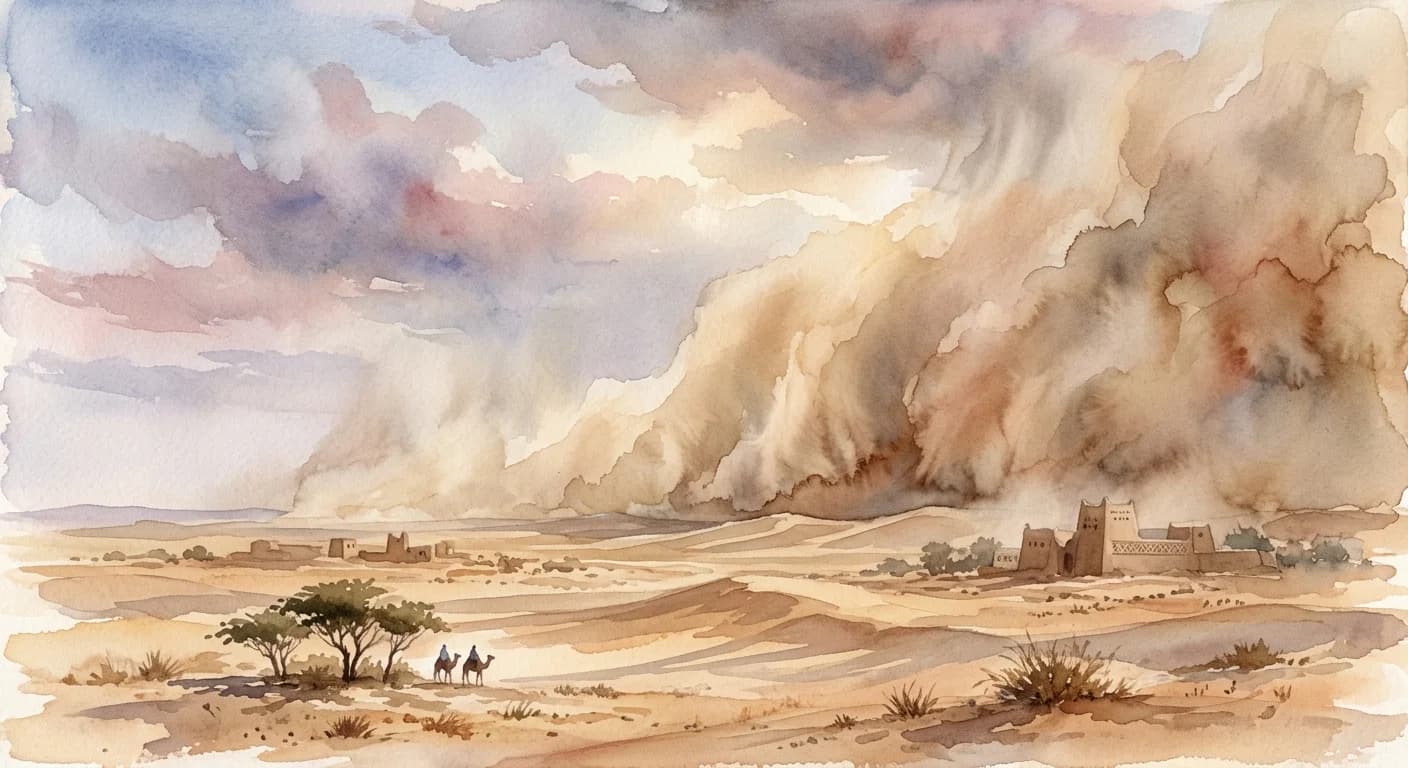
A haboob is far more than a mere dust storm; it is a dramatic meteorological event, a towering, suffocating wall of dust and sand that surges across arid landscapes, particularly in Sudan and the Arabian Peninsula. Preceded by an ominous calm, it plunges daylight into an instant, choking darkness, reducing visibility to zero and forcing all life to seek immediate refuge. This sudden, overwhelming display of nature's raw power transforms the familiar desert into a blinding, alien expanse, demanding profound respect and immediate caution from all who witness it.
Literal Translation
The Arabic word 'haboob' (هبوب) literally means 'blowing' or 'gusting', referring to the strong wind that characterizes these storms.
The Story Behind the Word
The existence and widespread use of 'haboob' in Sudanese Arabic reflects a deep, intimate relationship between the people and their environment, particularly the powerful and often unpredictable forces of the desert. In a land where life is intricately tied to the rhythms of nature, the haboob is not just a weather phenomenon but a recurring, transformative event that shapes daily life, travel, and even collective memory. It embodies the desert's capacity for sudden, overwhelming change, a reminder of human vulnerability and the need for preparedness and resilience. This word exists because it describes a fundamental, impactful experience that has shaped generations, reflecting a culture accustomed to adapting to and respecting the immense power of their natural surroundings. The haboob is a cultural touchstone, a shared experience that binds communities and underscores the wisdom of living in harmony with the desert's often harsh realities.
Experience It
Sudden Desert Encounter
The caravan leader suddenly pointed to the ominous, dark line on the horizon. 'Haboob!' he yelled, his voice urgent, as the distant rumble quickly turned into a roaring wall of sand. Everyone scrambled to cover their faces and secure their belongings, knowing they had mere minutes before the world would disappear into a blinding, gritty void.
City Life Interrupted
In Khartoum, the afternoon sun abruptly vanished, replaced by an eerie orange gloom. Within moments, a fierce wind howled, rattling windows as a dense haboob engulfed the city, coating every surface in fine dust and bringing all outdoor activity to a complete standstill. The air grew thick, tasting of earth and grit.
The Deeper Meaning
The concept of 'haboob' encapsulates a profound philosophical understanding of human existence within a powerful, indifferent natural world. It speaks to the impermanence of human order and the sudden, overwhelming force of nature that can strip away visibility, comfort, and control in an instant. It fosters a worldview of humility, resilience, and a deep, ingrained respect for the desert's untamed power, reminding individuals of their small place in a vast and dynamic ecosystem.
Did You Know?
Haboobs are so common and intense in Sudan that Khartoum, its capital city, experiences an average of 24 haboob days per year, dramatically altering daily life and travel.
How It's Used
Used to describe a specific type of intense dust storm common in desert regions, particularly in North Africa and the Middle East.