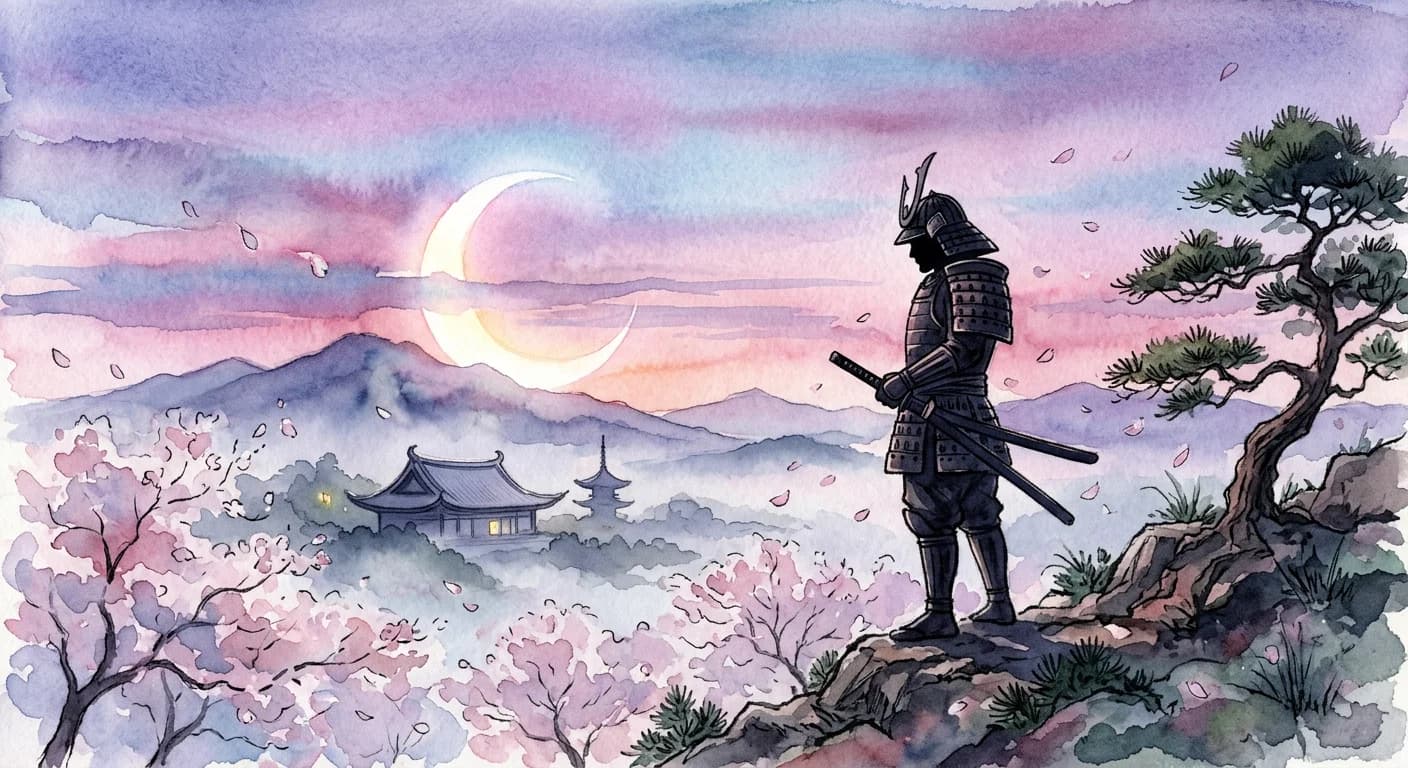
Harakiri
/HA-rah-kee-ree/
Meaning
Harakiri, more formally known as 'seppuku', is the ritualistic act of self-disembowelment performed by samurai in feudal Japan. Far from a simple suicide, it was a profound demonstration of honor, a final, defiant assertion of control over one's destiny in the face of capture, disgrace, or failure. This brutal yet highly ritualized act symbolized unwavering loyalty, a commitment to a strict moral code, and the ultimate sacrifice to preserve one's reputation and that of their lord, reflecting a deep spiritual and ethical dimension. It was a death chosen with dignity, often witnessed, to affirm one's samurai spirit.
Literal Translation
cutting the belly
The Story Behind the Word
The practice of harakiri is inextricably linked to Bushido, the 'way of the warrior', a moral code that emphasized frugality, loyalty, mastery of martial arts, and honor unto death. Originating in the 12th century, it became a formalized ritual during the Edo period (1603-1868), evolving from a spontaneous act of defiance into a highly structured ceremony. For a samurai, losing one's honor was a fate worse than death. Harakiri offered a means to die with integrity, to atone for mistakes, or to protest injustice, thereby restoring honor to oneself and one's family. It was believed that the soul resided in the belly, making disembowelment a potent symbol of revealing one's pure intentions and courage. This profound emphasis on honor, duty, and the acceptance of death as a path to spiritual purity reveals a culture that valued inner fortitude and reputation above all else, seeing life not as an end in itself, but as a vessel for upholding one's principles.
Experience It
A Lord's Disgrace
Lord Tanaka's domain was lost in battle, a catastrophic failure. Rather than face capture and public humiliation, he meticulously prepared for harakiri, inviting his closest retainers to witness his final, honorable act. His death, though tragic, preserved his family's name from utter ruin.
Loyalty Unto Death
When their master was unjustly executed, a group of loyal samurai chose harakiri, not out of despair, but as a final, defiant act of protest and unwavering loyalty. Their collective sacrifice became a legendary testament to their bond, immortalized in tales of unwavering devotion.
The Deeper Meaning
Harakiri embodies a philosophy where the integrity of one's spirit and honor transcends the value of life itself. It reflects a worldview rooted in stoicism, self-control, and the belief that ultimate freedom lies in choosing the manner of one's death. This act reveals a deep connection to the concept of 'giri' (duty) and 'on' (indebtedness), where personal existence is intricately woven into a larger fabric of social and spiritual obligations, making death a powerful statement of one's place within that order.
Did You Know?
While often depicted as a solitary act, a samurai performing harakiri was usually attended by a 'kaishakunin', a trusted second who would swiftly decapitate them after the initial cut, ensuring a quicker, less agonizing end.
How It's Used
Used to refer to the ritual suicide of samurai, often as a means of preserving honor or atoning for mistakes. It is also sometimes used metaphorically to describe a self-destructive act, particularly in business or politics.