U.
HomeRegionsLanguagesEmotionsCollections
Find Your Word

“The limits of my language mean the limits of my world.”

— Ludwig Wittgenstein, Philosopher

Untranslatable

A curated collection of the world's most beautiful expressions—words that remind us language is humanity's greatest invention.

  • Home
  • Collections
  • Regions
  • Countries
  • Emotions
  • Tags
  • Contexts
  • Finder
  • Europe
  • Asia
  • Americas
  • Africa
  • Middle East
  • About
  • Contact
  • Privacy Policy
  • Terms of Service

2026 © Untranslatable. All rights reserved.

    /
    /
    1. Home
    2. /
    3. Middle East
    4. /
    5. Hilal
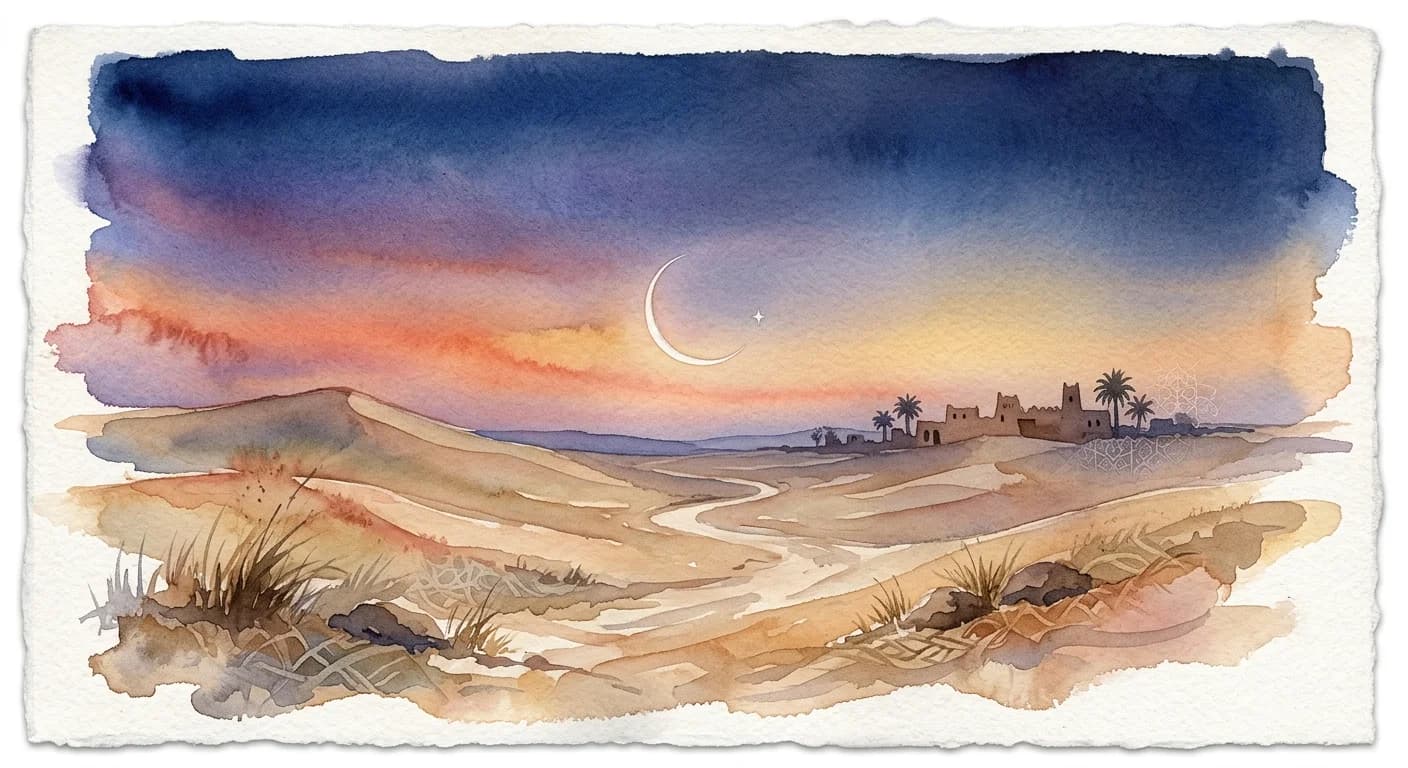
    Artistic representation of Hilal
    Arabic•
    🇩🇿Algeria🇧🇭Bahrain🇪🇬Egypt🇮🇶Iraq🇯🇴Jordan🇰🇼Kuwait🇱🇧Lebanon🇱🇾Libya🇲🇦Morocco🇴🇲Oman🇵🇸Palestine🇶🇦Qatar🇸🇦Saudi Arabia🇸🇩Sudan🇸🇾Syria🇹🇳Tunisia🇦🇪United Arab Emirates🇾🇪Yemen

    Hilal

    /hi-LAAL/

    Meaning

    The Arabic word 'Hilal' signifies far more than just a crescent moon; it is the delicate, ephemeral sliver of the new moon, specifically sighted just after sunset, marking the dawn of a new lunar month. This sighting is a moment of profound spiritual and communal anticipation, acting as the celestial harbinger for sacred Islamic observances like Ramadan and Eid. It embodies a vivid sense of renewal, divine guidance, and the cyclical rhythm of life, deeply interwoven with the Islamic calendar and identity.

    Literal Translation

    Crescent moon

    The Story Behind the Word

    The 'Hilal' is foundational to Islamic life, as the lunar calendar governs all religious observances. Its existence stems from pre-Islamic Arabian traditions of lunar reckoning, which Islam embraced and sanctified. The Prophet Muhammad's teachings emphasized direct observation for determining the start of months, creating a communal practice of 'Hilal' sighting. This practice fosters a deep connection to the natural world and the divine, symbolizing a submission to God's cosmic order. It reveals a culture that views time not as a linear progression but as a series of divinely ordained cycles, each 'Hilal' bringing a fresh opportunity for spiritual reflection and communal bonding. The anticipation of its appearance reinforces community ties, as neighbors and scholars collaborate to confirm its visibility, making it a shared cultural experience.

    Experience It

    Awaiting Ramadan's Hilal

    Families gather on rooftops and open plains, eyes scanning the western horizon just after sunset. A child excitedly points, 'Baba, is that the Hilal?' as a faint, silver arc emerges against the fading light. A collective murmur spreads, signaling the joyous start of the holy month of Ramadan.

    Eid al-Fitr Announcement

    After a day of anxious waiting, the news spreads through the mosque and homes: 'The Hilal has been sighted!' Relief and celebration erupt, as this confirms the end of Ramadan and the beginning of Eid al-Fitr, prompting preparations for feasts and family gatherings.

    The Deeper Meaning

    The 'Hilal' embodies a philosophy of divine order and human responsibility. It symbolizes that time is not merely an abstract concept but a sacred, observable phenomenon governed by God's will. The communal act of sighting encourages mindfulness, patience, and a deep respect for natural cycles, fostering a worldview where humanity is intimately connected to the cosmos and its Creator. It underscores the idea that new beginnings are always on the horizon, guided by celestial signs.

    Did You Know?

    Historically, the 'Hilal' was often sighted by trained observers, known as 'ru'yah' committees, using naked-eye observation, a tradition still upheld by many communities today.

    How It's Used

    The word 'Hilal' is used in astronomical contexts, religious calendars, and in general conversation when referring to the crescent moon. It is especially significant during periods leading up to Islamic festivals, where its sighting is a cause for celebration and communal anticipation.

    Emotions
    excitement,hope,serenity,wonder
    Contexts
    celebration,nature,religion,seasons
    🇩🇿Algeria🇧🇭Bahrain🇪🇬Egypt🇮🇶Iraq🇯🇴Jordan🇰🇼Kuwait🇱🇧Lebanon🇱🇾Libya🇲🇦Morocco🇴🇲Oman🇵🇸Palestine🇶🇦Qatar🇸🇦Saudi Arabia🇸🇩Sudan🇸🇾Syria🇹🇳Tunisia🇦🇪United Arab Emirates🇾🇪Yemen

    by Sofia Rossi·Written Mar 14, 2026·Updated Apr 3, 2026

    Related Words

    Explore more
    TarofPersian

    Tarof is a deeply ingrained Iranian social custom, a delicate dance of politeness and deference where individuals engage in an elaborate exchange of offers and refusals. It's a performative humility, a way of showing respect and avoiding imposing, often involving multiple cycles of insistence and polite decline before a genuine acceptance or refusal is reached. This intricate ritual governs interactions from sharing food to paying bills, creating a nuanced social ballet.

    TarabArabic

    Tarab is far more than mere enjoyment; it's a profound, almost spiritual communion with music, where the performer and audience become one in a shared emotional journey. It signifies a state of ecstatic enchantment, a deep emotional surrender that transcends the self, leading to a transformative experience. This intense connection often manifests as spontaneous vocalizations, tears, or even physical swaying, as the music penetrates the soul and evokes a powerful release of feeling. It's a moment of pure, unadulterated musical rapture.

    KeyifTurkish

    Keyif is a profound state of unhurried, mindful enjoyment, a deliberate savoring of the present moment without urgency or expectation. It's not merely relaxation, but an active engagement with the simple pleasures of life, finding contentment in the sensory details of a warm cup of tea, the gentle breeze, or a quiet conversation. It embodies a serene acceptance of 'what is,' fostering an inner peace that makes even mundane activities feel like a small celebration.

    ArbejdsroDanish

    Arbejdsro encapsulates the deep, almost meditative state of calm and unwavering focus achieved when one is completely undisturbed in their work. It's not merely the absence of noise, but a profound mental stillness that allows for uninterrupted flow, enabling deep concentration and peak productivity. This cherished Danish concept highlights the intrinsic value placed on creating an environment conducive to genuine engagement and satisfaction, where one can truly immerse themselves in their tasks without the constant pull of digital distractions or external demands.