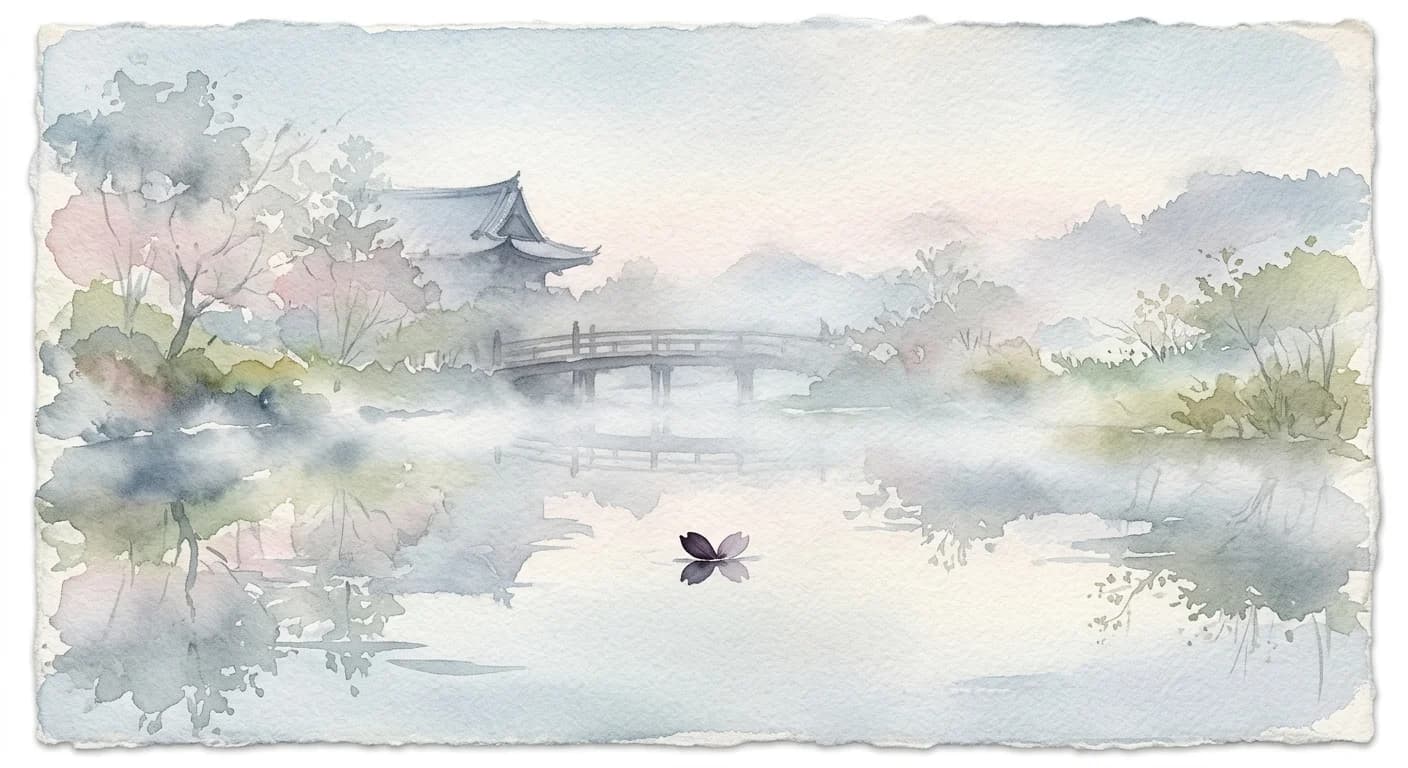
Hokku
/HOK-koo/
Meaning
Hokku, literally meaning "starting verse," is the foundational three-line stanza (5-7-5 syllables) of the ancient Japanese linked verse form, renga. It acts as the evocative opening, setting the seasonal stage and emotional register for the entire collaborative poem. More than just an introduction, a well-crafted hokku, rich with seasonal references (kigo) and a "cutting word" (kireji), captures a fleeting moment of nature or human experience, inviting profound contemplation and an appreciation for the transient beauty of the world.
Literal Translation
starting verse
The Story Behind the Word
The hokku's existence is deeply rooted in Japan's aesthetic principles, particularly the appreciation for nature, impermanence (mujo), and the power of concise expression. Originating in medieval courtly circles, renga and its opening hokku became a sophisticated pastime, reflecting a communal yet individualized artistic pursuit. It embodies the Japanese worldview that finds profound meaning in the ordinary and the ephemeral. The emphasis on kigo (seasonal words) reveals a culture intimately connected to nature's cycles, while kireji (cutting word) highlights a preference for suggestive gaps and pauses over explicit statements, fostering an active, contemplative engagement from the reader. The evolution of hokku into the standalone haiku further solidified its role in shaping Japanese poetic identity and its global impact.
Experience It
Renga Master's Opening
At a moon-viewing party, the renga master clears his throat. He recites, "Old pond, frog jumps / sound of water." The room falls silent, the guests already envisioning the cool night, the sudden ripple, and the profound stillness that follows, ready to build their verses upon this evocative start.
Student's First Hokku
A young poetry student, struggling to capture the essence of autumn, finally pens: "Crimson leaves falling / a gentle breeze whispers by." She feels a small triumph, sensing that she has, for a moment, distilled the season's quiet beauty into those seventeen syllables, a true hokku.
The Deeper Meaning
Hokku embodies the Zen Buddhist concept of 'satori' or sudden enlightenment, where a simple, observed moment can unlock profound truth. Its structure encourages 'mono no aware' – a poignant sensitivity to the transience of things – and 'wabi-sabi' – the beauty of imperfection and simplicity. By focusing on a precise, fleeting sensory experience, it teaches us to find depth and interconnectedness in the everyday world, fostering mindfulness and a deep appreciation for life's ephemeral nature.
Did You Know?
The most famous hokku of all time, Bashō's 'Old pond, frog jumps / sound of water,' was originally conceived as the opening of a renga session!
How It's Used
Used in the context of classical Japanese poetry, specifically as the initial part of a renga or as a standalone form that evolved into haiku.