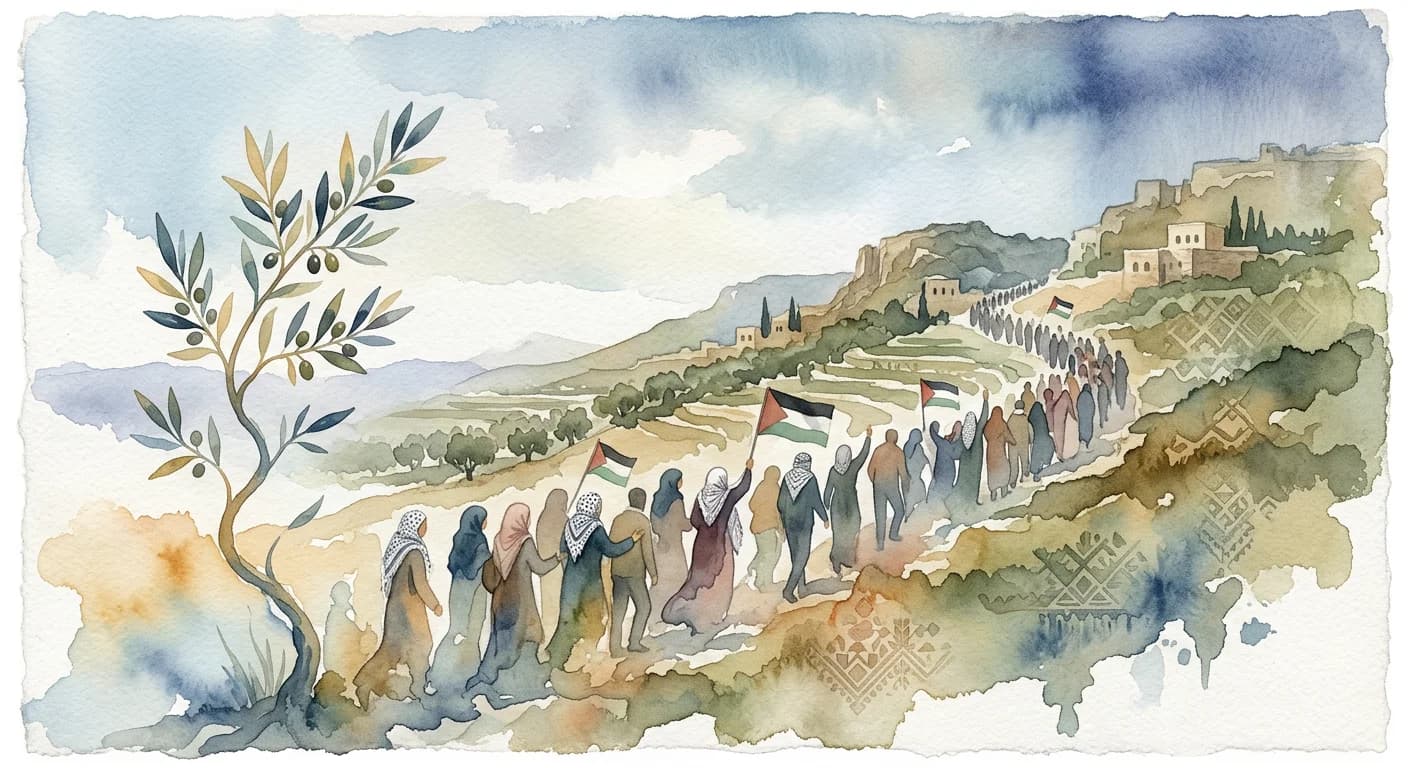
Intifada
/in-ti-FAH-dah/
Meaning
Intifada, literally translating to "shaking off" or "trembling," embodies a profound collective awakening and popular resistance against oppression. It signifies a spontaneous, yet deeply rooted, uprising where a subjugated people, often without conventional military means, rise in defiance to reclaim their rights and self-determination. Far more than mere protest, it represents a society-wide commitment to resist occupation, driven by an unyielding spirit of resilience and a fervent demand for liberation.
Literal Translation
shaking off, uprising
The Story Behind the Word
The word 'Intifada' is inextricably woven into the fabric of Palestinian identity and historical memory, representing key moments of national struggle against Israeli occupation. Its existence reflects a worldview where resistance is not merely a political act, but a moral imperative and a collective expression of dignity in the face of perceived injustice. The concept of 'shaking off' speaks to a deep-seated desire to cast aside the burdens of occupation, both physical and psychological. It underscores a belief in the power of popular mobilization and the steadfastness ('sumud') of a people to endure and resist, even when facing overwhelming odds. The word encapsulates generations of struggle, sacrifice, and an enduring hope for an independent future.
Experience It
Echoes of Stones
A young Palestinian artist paints a mural depicting children throwing stones, their faces resolute. An elder watching comments, 'This reminds me of the early days of the Intifada, when our youth, with just stones and spirit, shook the world.'
A Call for Change
During a community meeting discussing strategies for non-violent resistance, one activist declared, 'We need to reignite the spirit of Intifada in our hearts, not with violence, but with unified resolve and steadfastness against these policies.'
The Deeper Meaning
The word 'Intifada' reveals a philosophy of self-liberation and collective agency. It suggests that true freedom comes not as a gift, but through active, unified struggle against subjugation. It embodies the belief that even in the face of superior power, the collective will and unwavering spirit of a people can challenge and ultimately 'shake off' oppression, asserting their inherent right to self-determination and dignity.
Did You Know?
While most associated with Palestinian uprisings, 'Intifada' has been used in other contexts, such as describing the 1991 Shiite uprising in Iraq against Saddam Hussein, highlighting its broader applicability to popular revolts.
How It's Used
Used to describe Palestinian uprisings against Israeli occupation, most notably the First Intifada (1987-1993) and the Second Intifada (2000-2005). It can also be used more generally to denote any widespread popular uprising or resistance.