Isicathamiya
/ee-see-kah-tahme-EE-yah/
Meaning
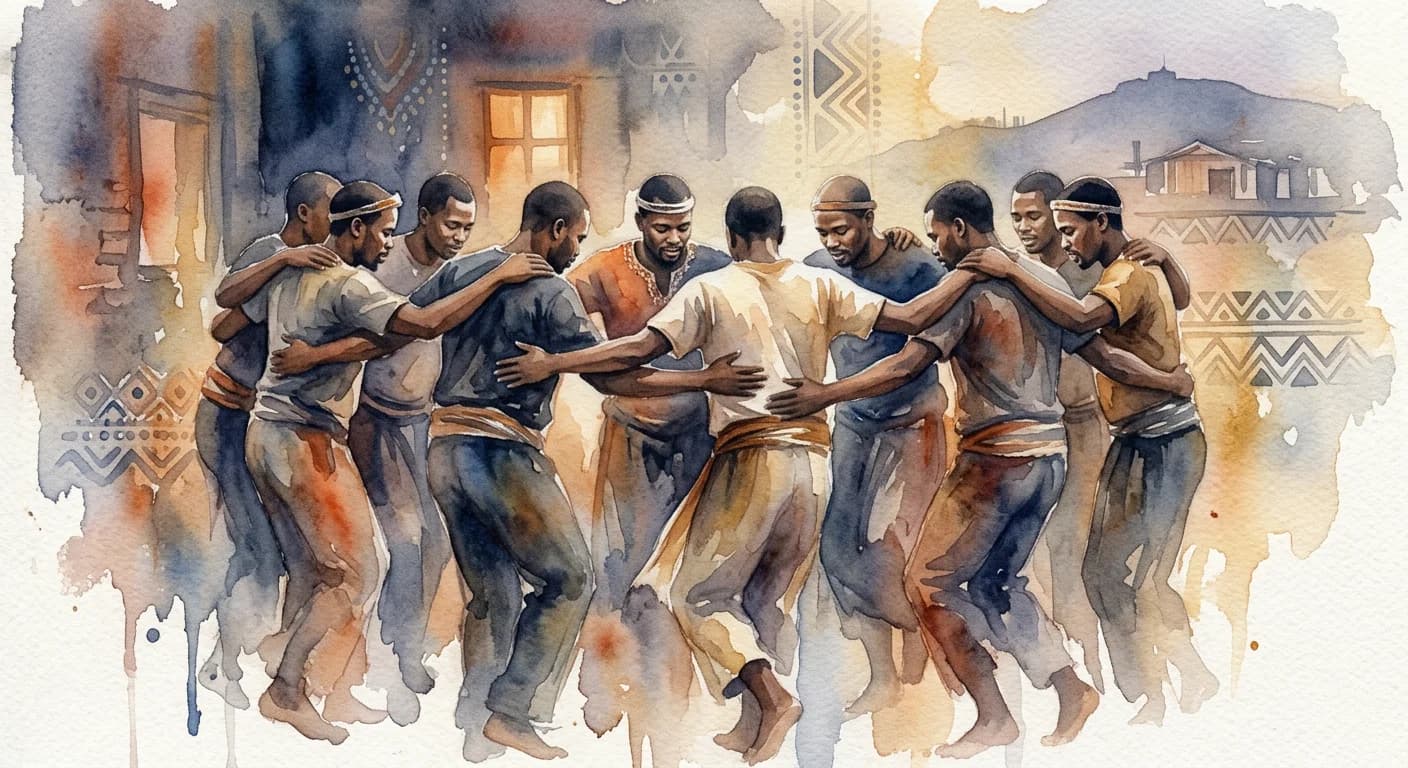
Isicathamiya transcends a mere musical genre; it is the soulful expression of Zulu a cappella, where male voices interweave in intricate harmonies, accompanied by a gentle, rhythmic swaying. This 'tiptoeing' style reflects a humble yet profound artistry, born from the depths of migrant workers' hostels. It evokes a powerful sense of communal belonging, spiritual solace, and shared heritage, resonating with the very heartbeat of South African identity.
Literal Translation
The literal meaning is debated, but it is often translated as 'walking softly' or 'tiptoeing,' referring to the gentle, unobtrusive style of the singing and dancing.
The Story Behind the Word
Isicathamiya emerged from the crucible of South Africa's apartheid era, specifically within the male migrant labor system. Zulu men, uprooted from their rural homes and confined to urban hostels, found in this music a vital outlet for their spiritual and emotional lives. It was a means to preserve cultural identity, articulate their experiences of hardship and longing, and build community amidst displacement. The 'soft' or 'tiptoeing' nature of the performance, often in competitions, is said to have originated from a desire to avoid disturbing hostel authorities and to move with a quiet dignity, a subtle act of defiance and self-respect. It embodies resilience, the power of collective expression, and the search for beauty and harmony even in oppressive conditions. This genre reveals a culture that values communal bonds, spiritual introspection, and the transformative power of shared song.
Experience It
Saturday Night Competition
The community hall buzzed with anticipation. As the 'Red Lions' took the stage, their voices rose in a soft, complex tapestry, their synchronized 'tiptoeing' movements adding to the hypnotic rhythm. The audience, captivated, felt the familiar embrace of Isicathamiya, a melody of shared joy and ancestral spirit.
Hostel Lullaby
After a grueling day in the mines, Thabo and his fellow migrant workers gathered in their hostel room. Their voices, blending in a low, harmonious hum of Isicathamiya, filled the cramped space, transforming it into a sanctuary. For a few precious hours, the music carried them home, easing their weariness and loneliness.
The Deeper Meaning
Isicathamiya embodies a deep philosophical understanding of 'ubuntu' – the interconnectedness of humanity. It teaches that one's identity is inextricably linked to the community, and that harmony, both social and spiritual, is achieved through collective expression and mutual respect. The 'soft' approach signifies humility, resilience, and the power of gentle persuasion over overt confrontation, reflecting a profound wisdom in navigating challenging circumstances.
Did You Know?
The legendary South African group Ladysmith Black Mambazo, famous for their collaborations with Paul Simon on 'Graceland,' are world-renowned exponents of Isicathamiya, bringing its unique sound to global audiences.
How It's Used
Isicathamiya is used to refer to the specific genre of a cappella music originating in South Africa, characterized by its close harmonies and often performed by male choirs. It is also used to describe the singing style itself and the cultural tradition it represents.