Jheel
/JHEEL/
Meaning
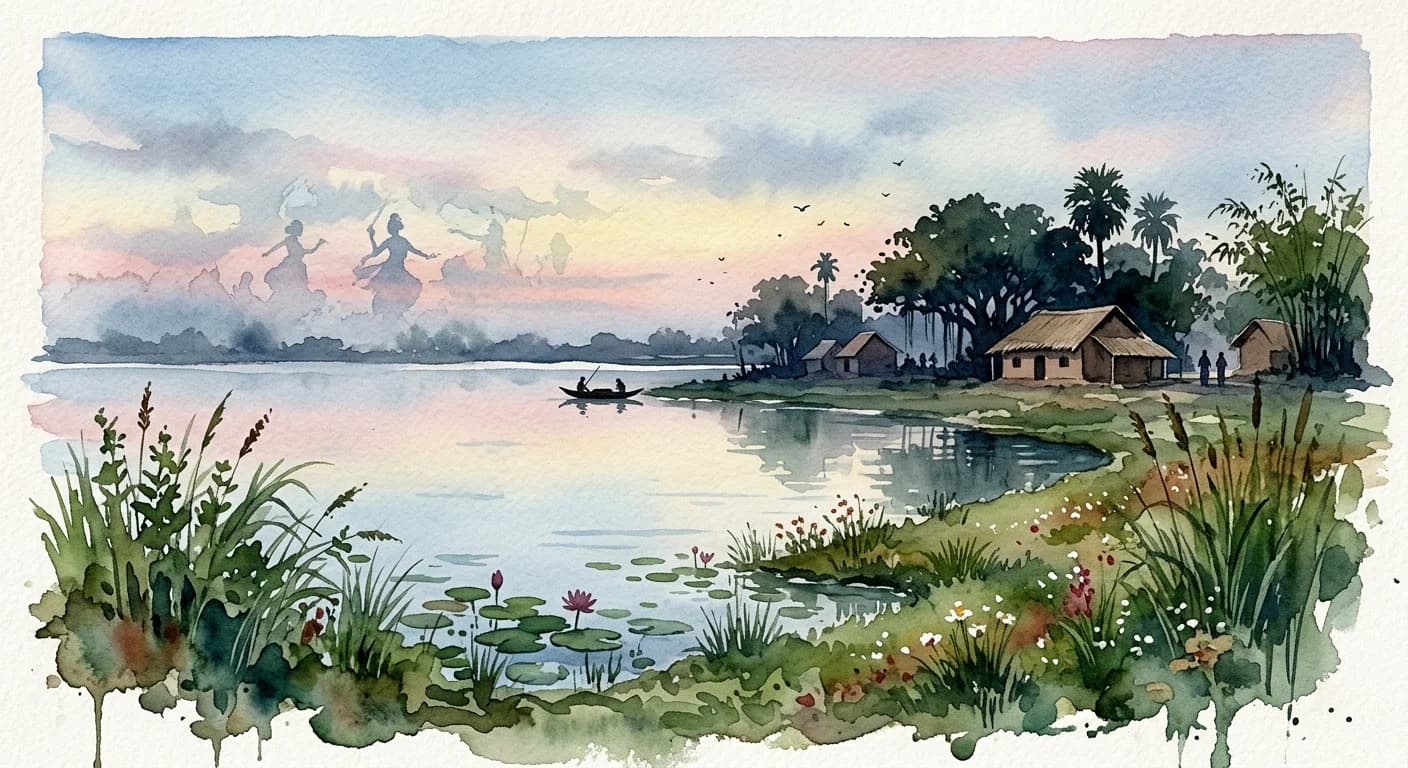
A "jheel" is more than just a body of water; it's a quintessential element of the Bengal delta's serene landscape, a large natural lake or expansive pond cradled by lush greenery. It embodies a deep sense of tranquility and a profound connection to the unhurried, agrarian rhythms of rural life, serving as a vital resource and a contemplative backdrop for generations. These still waters often reflect the vast sky, becoming mirrors of local folklore and the ever-changing cycles of nature.
Literal Translation
lake or large pond
The Story Behind the Word
The term "jheel" is deeply etched into the Bengali psyche, reflecting a culture intimately connected to its fertile, water-rich deltaic environment. Unlike the often turbulent rivers, jheels represent stillness, sustenance, and sanctuary. They are not merely geographical features but integral to village life, providing water for irrigation, fish for sustenance, and a gathering place. They appear in folk songs, poetry, and local legends, often personified or imbued with spiritual significance, symbolizing the calm enduring spirit of the land. The existence of "jheel" as a distinct concept highlights a worldview where nature's gentle, stable elements are cherished and integrated into daily existence, contrasting with the more dynamic, and sometimes destructive, aspects of the larger rivers.
Experience It
Evening by the Jheel
As the sun dipped below the horizon, casting hues of orange and purple, Rahim sat by the jheel. Its calm surface mirrored the fading light, and the gentle lapping of water against the bank brought a profound sense of peace after a long day in the fields.
Village Life Sustained
The villagers gathered at the jheel early in the morning, women collecting water for household chores while fishermen cast their nets, hoping for a good catch. The jheel was the lifeblood of their community, a constant source of nourishment and livelihood.
The Deeper Meaning
The concept of "jheel" reveals a philosophical appreciation for stillness and continuity amidst change. In a region defined by powerful rivers and monsoons, the jheel symbolizes a stable, nurturing presence, a place for quiet reflection and sustained life. It underscores a worldview that values harmony with nature's gentle cycles and finds profound beauty in tranquil permanence.
Did You Know?
Many jheels are actually oxbow lakes, formed from the meandering of rivers, showcasing the dynamic geological history of the Bengal delta.
How It's Used
Used to refer to natural lakes or large ponds, especially in rural areas of Bangladesh and West Bengal, India.