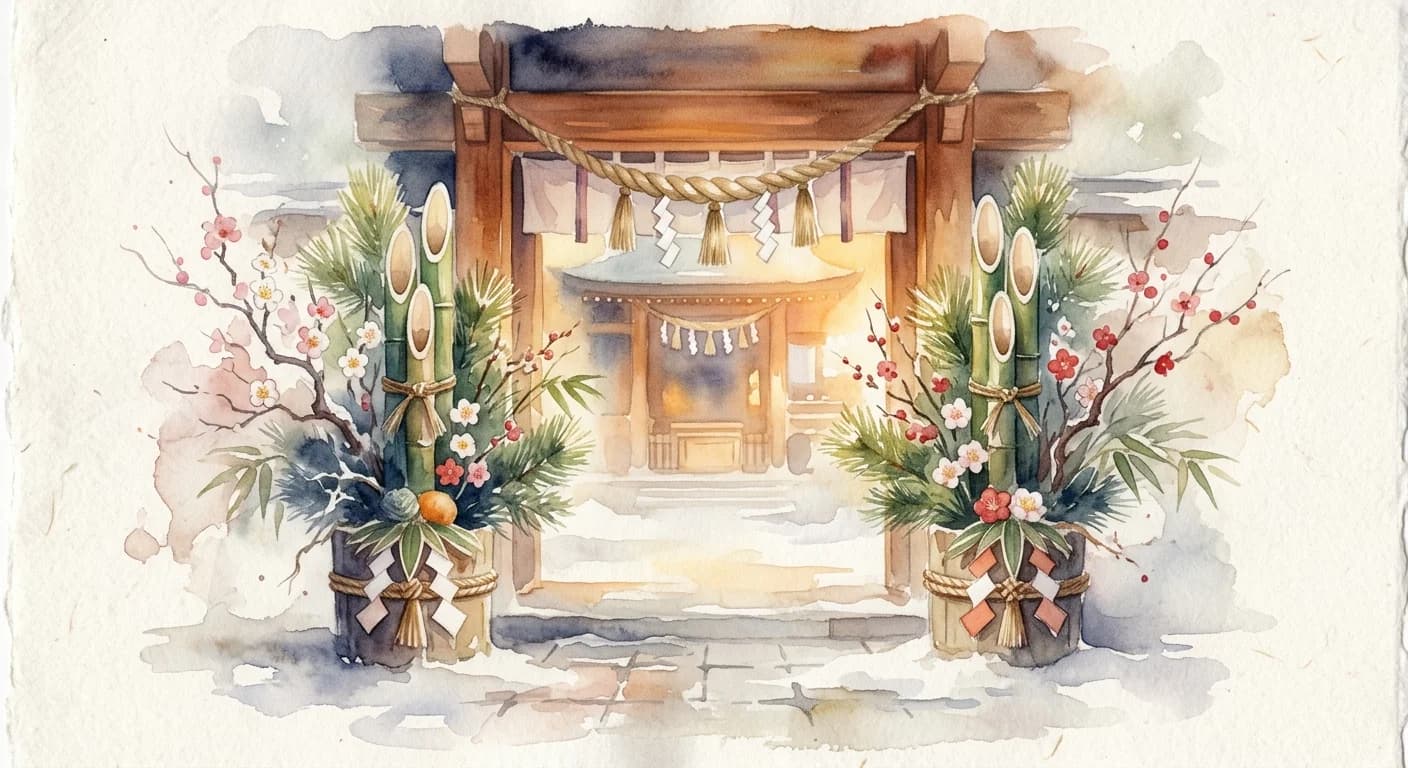
Kadomatsu
/kah-doh-maht-soo/
Meaning
Kadomatsu are exquisite, meticulously crafted New Year's decorations, typically featuring arrangements of resilient pine for longevity, sturdy bamboo for strength and growth, and often vibrant plum blossoms symbolizing renewal and perseverance. Placed in pairs flanking entrances, they serve as sacred temporary abodes for Toshigami, the deity of the New Year, inviting blessings and good fortune into homes and businesses. More than mere ornaments, they are a profound visual prayer, embodying a collective hope for a prosperous and auspicious beginning to the year.
Literal Translation
Pine gate
The Story Behind the Word
The tradition of Kadomatsu is deeply rooted in Japan's animistic Shinto beliefs, where nature is imbued with spiritual power and deities (kami) reside in natural objects. Pine, bamboo, and plum are not just decorative; they are auspicious symbols revered for their resilience, vitality, and beauty even in harsh winter conditions, reflecting the qualities desired for the coming year. The act of preparing and displaying Kadomatsu is a ritualistic purification and invitation, transforming the entrance into a sacred gateway for the Toshigami. This practice underscores the Japanese reverence for nature, their cyclical understanding of time, and the communal importance of welcoming new beginnings with respect and intentionality, ensuring harmony between the human and spiritual worlds. It reflects a worldview where prosperity is not solely economic but also spiritual and relational.
Experience It
New Year's Eve Preparation
A family carefully positions a pair of Kadomatsu outside their home, the father explaining to his children the significance of each plant. He reminds them that these arrangements are not just decorations, but a special welcome for the New Year's god, hoping for a year filled with health and happiness.
Business Prosperity Wish
The owner of a small izakaya proudly displays a pair of elaborate Kadomatsu, freshly installed by a local artisan. He bows slightly as he passes them each morning, a silent wish for a thriving year ahead, believing the Kadomatsu will draw in good fortune and protect his establishment.
The Deeper Meaning
Kadomatsu encapsulates the Japanese philosophy of 'omotenashi' in a spiritual context – an unspoken, selfless hospitality extended to the divine. It reflects a deep-seated belief in the interconnectedness of nature, humanity, and the spiritual realm, where conscious preparation and aesthetic appreciation are integral to inviting positive energy and ensuring a harmonious transition into the future.
Did You Know?
The bamboo in Kadomatsu is often cut diagonally, a style known as 'sogi,' which is said to resemble a sharp, upward-pointing smile, symbolizing a joyful and successful year ahead.
How It's Used
Kadomatsu are displayed from the end of December until January 7th (or later in some regions) as a New Year's decoration.