U.
HomeRegionsLanguagesEmotionsCollections
Find Your Word

“The limits of my language mean the limits of my world.”

— Ludwig Wittgenstein, Philosopher

Untranslatable

A curated collection of the world's most beautiful expressions—words that remind us language is humanity's greatest invention.

  • Home
  • Collections
  • Regions
  • Countries
  • Emotions
  • Tags
  • Contexts
  • Finder
  • Europe
  • Asia
  • Americas
  • Africa
  • Middle East
  • About
  • Contact
  • Privacy Policy
  • Terms of Service

2026 © Untranslatable. All rights reserved.

    /
    /
    1. Home
    2. /
    3. Middle East
    4. /
    5. Muezzin
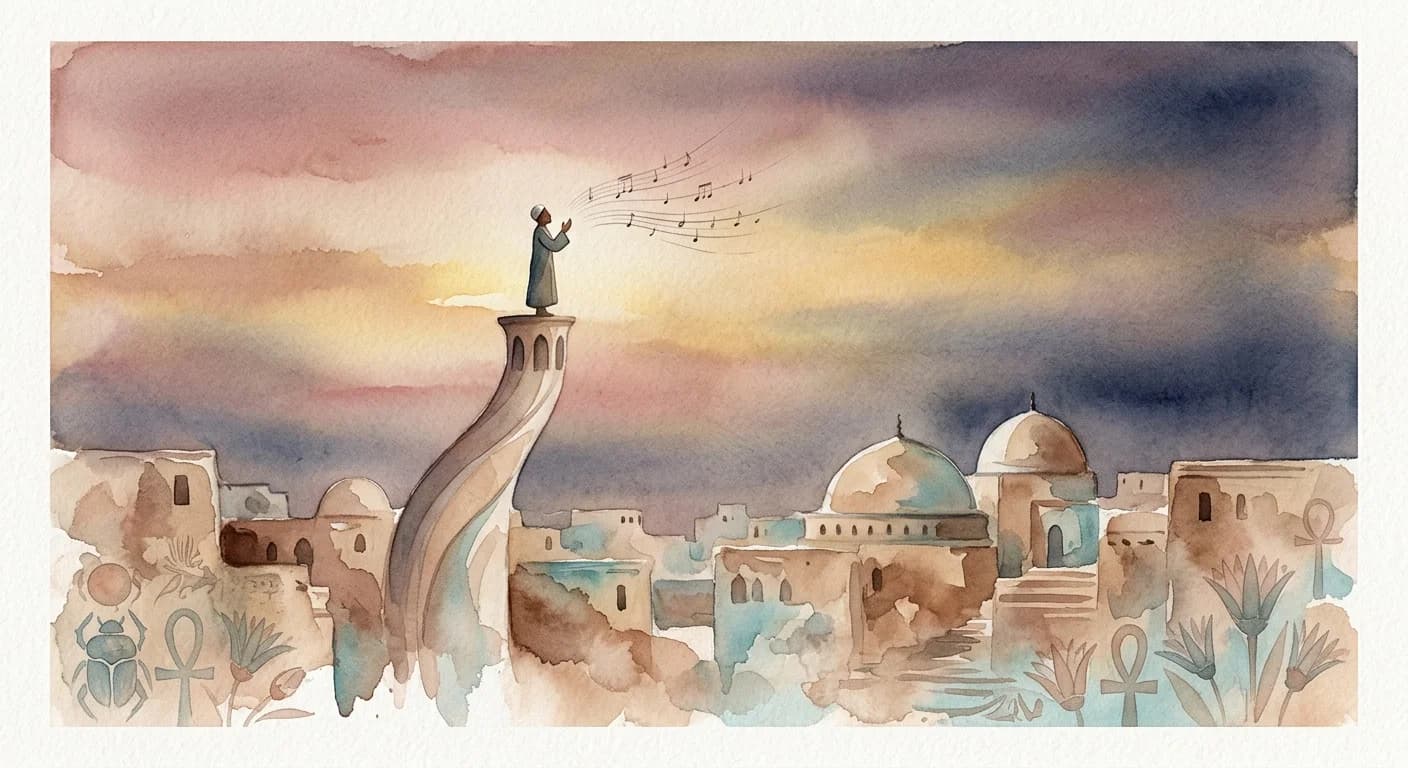
    Artistic representation of Muezzin
    Arabic•
    🇦🇫Afghanistan🇩🇿Algeria🇧🇭Bahrain🇧🇩Bangladesh🇪🇬Egypt🇮🇳India🇮🇩Indonesia🇮🇷Iran🇮🇶Iraq🇯🇴Jordan🇰🇼Kuwait🇲🇾Malaysia🇲🇱Mali🇲🇦Morocco🇳🇪Niger🇳🇬Nigeria🇴🇲Oman🇵🇰Pakistan🇶🇦Qatar🇸🇦Saudi Arabia🇸🇳Senegal🇸🇴Somalia🇸🇩Sudan🇸🇾Syria🇹🇳Tunisia🇹🇷Turkey🇦🇪United Arab Emirates🇾🇪Yemen

    Muezzin

    /MOO-eh-zin/

    Meaning

    The muezzin is the revered individual, often chosen for the beauty and clarity of their voice, who performs the adhan, the Islamic call to prayer, from the mosque's minaret. This role transcends a mere announcement; it is a profound spiritual broadcast, weaving the divine rhythm into the fabric of daily life for Muslim communities. Their resonant call serves as a collective invitation to devotion, a moment of sacred pause, and a constant, comforting reminder of God's omnipresence amidst the world's ceaseless activity.

    Literal Translation

    one who calls out

    The Story Behind the Word

    The role of the muezzin is deeply embedded in Islamic history and culture, dating back to the time of Prophet Muhammad. Bilal ibn Rabah, an Abyssinian companion, was chosen as the first muezzin, highlighting that piety and vocal ability, not social status, were paramount. This established a tradition where the call to prayer is not just functional but an art form, often requiring years of training and spiritual dedication. The muezzin's voice acts as an audible thread connecting the community to its faith, signifying the start of prayer times, the breaking of fasts, and the general flow of life. It reveals a culture that values collective spiritual awareness, where the sacred permeates the secular, and sound itself can be a powerful medium for divine communication and community cohesion.

    Experience It

    Dawn's First Call

    As the first hints of dawn paint the eastern sky, a hush falls over the bustling market. Then, the rich, echoing voice of the muezzin sweeps across the city from the mosque's minaret, a melodic summons to Fajr prayer. Shopkeepers pause their preparations, and early risers are drawn into a moment of quiet reflection, feeling the day begin with a sacred rhythm.

    Evening Adhan

    After a long day's work, a family gathers for dinner. Suddenly, the muezzin's voice rings out, signaling the Maghrib prayer. The conversation softens, and children instinctively quiet down. It's a familiar, comforting sound that marks the transition from worldly pursuits to spiritual contemplation, uniting households in a shared moment of devotion.

    The Deeper Meaning

    The muezzin embodies the Islamic concept of 'dhikr' (remembrance of God) made manifest through sound. Their call transforms the urban soundscape into a spiritual reminder, asserting that divine presence is not confined to sacred spaces but is an integral part of daily existence, inviting constant mindfulness and a realignment of priorities from the temporal to the eternal.

    Did You Know?

    Historically, muezzins often climbed the minaret five times a day, but modern mosques frequently use microphones and loudspeakers, and the adhan may even be pre-recorded or broadcast digitally.

    How It's Used

    Used to refer to the person who performs the Islamic call to prayer.

    Emotions
    belonging,gratitude,peace,serenity
    Contexts
    celebration,daily life,greeting,religion
    🇦🇫Afghanistan🇩🇿Algeria🇧🇭Bahrain🇧🇩Bangladesh🇪🇬Egypt🇮🇳India🇮🇩Indonesia🇮🇷Iran🇮🇶Iraq🇯🇴Jordan🇰🇼Kuwait🇲🇾Malaysia🇲🇱Mali🇲🇦Morocco🇳🇪Niger🇳🇬Nigeria🇴🇲Oman🇵🇰Pakistan🇶🇦Qatar🇸🇦Saudi Arabia🇸🇳Senegal🇸🇴Somalia🇸🇩Sudan🇸🇾Syria🇹🇳Tunisia🇹🇷Turkey🇦🇪United Arab Emirates🇾🇪Yemen

    by Sofia Rossi·Written Mar 14, 2026·Updated Apr 3, 2026

    Related Words

    Explore more
    Dolce far nienteItalian

    Dolce far niente captures the profound joy and effortless pleasure derived from simply existing without obligation or purpose. It's the art of savoring moments of pure, unadulterated idleness – lying in the sun, watching the clouds drift, or enjoying a leisurely coffee – not as a break from work, but as a valuable state in itself. This 'sweetness of doing nothing' is a conscious embrace of stillness and contentment, allowing the soul to breathe and the senses to fully engage with the present.

    SobremesaSpanish

    Sobremesa is the cherished, often extended period immediately following a meal, particularly lunch or dinner, where diners remain seated at the table to enjoy conversation, coffee, and digest not just the food, but the company itself. It’s a dedicated time for unhurried social bonding, storytelling, and shared laughter, transforming a simple meal into a profound communal experience. Far from just clearing the dishes, sobremesa is an integral part of Spanish social life, often lasting for hours.

    Pura vidaSpanish

    More than just 'pure life,' "Pura vida" encapsulates a profound philosophy of embracing the present moment with unwavering optimism and gratitude. It's a daily commitment to finding joy in simple pleasures, accepting life's challenges with a positive spirit, and prioritizing well-being over material possessions. This ubiquitous phrase reflects a national identity built on resilience, community, and an deep appreciation for nature's bounty.

    UbuntuZulu/Xhosa

    Ubuntu is a profound African philosophy that translates to 'I am because we are,' signifying that an individual's humanity is inextricably linked to the humanity of others. It embodies the belief that our existence and well-being are deeply intertwined with the community. This concept emphasizes compassion, reciprocity, dignity, and the understanding that true fulfillment is found not in isolation, but through collective flourishing and mutual support. It's a call to recognize and affirm the humanity in everyone, fostering a sense of interconnectedness.