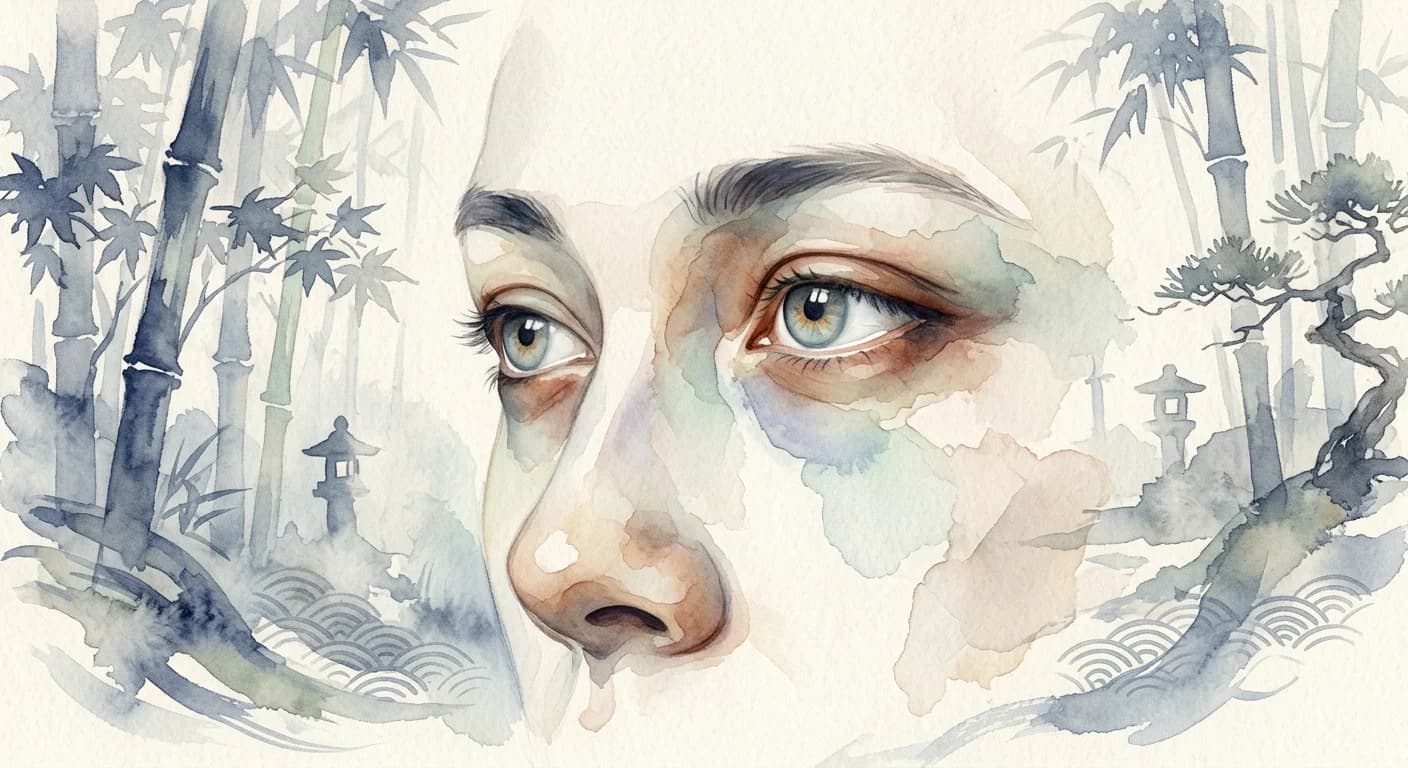
Sanpaku
/SAHN-pah-koo/
Meaning
Sanpaku, literally "three whites," is a fascinating concept from traditional Japanese physiognomy that refers to a specific ocular presentation: the white part of the eye (sclera) being visible on three sides of the iris. This can manifest as either 'yin sanpaku,' where the white is visible below the iris, or 'yang sanpaku,' where it's visible above. Far from a mere physical description, sanpaku is believed to signify an imbalance within an individual, potentially foretelling physical illness, mental distress, or even a predisposition to misfortune and danger, making it a subject of profound cultural intrigue.
Literal Translation
three whites
The Story Behind the Word
The concept of Sanpaku is deeply rooted in East Asian physiognomy (相術, sōjutsu in Japanese), a practice with ancient origins in China that spread to Japan. This tradition posits that a person's physical features, particularly those of the face, are not random but rather reflect their inner state, character, health, and destiny. Sanpaku specifically draws on the belief that a harmonious balance within the body and spirit is essential for well-being, and any deviation from this balance, such as the unusual presentation of the eyes, can be a warning sign. It reflects a worldview where the microcosm of the human body is intertwined with macrocosmic forces, and subtle physical cues can reveal profound truths about one's life path. The enduring interest in sanpaku underscores a cultural inclination towards holistic observation and a quest for deeper meaning in physical appearance.
Experience It
Observing a New Acquaintance
During a village gathering, an elder quietly observes a new, boisterous young man. Noticing the distinct 'three whites' in his eyes, she murmurs to her companion, 'He has sanpaku. I hope he finds peace, his spirit seems restless and prone to trouble.'
A Mother's Concern
A mother gently cradles her feverish child, her heart heavy with worry. As she looks into his eyes, she notes the unusual prominence of the sclera below his iris, a 'yin sanpaku,' and thinks, 'Could this be a sign of deeper imbalance, beyond just this fever?'
The Deeper Meaning
Sanpaku embodies a philosophical perspective that views the human body as a mirror of inner harmony and destiny. It suggests that external signs, even as subtle as eye whites, can reveal deep truths about a person's physical, mental, and spiritual balance. This belief underscores a holistic understanding of existence, where the visible and invisible realms are interconnected, and a balanced life is paramount to avoiding misfortune.
Did You Know?
George Ohsawa, a Japanese macrobiotic diet advocate, popularized sanpaku in the West in the 1960s, linking 'yin sanpaku' to physical illness and 'yang sanpaku' to violence or mental instability.
How It's Used
Used in traditional Japanese physiognomy and face reading to analyze a person's health, fortune, and disposition based on the appearance of their eyes.