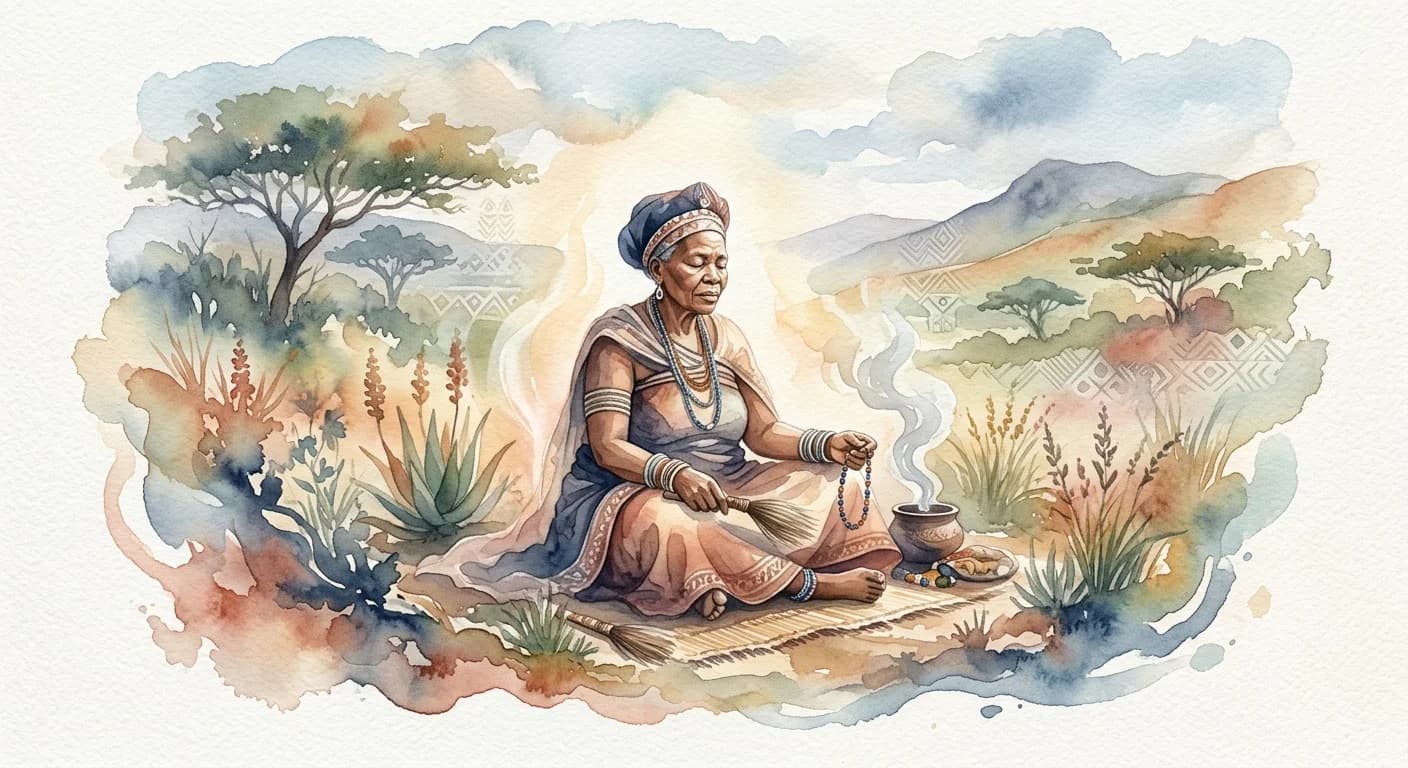
Sangoma
/sah-NG-oh-mah/
Meaning
A Sangoma is far more than a mere healer; they are a revered conduit between the visible world and the ancestral realm within Southern African Nguni cultures. Through trance, divination with bones (ukuhlola), and dreams, they interpret the messages of the ancestors, diagnose spiritual and physical ailments, and prescribe remedies ranging from herbal medicines to ritual cleansings. Their practice is deeply holistic, addressing imbalances in the individual, family, and community, thus serving as vital custodians of both health and tradition.
Literal Translation
The exact literal meaning is debated, but it is often associated with 'one who is praised' or 'one who is consulted'.
The Story Behind the Word
The existence of the Sangoma is rooted in an animistic worldview where the spiritual and physical realms are inextricably linked, and ancestors actively participate in the lives of the living. This word reflects a communal understanding that well-being is not just about the body, but also about one's relationship with the spiritual world, one's family lineage, and the broader community. The Sangoma embodies this interconnectedness, acting as a spiritual guide, counselor, and resolver of conflict, affirming that harmony with the ancestors and nature is paramount for individual and collective prosperity. Their role predates colonial influence and continues to be a cornerstone of cultural identity and traditional justice.
Experience It
Seeking Ancestral Guidance
A young woman, troubled by recurring nightmares and a persistent cough that doctors couldn't cure, visits the Sangoma. The Sangoma casts their bones, enters a trance, and reveals that an ancestor is displeased due to a forgotten family ritual, prescribing a specific ceremony to appease them and restore balance.
Community Dispute Resolution
When a long-standing land dispute threatens to divide a village, the elders consult the Sangoma. Through divination and communication with the ancestral spirits of both families, the Sangoma uncovers a forgotten agreement, guiding the community towards a resolution that honors tradition and restores peace.
The Deeper Meaning
The Sangoma embodies a holistic philosophy where illness is rarely seen in isolation, but rather as a symptom of a deeper imbalance—be it spiritual, social, or environmental. This worldview emphasizes interconnectedness, the active presence of the ancestral realm in daily life, and the belief that harmony with both the seen and unseen worlds is essential for true well-being and a flourishing community. It underscores a profound respect for tradition and the wisdom of those who have passed on.
Did You Know?
Many Sangomas undergo a rigorous training period, often lasting years, known as 'ukuthwasa.' This involves intense spiritual journeys, learning herbal lore, and developing their connection to the ancestral spirits under the guidance of an experienced Sangoma.
How It's Used
Refers to a traditional healer or diviner in Southern Africa, particularly within Nguni-speaking communities. The term is used to describe the person, their practice, and the spiritual connection they maintain.