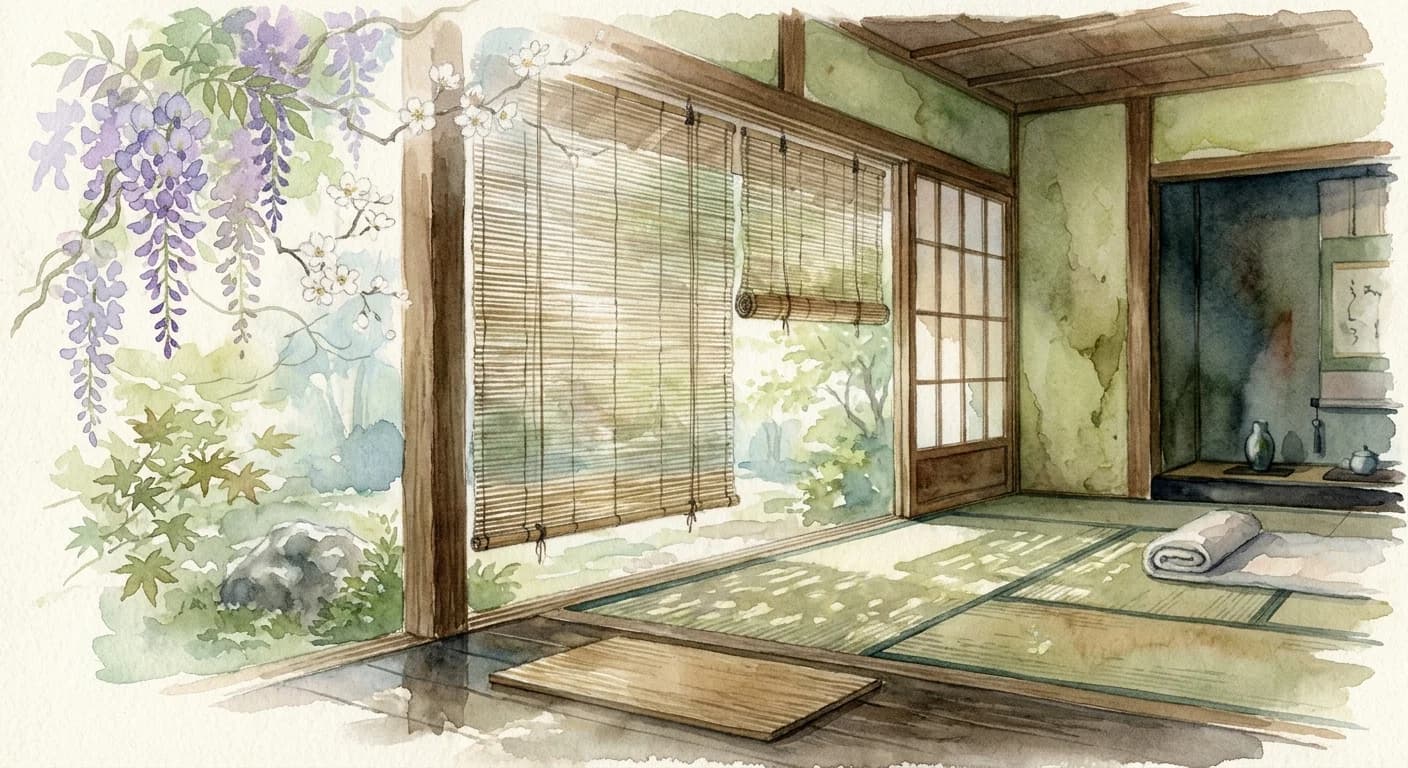
Sudare
/SOO-dah-reh/
Meaning
Sudare refers to traditional Japanese screens or blinds, meticulously crafted from slender bamboo or delicate reeds woven together. Far beyond their practical role of filtering harsh sunlight and offering privacy, sudare embody a profound aesthetic of understated elegance and the gentle rhythm of nature. They diffuse light into a soft, dappled glow, creating a serene and contemplative atmosphere, while their subtle rustling in the breeze whispers of the natural world, fostering a deep connection to the outdoors within interior spaces.
Literal Translation
bamboo screen
The Story Behind the Word
The existence of sudare is deeply rooted in Japan's historical climate and its enduring embrace of natural materials and subtle aesthetics. Developed in an era before modern air conditioning, sudare provided essential ventilation and shade, allowing breezes to pass through while mitigating the intense summer sun. Philosophically, they reflect the Japanese concept of *wabi-sabi*, finding beauty in imperfection, transience, and natural simplicity. The semi-transparency of sudare also speaks to the idea of *ma*, the profound significance of empty space and the interplay between presence and absence, allowing for a softened perception of the outside world rather than a stark separation. This nuanced interaction with the environment reveals a cultural preference for harmony with nature over its forceful control, valuing subtlety and suggestion over overt display.
Experience It
Summer Tea Ceremony
Inside the tranquil tea house, the host gently raises a sudare, allowing a soft, filtered light to illuminate the tatami mats. A faint breeze rustles the bamboo, carrying the scent of damp earth and greenery, perfectly complementing the quiet reverence of the tea ceremony and blurring the lines between the interior and the garden beyond.
Morning Light Dapple
As the morning sun rises, its beams strike the sudare hanging in the engawa. Intricate patterns of light and shadow dance across the wooden floor, constantly shifting with the gentle sway of the bamboo, transforming the room into a canvas of ephemeral beauty and welcoming the new day with quiet grace.
The Deeper Meaning
Sudare embody the Japanese aesthetic principle of *yugen*, suggesting profound beauty that is subtle, mysterious, and not fully revealed. Their semi-transparency and the way they diffuse light encourage contemplation and an appreciation for the unseen or partially seen, fostering a deeper, more imaginative engagement with one's surroundings. This reflects a worldview that values suggestion and atmosphere over explicit declaration, finding richness in ambiguity and the interplay of light and shadow.
Did You Know?
Historically, sudare were sometimes used by high-ranking court ladies to observe guests without being directly seen, maintaining an air of mystery and decorum.
How It's Used
Sudare are used as window coverings, room dividers, or decorative elements in traditional Japanese architecture, particularly in homes, temples, and tea houses. They are most commonly used during warmer months to provide shade and ventilation.