Tarawih
/tuh-RAH-weeh/
Meaning
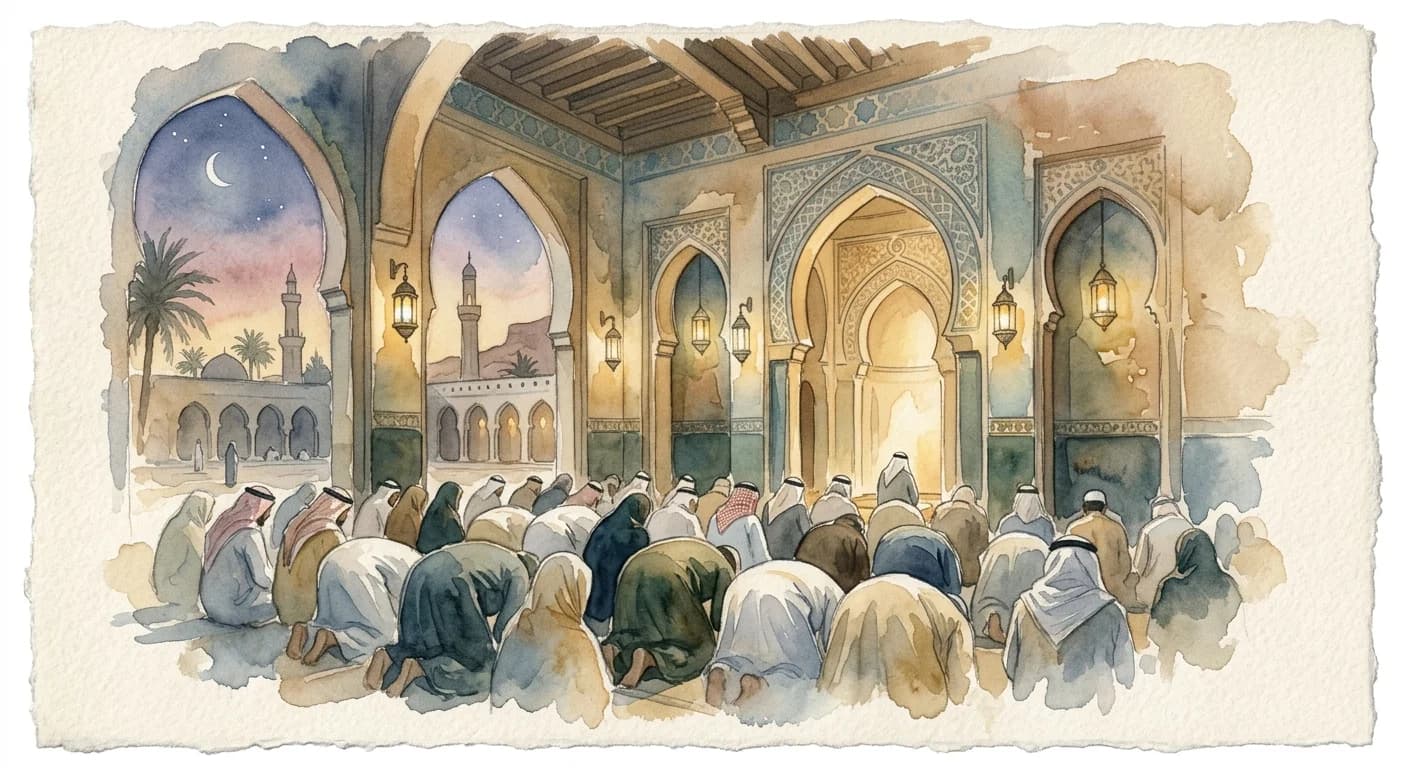
Tarawih embodies the special voluntary night prayers performed by Muslims throughout the sacred month of Ramadan, commencing after the Isha (evening) prayer. These extended devotions are a profound spiritual journey, marked by the rhythmic recitation of the Quran and prolonged standing, bowing, and prostrating. It's a cherished time for communal gathering in mosques, fostering deep bonds of unity, devotion, and a heightened sense of peace and divine connection among worshippers as they collectively seek solace and strengthen their faith.
Literal Translation
To rest, to be tranquil
The Story Behind the Word
The practice of Tarawih prayer is deeply rooted in the Sunnah (tradition) of Prophet Muhammad, who encouraged extra worship during Ramadan. The word 'Tarawih' itself, meaning 'to rest' or 'to be tranquil,' reflects the pauses taken between sets of prayers, traditionally allowing worshippers moments of respite during the lengthy devotion. Culturally, it transforms mosques into vibrant hubs of spiritual activity each night, drawing families and communities together. It's not merely a ritual but a communal expression of piety, reinforcing social cohesion and shared purpose. For many, it's the spiritual heartbeat of Ramadan, a time for profound personal reflection and collective supplication that defines the unique atmosphere of the holy month. It reveals a cultural emphasis on communal worship, endurance in devotion, and the pursuit of tranquility through spiritual effort.
Experience It
A Community United
The call to Isha faded, and the mosque swelled with worshippers. As the Imam began the melodious recitation for Tarawih, a palpable stillness settled, broken only by the soft murmurs of 'Ameen.' Rows of people, young and old, stood shoulder to shoulder, their hearts united in devotion, seeking closeness to God through the rhythmic movements and profound verses.
Quiet Solace at Home
Layla, unable to attend the mosque, spread her prayer mat in her living room after putting her children to bed. The quiet of the night was only punctuated by her soft recitation as she performed Tarawih alone. Each prostration brought a sense of profound peace, a private communion that deepened her personal spiritual journey during Ramadan.
What Gets Lost in Translation
English speakers might misunderstand Tarawih as a mandatory prayer, whereas it is entirely voluntary (Sunnah Mu'akkadah). Another nuance is that while it's ideally performed in congregation, it can also be prayed individually at home. It's not just 'extra prayers,' but specifically night prayers during Ramadan with a distinct rhythm and spiritual significance.
Across Cultures
While the specific term 'Tarawih' is unique to Islamic tradition, the concept of extended night vigils or special prayers during holy periods exists across many faiths. For example, 'Vespers' in Christianity or 'Pujas' in Hinduism often involve lengthy, communal devotional practices performed at specific times, emphasizing spiritual focus and community bonding during sacred seasons.
The Deeper Meaning
Tarawih underscores a philosophy of intentional spiritual exertion and communal solidarity. It reveals a worldview where tranquility is not passively received but actively sought through disciplined devotion and shared worship. The voluntary nature of these lengthy prayers highlights the profound human desire for a deeper connection with the divine, demonstrating that true spiritual growth often lies beyond mere obligation, in acts of heartfelt commitment and collective endeavor.
Did You Know?
While commonly performed in 8, 12, or 20 units (rak'ahs), the Prophet Muhammad himself only performed Tarawih for a few nights in congregation, fearing it would become an obligatory duty if he continued, thus highlighting its voluntary nature.
How It's Used
Performed nightly in congregation at mosques or individually at home during Ramadan, after the Isha prayer.