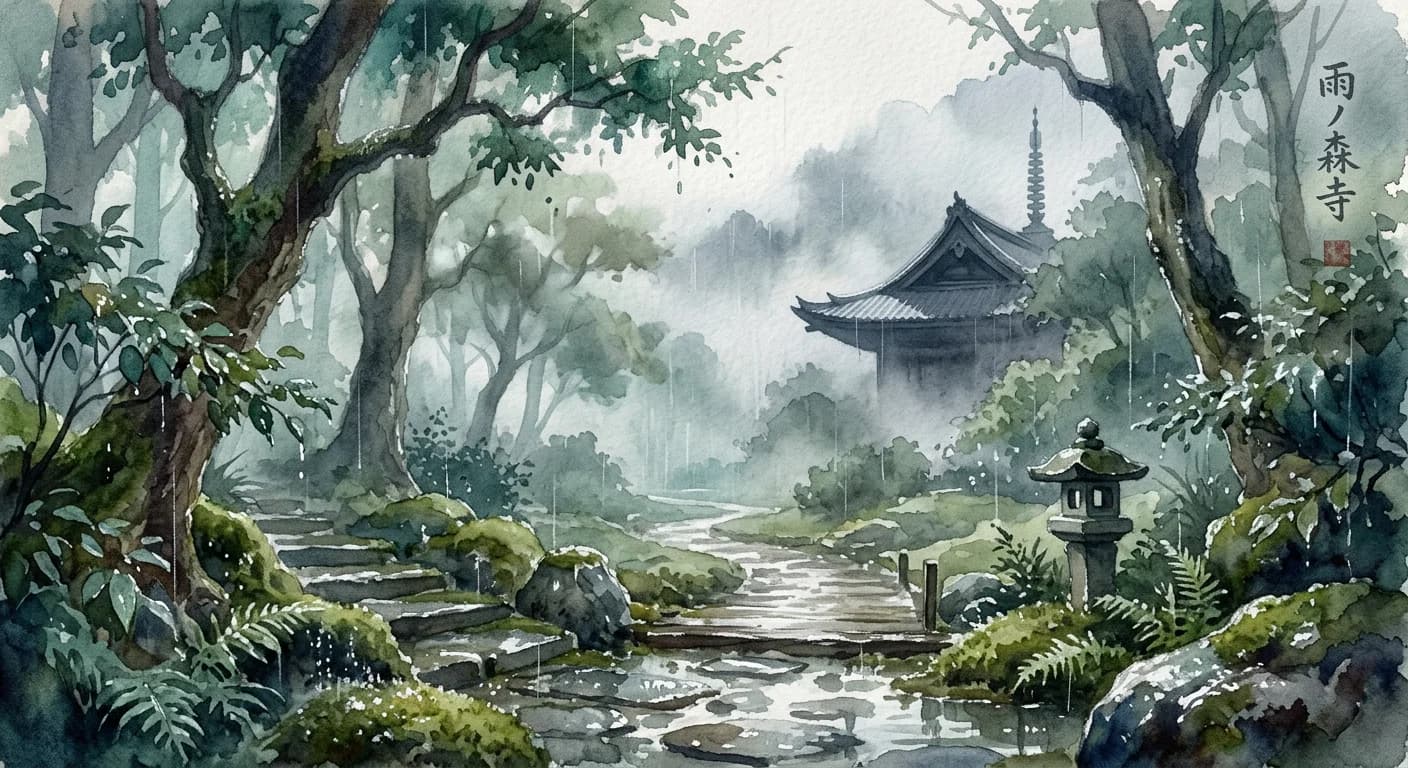
Amenomori
/AH-meh-noh-moh-ree/
Meaning
Amenomori transcends a simple description of rain; it embodies the quiet, persistent presence of a gentle downpour that washes over the landscape, inviting introspection. It's the soft, rhythmic patter on moss, the glistening of wet leaves, and the subtle fragrance of earth revitalized. This word captures the serene beauty and profound tranquility that emerges when the world pauses under a steady, life-giving rain, particularly cherished during Japan's distinct rainy seasons.
Literal Translation
Rain forest (雨森)
The Story Behind the Word
The existence of 'amenomori' reflects Japan's deep-seated reverence for nature and its cyclical rhythms, a core tenet of Shintoism. Unlike Western perceptions of rain often associated with gloom or inconvenience, 'amenomori' highlights a positive, almost sacred aspect. It speaks to a cultural appreciation for transience (mono no aware) and the beauty found in subtle, ephemeral moments. During the 'Tsuyu' (rainy season), when much of Japan is enveloped in persistent rain, 'amenomori' provides a linguistic anchor for finding peace and beauty in what could otherwise be seen as monotonous. This word reveals a cultural predisposition to harmonize with, rather than conquer, natural phenomena, finding spiritual and aesthetic value in quiet contemplation of the elements.
Experience It
Garden's Gentle Embrace
Sitting on the engawa, she watched the 'amenomori' softly fall, each drop creating tiny ripples in the koi pond. The world outside felt hushed and cleansed, perfectly reflecting the tranquil beauty of her garden.
Forest's Whispering Veil
Hiking through the ancient cedar forest, the 'amenomori' created a mystical atmosphere, the air thick with the scent of damp earth and wood. Every leaf seemed to shimmer, and the forest felt alive with a quiet, profound energy.
The Deeper Meaning
Amenomori encapsulates the Japanese aesthetic of 'wabi-sabi' – finding beauty in imperfection, transience, and natural simplicity. It encourages an appreciation for the subtle, often overlooked moments in nature, fostering a sense of interconnectedness with the environment and a quiet acceptance of the world's natural flow, even in its most persistent forms.
Did You Know?
Despite its evocative meaning, 'amenomori' (雨森) literally translates to 'rain forest.' However, its usage in Japanese poetry and daily conversation evokes a far more nuanced and gentle image than the dense, tropical rainforests the literal translation might suggest.
How It's Used
Amenomori is used to describe the phenomenon of rain, particularly when it is gentle, consistent, and contributes to a peaceful atmosphere. It is often evoked when discussing the beauty of nature, especially during Japan's rainy seasons like Tsuyu.