U.
HomeRegionsLanguagesEmotionsCollections
Find Your Word

“The limits of my language mean the limits of my world.”

— Ludwig Wittgenstein, Philosopher

Untranslatable

A curated collection of the world's most beautiful expressions—words that remind us language is humanity's greatest invention.

  • Home
  • Collections
  • Regions
  • Countries
  • Emotions
  • Tags
  • Contexts
  • Finder
  • Europe
  • Asia
  • Americas
  • Africa
  • Middle East
  • About
  • Contact
  • Privacy Policy
  • Terms of Service

2026 © Untranslatable. All rights reserved.

    /
    /
    1. Home
    2. /
    3. Africa
    4. /
    5. Alaafin
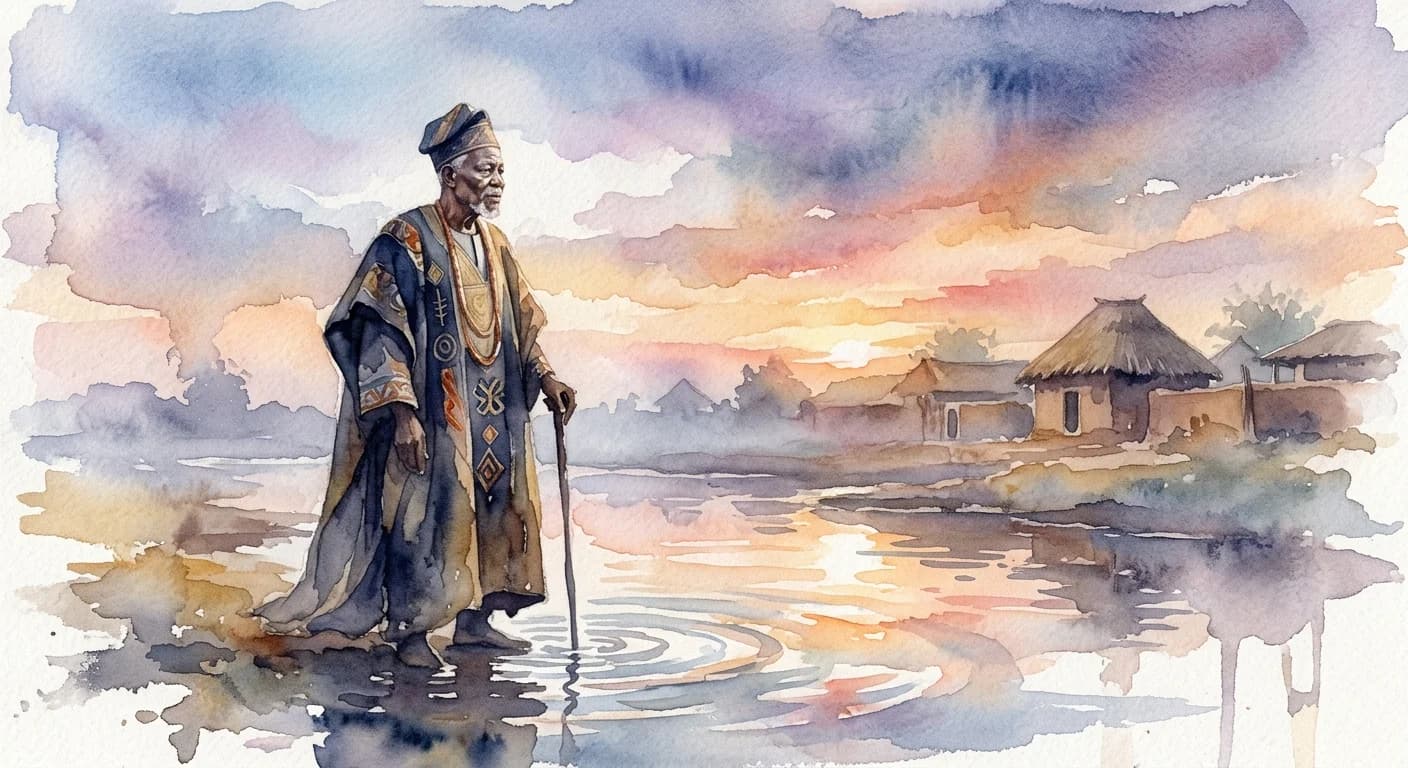
    Artistic representation of Alaafin
    Yoruba•
    🇳🇬Nigeria

    Alaafin

    /ah-LAH-ah-fin/

    Meaning

    The Alaafin is more than a mere monarch; it is the living embodiment of the Oyo Yoruba people's spiritual and temporal sovereignty, a sacred trust passed down through an unbroken ancestral line. This title signifies a ruler who serves as the vital link between the earthly realm and the divine, meticulously upholding ancient traditions and ensuring the collective well-being and prosperity of their domain. Bearing the weight of centuries of history, the Alaafin's every pronouncement resonates with profound cultural and spiritual authority, shaping the destiny of the Oyo people.

    Literal Translation

    None

    The Story Behind the Word

    The word "Alaafin" is deeply rooted in the historical formation and philosophical underpinnings of the Oyo Empire, one of the most powerful and enduring Yoruba kingdoms. Its existence reflects a worldview where governance is not merely political administration but a sacred duty, intrinsically linked to the spiritual health and cosmic balance of the community. The Alaafin is believed to be a direct descendant of Oranmiyan, a legendary founder of the Yoruba people, making his rule divinely sanctioned. This lineage bestows upon him not just authority but also a heavy responsibility to maintain harmony, adjudicate disputes with wisdom, and perform rituals essential for agricultural fertility and societal cohesion. The title encapsulates the Yoruba belief in a hierarchical universe where the king acts as a mediator between humans and the Orishas (deities), ensuring that the collective destiny of the people aligns with divine will. It reveals a culture that values continuity, ancestral veneration, and the integration of the sacred into every aspect of public life.

    Experience It

    Royal Proclamation

    During the annual 'Bere' festival, the Alaafin, adorned in regal robes, emerged from the inner chambers of the palace. His voice, amplified by tradition and reverence, declared the new farming season open, a sacred decree that signaled hope and collective effort for the entire Oyo kingdom.

    Ancestral Counsel

    Facing a challenging inter-community dispute, the council of chiefs turned to the Alaafin. He spent days in consultation, drawing upon the wisdom of his ancestors and the ancient laws of the land, before delivering a judgment that sought to restore peace and uphold justice for all parties.

    The Deeper Meaning

    The "Alaafin" embodies the Yoruba concept of 'Ase' – the divine power, authority, and life force that enables things to happen. The king is seen as a repository of Ase, which he channels to maintain order, prosperity, and spiritual balance within his realm. This reveals a worldview where leadership is a conduit for divine energy, not merely a human appointment.

    Did You Know?

    The Alaafin traditionally does not eat in public, symbolizing his divine separation and the sacred nature of his person, a practice that underscores his role as a spiritual intermediary.

    How It's Used

    Used as a royal title for the head of state and spiritual leader of the Oyo people.

    Contexts
    daily life,history,politics
    🇳🇬Nigeria

    by Kwame Nkrumah·Written Mar 14, 2026·Updated Apr 3, 2026

    Related Words

    Explore more
    UbuntuZulu/Xhosa

    Ubuntu is a profound African philosophy that translates to 'I am because we are,' signifying that an individual's humanity is inextricably linked to the humanity of others. It embodies the belief that our existence and well-being are deeply intertwined with the community. This concept emphasizes compassion, reciprocity, dignity, and the understanding that true fulfillment is found not in isolation, but through collective flourishing and mutual support. It's a call to recognize and affirm the humanity in everyone, fostering a sense of interconnectedness.

    VoetstootsAfrikaans

    Voetstoots encapsulates the unvarnished truth of a transaction: accepting an item, typically property or a vehicle, precisely as it stands, with all its inherent imperfections, visible or hidden. It's a declaration that the buyer embraces the full spectrum of risk, relying solely on their own assessment and a handshake-level understanding, freeing the seller from future liability. This term doesn't just describe a legal clause; it embodies a pragmatic relinquishment of recourse, placing the onus squarely on the purchaser to exercise ultimate due diligence or simply accept fate.

    Lui lekkerAfrikaans

    “Lui lekker” transcends simple enjoyment, embodying a profound, almost visceral contentment that resonates deeply within one's being. It signifies a moment where sensory input—be it taste, sight, sound, or touch—aligns perfectly to create a holistic sense of well-being and satisfaction. This phrase captures an authentic, unadulterated pleasure, suggesting a state of perfect ease where one is utterly delighted and at peace with the experience. It's the feeling of everything being just right, reaching a peak of pleasantness.

    UbuntuZulu

    Ubuntu is a profound Nguni Bantu philosophy asserting that our humanity is inextricably woven into the fabric of our relationships with others. It champions the radical idea that 'I am because we are,' emphasizing that a person's well-being and identity are affirmed through community, compassion, and collective flourishing. Far more than just empathy, it's a call to active participation in building a harmonious society, where generosity, kindness, and mutual respect are not merely virtues but the very essence of existence.