U.
HomeRegionsLanguagesEmotionsCollections
Find Your Word

“The limits of my language mean the limits of my world.”

— Ludwig Wittgenstein, Philosopher

Untranslatable

A curated collection of the world's most beautiful expressions—words that remind us language is humanity's greatest invention.

  • Home
  • Collections
  • Regions
  • Countries
  • Emotions
  • Tags
  • Contexts
  • Finder
  • Europe
  • Asia
  • Americas
  • Africa
  • Middle East
  • About
  • Contact
  • Privacy Policy
  • Terms of Service

2026 © Untranslatable. All rights reserved.

    /
    /
    1. Home
    2. /
    3. Middle East
    4. /
    5. Barzakh
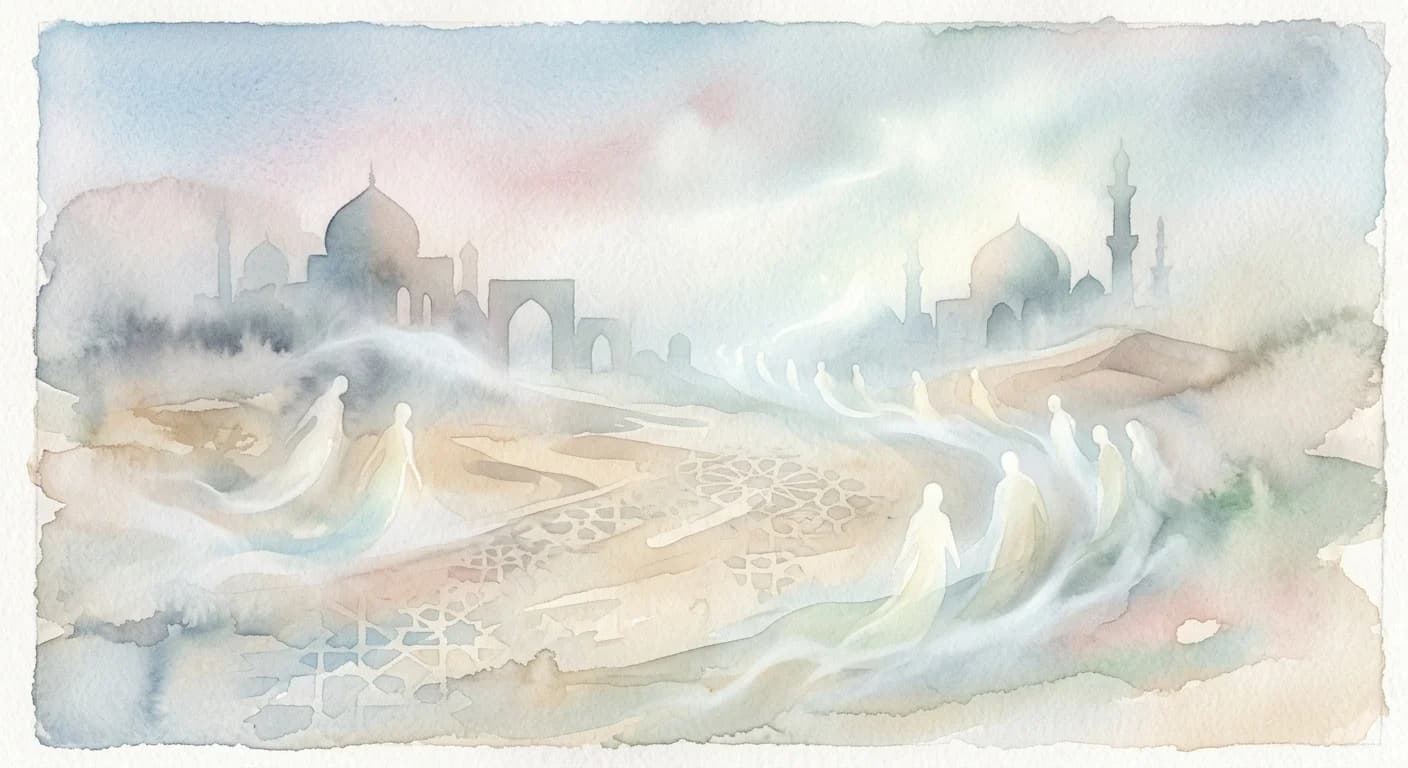
    Artistic representation of Barzakh
    Arabic•
    🇩🇿Algeria🇧🇭Bahrain🇪🇬Egypt🇮🇷Iran🇮🇶Iraq🇯🇴Jordan🇰🇼Kuwait🇱🇧Lebanon🇱🇾Libya🇲🇦Morocco🇴🇲Oman🇵🇸Palestine🇶🇦Qatar🇸🇦Saudi Arabia🇸🇩Sudan🇸🇾Syria🇹🇳Tunisia🇦🇪United Arab Emirates🇾🇪Yemen

    Barzakh

    /BAR-zak/

    Meaning

    Barzakh signifies a profound, intermediate dimension where the soul resides after death, awaiting the Day of Judgment. It's not a final destination but a temporary, ethereal 'barrier' or 'partition' separating the earthly life from the eternal hereafter. In this liminal state, souls experience a foretaste of their ultimate reward or punishment, making it a period of intense spiritual consequence and anticipation, a bridge between two distinct realities.

    Literal Translation

    Barrier, partition, interval

    The Story Behind the Word

    The concept of Barzakh is deeply embedded in Islamic theology and philosophy, originating from Quranic verses and Prophetic traditions. It reflects a worldview that sees life as a journey with distinct stages, emphasizing accountability and the continuity of the soul. For Saudi Arabian culture, intertwined with Islamic principles, Barzakh provides a structured understanding of death, offering solace in the belief that loved ones are not simply 'gone' but are in a specific, known interim state. This concept shapes funeral rites, mourning periods, and ethical considerations, as actions in this life are believed to directly impact one's experience in Barzakh, reinforcing moral living and a constant awareness of the afterlife. It underscores the belief in divine justice and the ultimate reckoning.

    Experience It

    A Scholar's Reflection

    During a eulogy, the Imam spoke of the deceased entering Barzakh, emphasizing that their good deeds would illuminate their temporary abode. He reminded the congregants that this interim period is a time of waiting, where the soul begins to experience the fruits of its earthly labor, good or ill.

    Comforting the Grieving

    When comforting a widow, her aunt whispered, 'He is in Barzakh now, my dear, in God's hands. His patience and piety will be his companions there.' This brought a measure of peace, framing the loss not as an end, but as a transition to a divinely managed phase.

    The Deeper Meaning

    Barzakh reveals a worldview deeply concerned with justice, accountability, and the continuity of existence beyond the physical. It posits that death is not annihilation but a transition, where the soul retains its identity and begins to experience consequences, suggesting a profound belief in an ordered cosmos where every action has an eternal ripple effect. This interim realm underscores the preparatory nature of earthly life for the eternal hereafter.

    Did You Know?

    The word 'Barzakh' appears three times in the Quran, notably in reference to the 'barrier' between fresh and salt water, symbolizing impenetrable divides, including that between life and death.

    How It's Used

    Primarily used in theological and philosophical discussions within Islamic contexts, referring to the spiritual realm between life and the afterlife.

    Emotions
    hope,melancholy,peace,wonder
    Contexts
    farewell,solitude
    🇩🇿Algeria🇧🇭Bahrain🇪🇬Egypt🇮🇷Iran🇮🇶Iraq🇯🇴Jordan🇰🇼Kuwait🇱🇧Lebanon🇱🇾Libya🇲🇦Morocco🇴🇲Oman🇵🇸Palestine🇶🇦Qatar🇸🇦Saudi Arabia🇸🇩Sudan🇸🇾Syria🇹🇳Tunisia🇦🇪United Arab Emirates🇾🇪Yemen

    by Annelise Dubois·Written Mar 14, 2026·Updated Apr 3, 2026

    Related Words

    Explore more
    SaudadePortuguese

    Saudade encapsulates a profound, melancholic longing for something or someone cherished that is absent, often with the bittersweet knowledge that it may never return. It's a deep emotional state tinged with nostalgia, evoking a sense of loss for past experiences, places, or people, yet also holding a tender appreciation for the beauty of what once was. This yearning is not merely sadness, but a complex tapestry of desire, memory, and a poignant acceptance of absence, holding the beloved in a warm, persistent embrace within the heart.

    Dolce far nienteItalian

    Dolce far niente captures the profound joy and effortless pleasure derived from simply existing without obligation or purpose. It's the art of savoring moments of pure, unadulterated idleness – lying in the sun, watching the clouds drift, or enjoying a leisurely coffee – not as a break from work, but as a valuable state in itself. This 'sweetness of doing nothing' is a conscious embrace of stillness and contentment, allowing the soul to breathe and the senses to fully engage with the present.

    TarofPersian

    Tarof is a deeply ingrained Iranian social custom, a delicate dance of politeness and deference where individuals engage in an elaborate exchange of offers and refusals. It's a performative humility, a way of showing respect and avoiding imposing, often involving multiple cycles of insistence and polite decline before a genuine acceptance or refusal is reached. This intricate ritual governs interactions from sharing food to paying bills, creating a nuanced social ballet.

    TarabArabic

    Tarab is far more than mere enjoyment; it's a profound, almost spiritual communion with music, where the performer and audience become one in a shared emotional journey. It signifies a state of ecstatic enchantment, a deep emotional surrender that transcends the self, leading to a transformative experience. This intense connection often manifests as spontaneous vocalizations, tears, or even physical swaying, as the music penetrates the soul and evokes a powerful release of feeling. It's a moment of pure, unadulterated musical rapture.