U.
HomeRegionsLanguagesEmotionsCollections
Find Your Word

“The limits of my language mean the limits of my world.”

— Ludwig Wittgenstein, Philosopher

Untranslatable

A curated collection of the world's most beautiful expressions—words that remind us language is humanity's greatest invention.

  • Home
  • Collections
  • Regions
  • Countries
  • Emotions
  • Tags
  • Contexts
  • Finder
  • Europe
  • Asia
  • Americas
  • Africa
  • Middle East
  • About
  • Contact
  • Privacy Policy
  • Terms of Service

2026 © Untranslatable. All rights reserved.

    /
    /
    1. Home
    2. /
    3. Americas
    4. /
    5. Calima
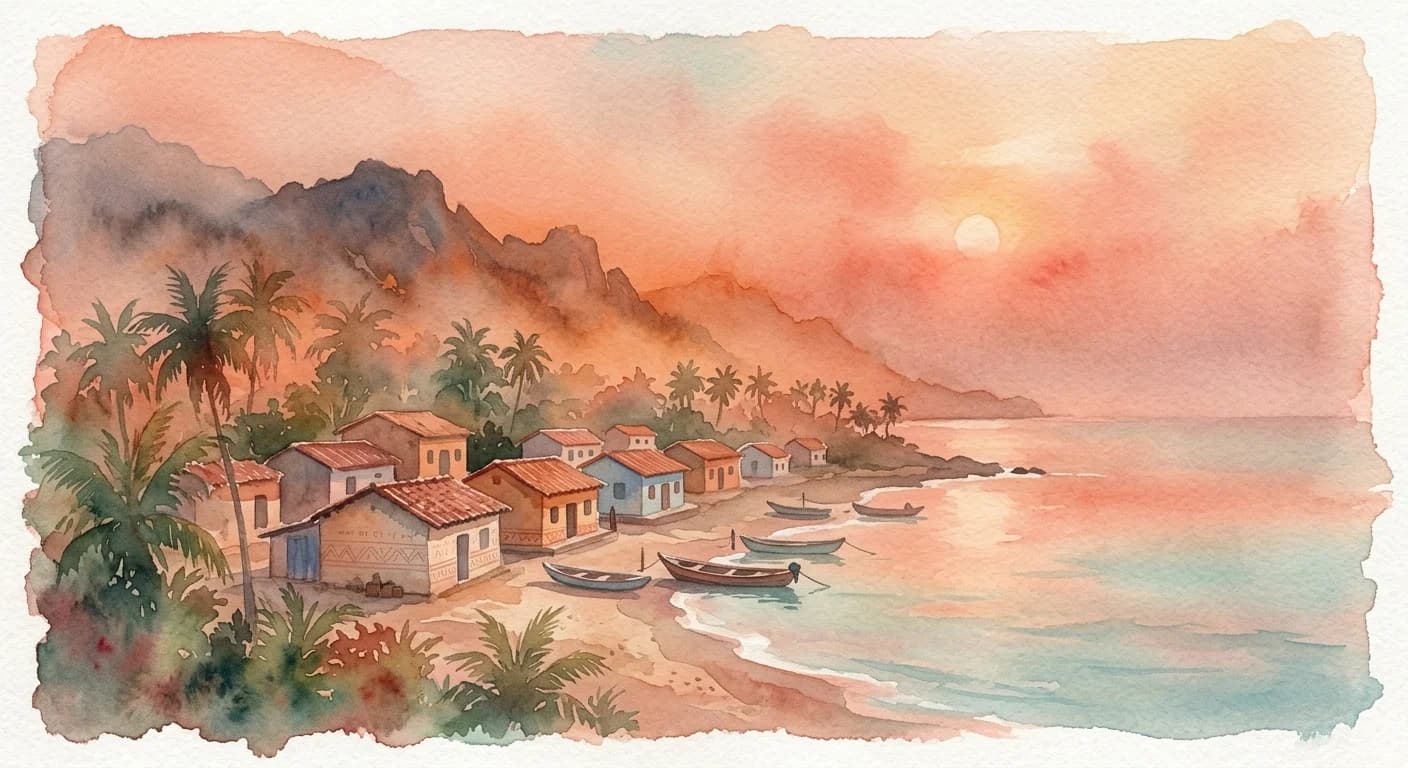
    Artistic representation of Calima
    Spanish•
    🇨🇴Colombia

    Calima

    /kah-LEE-mah/

    Meaning

    “Calima” describes a distinctive atmospheric phenomenon prevalent in the Caribbean region of Colombia, where a dense, often reddish-orange haze envelops the landscape. This isn't merely a weather condition; it's a profound transformation of the environment, caused by dust plumes carried thousands of miles from the Sahara Desert. The calima mutes the vibrant tropical colors into soft, diffused pastels, creating an almost surreal, dreamlike stillness that permeates the air and the collective consciousness, temporarily altering daily rhythms and perceptions.

    Literal Translation

    haze, mist

    The Story Behind the Word

    The existence and specific usage of 'Calima' in Colombia’s Caribbean coast reflect a deep, almost ancestral connection to natural phenomena that profoundly shape daily life. Unlike a simple 'haze,' 'Calima' carries the weight of a transatlantic journey, linking the Caribbean to the distant Sahara. It underscores a worldview where nature's immense, unseen forces are acknowledged and integrated into local identity. The arrival of the calima is not just a meteorological event; it's a recurring character in the regional narrative, influencing everything from fishing patterns and agricultural cycles to the very mood of the people, fostering a sense of shared experience and resilience in the face of environmental shifts. It reveals a culture attuned to subtle changes in its environment, recognizing the interconnectedness of distant lands.

    Experience It

    Morning on the Coast

    Elena stepped onto her balcony, her usual vibrant view of the Caribbean sea now softened by a thick veil. “La calima ha llegado,” she murmured, watching the sun, a pale orange orb, struggle to pierce the airborne dust. The humidity felt heavier, the air thick with the scent of distant earth, signalling a day of introspection rather than bustling activity.

    A Change in Plans

    The fishermen checked their nets, debating the morning's catch. “Con esta calima, la visibilidad es nula,” Ricardo grumbled, shading his eyes. They knew the dense haze meant unpredictable currents and obscured landmarks, making their usual offshore journey too risky. Today, the sea would keep its secrets, and they'd mend nets on shore instead.

    The Deeper Meaning

    The concept of 'Calima' subtly highlights a philosophy of interconnectedness and deep time. It forces an awareness that the local environment is inextricably linked to distant, unseen forces across continents. It reveals a worldview where human experience is shaped by vast, slow-moving natural phenomena, fostering a sense of humility and a recognition of the planet's intricate, global systems that transcend immediate geographical boundaries.

    Did You Know?

    The Saharan dust that creates "Calima" isn't just atmospheric; it's a vital nutrient source, carrying minerals like phosphorus that fertilize the Amazon rainforest, demonstrating an incredible planetary ecological link.

    How It's Used

    Used to describe the specific phenomenon of Saharan dust clouds affecting the Caribbean coast, particularly in Colombia, and the resulting atmospheric conditions and visual effect.

    Emotions
    melancholy,serenity,wonder
    Contexts
    nature,seasons,weather
    🇨🇴Colombia

    by Dr. Kenji Tanaka·Written Mar 14, 2026·Updated Apr 3, 2026

    Related Words

    Explore more
    SaudadePortuguese

    Saudade encapsulates a profound, melancholic longing for something or someone cherished that is absent, often with the bittersweet knowledge that it may never return. It's a deep emotional state tinged with nostalgia, evoking a sense of loss for past experiences, places, or people, yet also holding a tender appreciation for the beauty of what once was. This yearning is not merely sadness, but a complex tapestry of desire, memory, and a poignant acceptance of absence, holding the beloved in a warm, persistent embrace within the heart.

    Pura vidaSpanish

    More than just 'pure life,' "Pura vida" encapsulates a profound philosophy of embracing the present moment with unwavering optimism and gratitude. It's a daily commitment to finding joy in simple pleasures, accepting life's challenges with a positive spirit, and prioritizing well-being over material possessions. This ubiquitous phrase reflects a national identity built on resilience, community, and an deep appreciation for nature's bounty.

    MamihlapinatapaiYaghan

    Mamihlapinatapai encapsulates that profound, unspoken moment when two individuals lock eyes, each silently acknowledging a mutual desire or intention, yet both hesitate to be the first to act upon it. It's a delicate dance of anticipation, a shared gaze brimming with common understanding and a quiet longing for the other to break the ice. This intricate look carries the weight of a shared, uninitiated potential, a silent conversation where both parties are perfectly aware of what could happen, but neither makes the first move.

    TingoPascuense

    Tingo describes the subtle, insidious process of progressively appropriating a neighbor's belongings by habitually requesting to borrow them, only to 'forget' their return. It's not outright theft, but a slow, deliberate erosion of another's possessions, often under the guise of neighborly exchange. This gradual accumulation, piece by piece, ultimately results in a significant transfer of goods without any direct confrontation or formal acknowledgment of the loss. It speaks to a passive-aggressive form of acquisition, where social niceties are weaponized.