U.
HomeRegionsLanguagesEmotionsCollections
Find Your Word

“The limits of my language mean the limits of my world.”

— Ludwig Wittgenstein, Philosopher

Untranslatable

A curated collection of the world's most beautiful expressions—words that remind us language is humanity's greatest invention.

  • Home
  • Collections
  • Regions
  • Countries
  • Emotions
  • Tags
  • Contexts
  • Finder
  • Europe
  • Asia
  • Americas
  • Africa
  • Middle East
  • About
  • Contact
  • Privacy Policy
  • Terms of Service

2026 © Untranslatable. All rights reserved.

    /
    /
    1. Home
    2. /
    3. Asia
    4. /
    5. Chandra
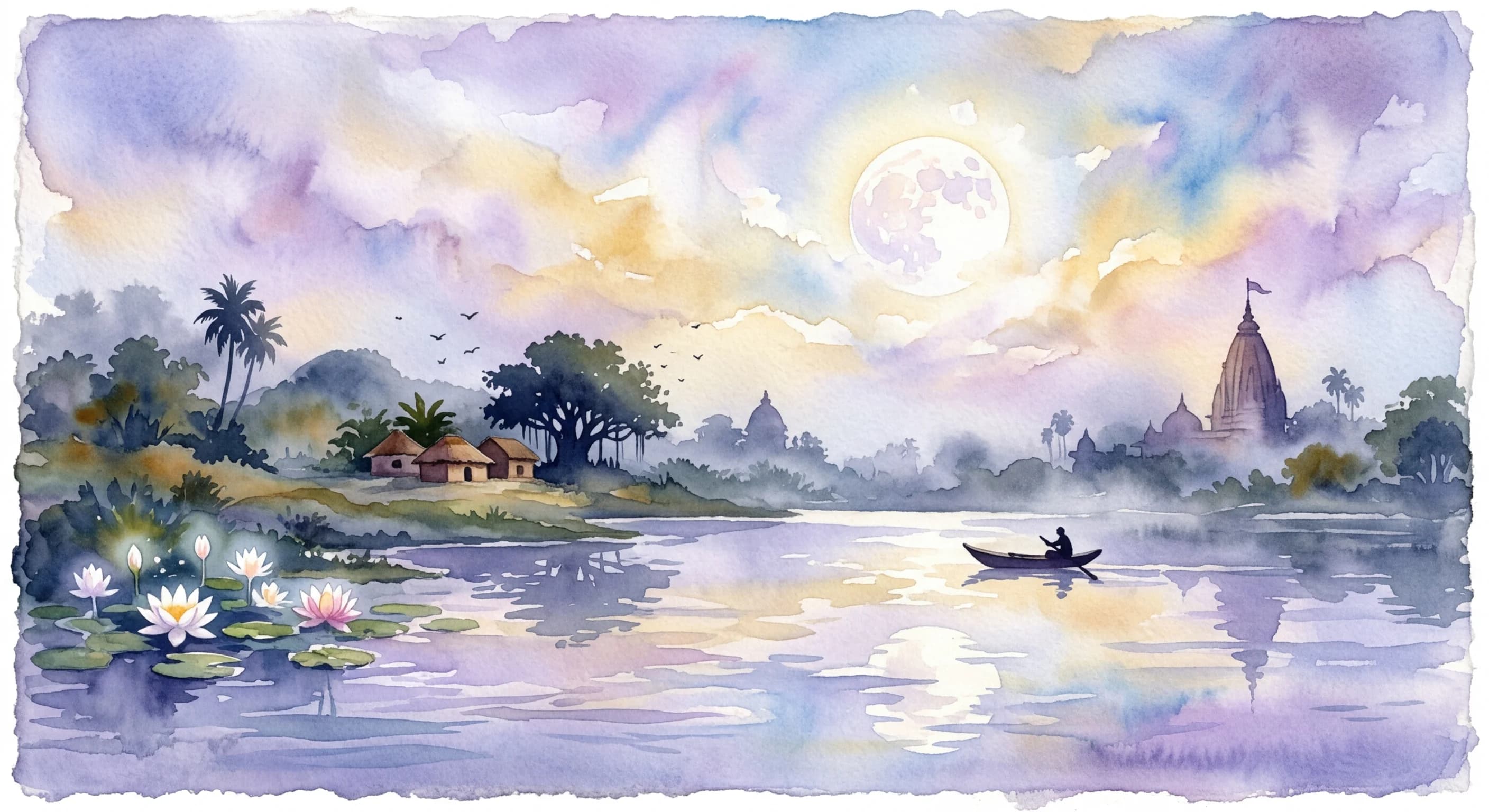
    Artistic representation of chandra
    Sanskrit•
    🇮🇳India🇮🇩Indonesia🇲🇾Malaysia

    Chandra

    /CHAHN-drah/

    Meaning

    In Sanskrit and derived languages, 'Chandra' transcends a mere celestial body; it embodies the serene, luminous essence of the Moon, deeply interwoven with cycles of time, fertility, and divine influence. It conjures images of cool, calming radiance, often linked to romantic love, poetic inspiration, and spiritual tranquility. More than just a 'moon,' Chandra represents a gentle, nurturing presence, a source of light in darkness, deeply revered and celebrated across Indic cultures.

    Literal Translation

    Moon

    The Story Behind the Word

    The reverence for 'Chandra' stems from its profound integration into Hindu mythology, astrology (Jyotish), and ancient philosophical texts. As Soma, the Moon God, Chandra is associated with nourishment, medicinal herbs, and the elixir of immortality, reflecting a worldview where celestial bodies are living deities influencing earthly life. Its cyclical phases symbolize birth, death, and rebirth, mirroring the cosmic dance of creation and dissolution. This word reveals a culture that perceives the natural world, particularly the night sky, as imbued with sacred meaning, where beauty, spirituality, and scientific observation (of cycles) are inextricably linked, shaping everything from calendars to personal names and artistic expression.

    Experience It

    Moonlit Meditation

    Under the soft glow of the full 'Chandra,' an elderly woman sits in her courtyard, eyes closed in meditation. She feels its cool, calming energy washing over her, a connection to ancient rhythms and inner peace, as she recites mantras.

    Poetic Inspiration

    A young poet gazes at the crescent 'Chandra' hanging delicately in the twilight sky. Its gentle luminescence inspires verses of longing and beauty, reflecting the tender melancholy and romantic yearning often associated with the moon in Indian poetry.

    The Deeper Meaning

    The concept of 'Chandra' reveals a worldview where the cosmos is not merely an external phenomenon but an active, conscious entity influencing human experience. It underscores the belief in interconnectedness, where the rhythms of the celestial body are mirrored in human emotions, fertility, and spiritual well-being. This perspective emphasizes harmony with nature and the sacredness inherent in cyclical existence, blurring the lines between the divine and the natural world.

    Did You Know?

    The word 'Chandra' is also the root for 'Chandrayaan,' India's lunar exploration missions, directly translating to 'Moon Vehicle,' showcasing its continued relevance in modern science.

    How It's Used

    'Chandra' is commonly used as a given name for both males and females in India and other parts of South and Southeast Asia. It also appears in compound words and as a direct reference to the moon in literature, poetry, and religious contexts.

    Emotions
    peace,serenity,warmth,wonder
    Contexts
    celebration,nature,romance,seasons
    🇮🇳India🇮🇩Indonesia🇲🇾Malaysia

    by Anya Petrova·Written Mar 10, 2026·Updated Apr 3, 2026

    Related Words

    Explore more
    GezelligDutch

    Gezellig encapsulates a profound sense of warmth, belonging, and convivial comfort, extending beyond mere coziness to embrace the social and emotional atmosphere. It's the feeling of being truly at ease, surrounded by good company, laughter, and a shared sense of contentment. This untranslatable term describes not just a physical space, but a holistic experience where time seems to slow down, fostering genuine connection and a deep sense of well-being.

    Dolce far nienteItalian

    Dolce far niente captures the profound joy and effortless pleasure derived from simply existing without obligation or purpose. It's the art of savoring moments of pure, unadulterated idleness – lying in the sun, watching the clouds drift, or enjoying a leisurely coffee – not as a break from work, but as a valuable state in itself. This 'sweetness of doing nothing' is a conscious embrace of stillness and contentment, allowing the soul to breathe and the senses to fully engage with the present.

    Wabi-sabiJapanese

    Wabi-sabi is the profound appreciation for the ephemeral, the imperfect, and the incomplete aspects of existence. It is about discovering beauty in the subtle textures of age, the unique character of flaws, and the gentle decay that marks the passage of time. This philosophy encourages a quiet acceptance of impermanence and a mindful connection to the natural world, finding elegance in simplicity and authenticity.

    IkigaiJapanese

    Ikigai is more than just a reason to get out of bed; it's a deeply personal and evolving sense of purpose that brings genuine fulfillment and joy to one's life. It represents the sweet spot where your passions, talents, needs of the world, and what you can be paid for beautifully converge. Discovering your ikigai often leads to a life lived with intentionality, resilience, and a profound connection to one's contributions. It's the intrinsic motivation that fuels a meaningful existence, regardless of external circumstances.

    Featured in 1 collection

    🌿Words for Nature Lovers