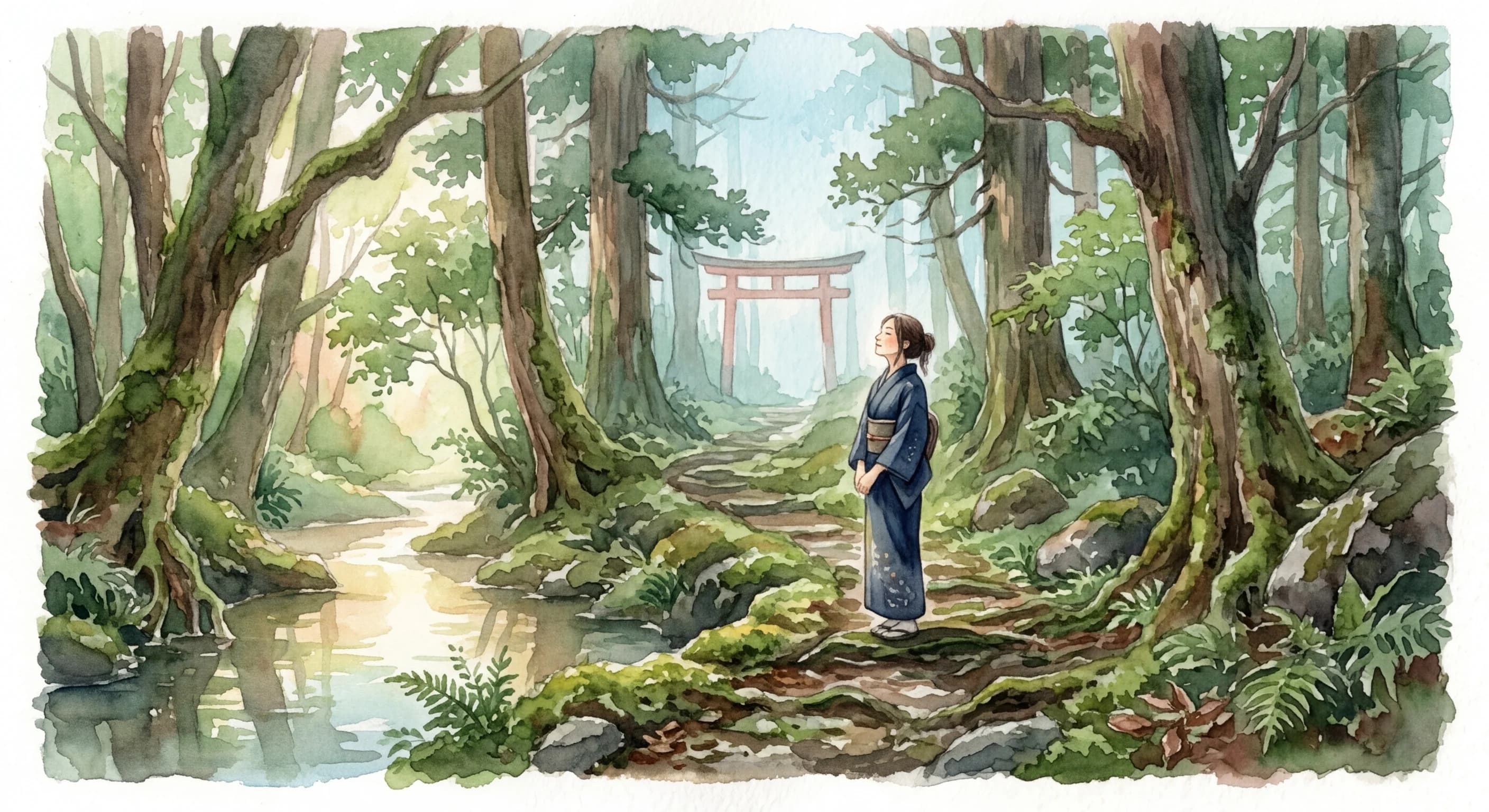
Shinrinyoku
/SHEEN-rin-yoh-koo/
Meaning
Shinrinyoku, or 'forest bathing,' is a mindful immersion in the forest environment, far beyond a simple walk; it's a therapeutic practice engaging all five senses to absorb the forest's atmosphere. It encourages a deliberate slowing down, allowing individuals to consciously breathe in the phytoncides released by trees, feel the texture of moss underfoot, and listen to the symphony of rustling leaves and birdsong. This holistic engagement with nature aims to reduce stress, lower blood pressure, and foster a profound sense of peace and rejuvenation, deeply reconnecting one with the natural world and their inner self.
Literal Translation
Forest bathing
The Story Behind the Word
Shinrinyoku emerged in Japan in the 1980s as a response to increasing urban stress and technological detachment, officially promoted by the Japanese government as a national health program. Its roots, however, draw deeply from Japan's indigenous Shinto beliefs, which hold a reverence for nature and consider mountains, forests, and trees as sacred dwellings of kami (deities or spirits). This spiritual connection imbues Shinrinyoku with more than just physical benefits; it's a way to restore balance, not only within oneself but also in one's relationship with the natural world, reflecting a cultural understanding that humans are an integral part of nature, not separate from it. The practice embodies the Japanese aesthetic principle of 'mono no aware,' an empathetic appreciation for the transient beauty of nature.
Experience It
Urban Escape
After a grueling week of city life, Kenji felt his shoulders tighten with stress. He drove to a nearby national park, leaving his phone in the car. For three hours, he practiced shinrinyoku, focusing on the scent of pine and the dappled sunlight through the canopy, returning home with a calm mind and renewed energy.
Mindful Morning
Sakura started her day with a deliberate shinrinyoku in her local wooded area. She touched the rough bark of ancient cedars, listened intently to the chirping sparrows, and watched a dewdrop fall from a leaf. This mindful connection to nature grounded her, preparing her for the day's challenges with clarity.
The Deeper Meaning
Shinrinyoku embodies the Japanese worldview of 'shizen to no kyōsei' (coexistence with nature), suggesting that human well-being is intrinsically linked to the health and presence of the natural environment. It reflects a profound understanding that nature is not merely a resource to be exploited, but a vital partner in maintaining physical, mental, and spiritual harmony. This practice underscores a rejection of purely anthropocentric views, advocating for a reciprocal relationship with the earth.
Did You Know?
The Japanese government has designated numerous 'Forest Therapy Bases' across the country, complete with trained guides and established therapeutic trails, emphasizing Shinrinyoku's recognized health benefits.
How It's Used
Shinrinyoku is used to describe the specific practice of spending time in a forest for therapeutic and mindful purposes, often as a form of preventative healthcare or stress relief.