Kawaakari
/KAH-wah-ah-KAH-ree/
Meaning
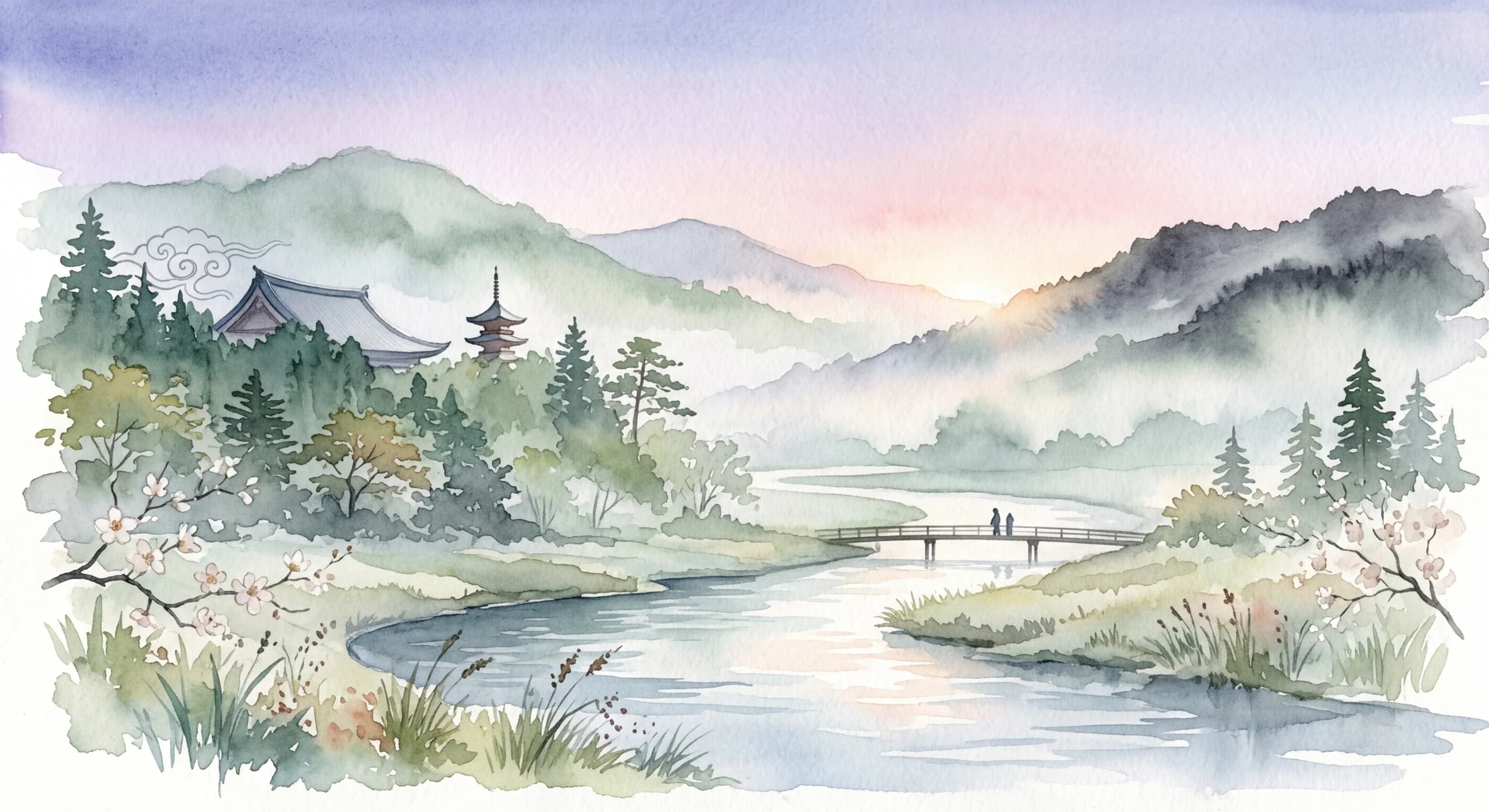
Kawaakari describes the profound, almost subconscious recognition of an approaching river or stream, even when its presence is neither seen nor distinctly heard. It's an exquisite sensory attunement, a gentle shift in the air's humidity, a subtle coolness, or a distinct earthy scent that subtly signals the proximity of flowing water. This term encapsulates a deep, embodied wisdom, a unique atmospheric signature that anticipates the life-giving presence of a natural waterway.
Literal Translation
River-awareness / River-feeling
The Story Behind the Word
Kawaakari emerges from a long history of human-nature interaction in Japan, where rivers were central to life—for agriculture, transportation, and spiritual reverence. In a land prone to natural disasters and intimately connected to its varied landscapes, an acute awareness of environmental cues was not just poetic; it was essential for survival and navigation. This word reflects a pre-modern sensibility, where people lived in constant dialogue with their surroundings, developing a refined sensitivity to the subtle energies and signatures of the natural world. It speaks to a cultural value placed on observation, patience, and a deep, intuitive understanding of one's environment, highlighting a holistic view where humans are not separate from, but deeply embedded within, nature's intricate systems.
Experience It
Forest Path Discovery
Hiking deep in a dense forest, she felt a distinct, refreshing coolness descend, carrying a faint, damp earthiness. Before any sound or sight of it, she knew a substantial river lay just ahead, a kawaakari guiding her path.
Summer Evening Stroll
As dusk settled, a subtle, almost imperceptible shift in the evening air—a gentle humidity and a unique, fresh scent—signaled to the old man that he was nearing the village's main river. It was the kawaakari, a familiar comfort of his childhood.
The Deeper Meaning
Kawaakari embodies a philosophy of embodied cognition and deep ecological connection. It suggests that true understanding of nature comes not just from intellectual knowledge, but from an intuitive, multi-sensory engagement with the environment. It challenges modern disengagement, proposing that our bodies are instruments capable of perceiving nuanced environmental signals, fostering a profound sense of belonging and attunement to the natural world's rhythms and presence.
Did You Know?
The 'akari' (明かり) in Kawaakari often refers to light or brightness, but in this context, it subtly alludes to an 'awareness' or 'feeling' that illuminates the presence of the river, even in darkness or obscurity.
How It's Used
Used to describe the sensory perception of an approaching river or body of water, often before it is visually or audibly detectable.