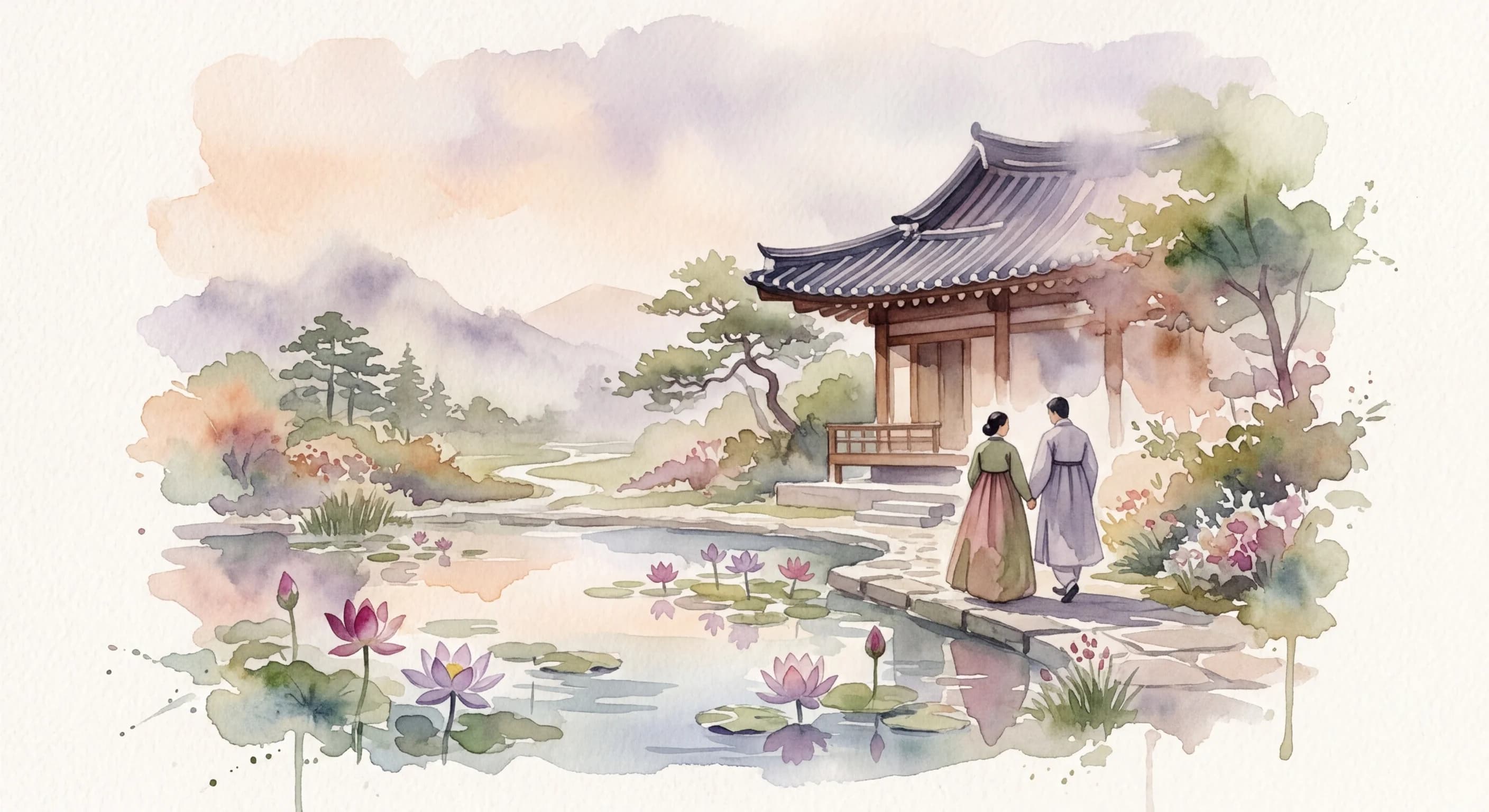
Kkaemajung
/Kkeh-mah-joong/
Meaning
Kkaemajung describes that profound, almost primal sense of absolute comfort and uninhibited ease experienced in the presence of someone with whom you share an intimate, long-standing bond. It's the feeling of being utterly at home, where all pretense dissolves, and you can be your most authentic, perhaps even 'naked' self, without judgment or effort. This state of deep relaxation and familiarity arises from a shared history and unspoken understanding, fostering a unique intimacy that transcends words and requires no maintenance, only presence.
Literal Translation
Often interpreted as 'the peak of being comfortable' or 'the height of familiarity'. The 'kkaema' part relates to being naked or exposed, while 'jung' means center or peak.
The Story Behind the Word
The existence of 'kkaemajung' in Korean culture speaks to a profound valuing of genuine intimacy and the sanctuary found within close relationships, particularly familial and romantic ones. In a society that often emphasizes social harmony, hierarchy, and public presentation (체면 - chaemyon, or 'face'), 'kkaemajung' represents a cherished counterpoint – a private space where one can completely let down their guard. It reflects a cultural understanding that true connection is not about performance, but about an effortless, comfortable coexistence. This word encapsulates the ideal of a relationship so deeply rooted that it provides a refuge from the complexities and demands of the external world, highlighting the importance of emotional safety and unburdened connection as a cornerstone of well-being.
Experience It
Evening Comfort
After a long day, Sarah and Minjun sit on their couch, not speaking, simply existing in comfortable silence. Minjun leans his head on Sarah's shoulder, feeling the 'kkaemajung' of their shared space, knowing he doesn't need to entertain or impress, just be.
Family Hearth
Visiting her parents, Hyejin sheds her professional demeanor, slipping into worn pajamas. Watching her mother knit and her father read, she feels the warm 'kkaemajung' of being back in her childhood home, completely herself among those who know her best.
The Deeper Meaning
This word reveals a philosophy that champions authenticity and vulnerability as the highest forms of intimacy. It suggests that true connection isn't built on grand gestures but on the quiet, sustained comfort of being completely understood and accepted without effort. It underscores the idea that profound peace is found not in solitude, but in shared, unburdened presence within a trusted relationship, a sanctuary from the world's demands.
Did You Know?
The 'kkaema' in 'kkaemajung' literally means 'naked' or 'exposed,' underscoring the raw, unadorned authenticity central to this feeling – not physically naked, but emotionally bare.
How It's Used
Used to describe a feeling of deep comfort and familiarity, often within a romantic relationship or close family bond, where one can be completely relaxed and uninhibited.