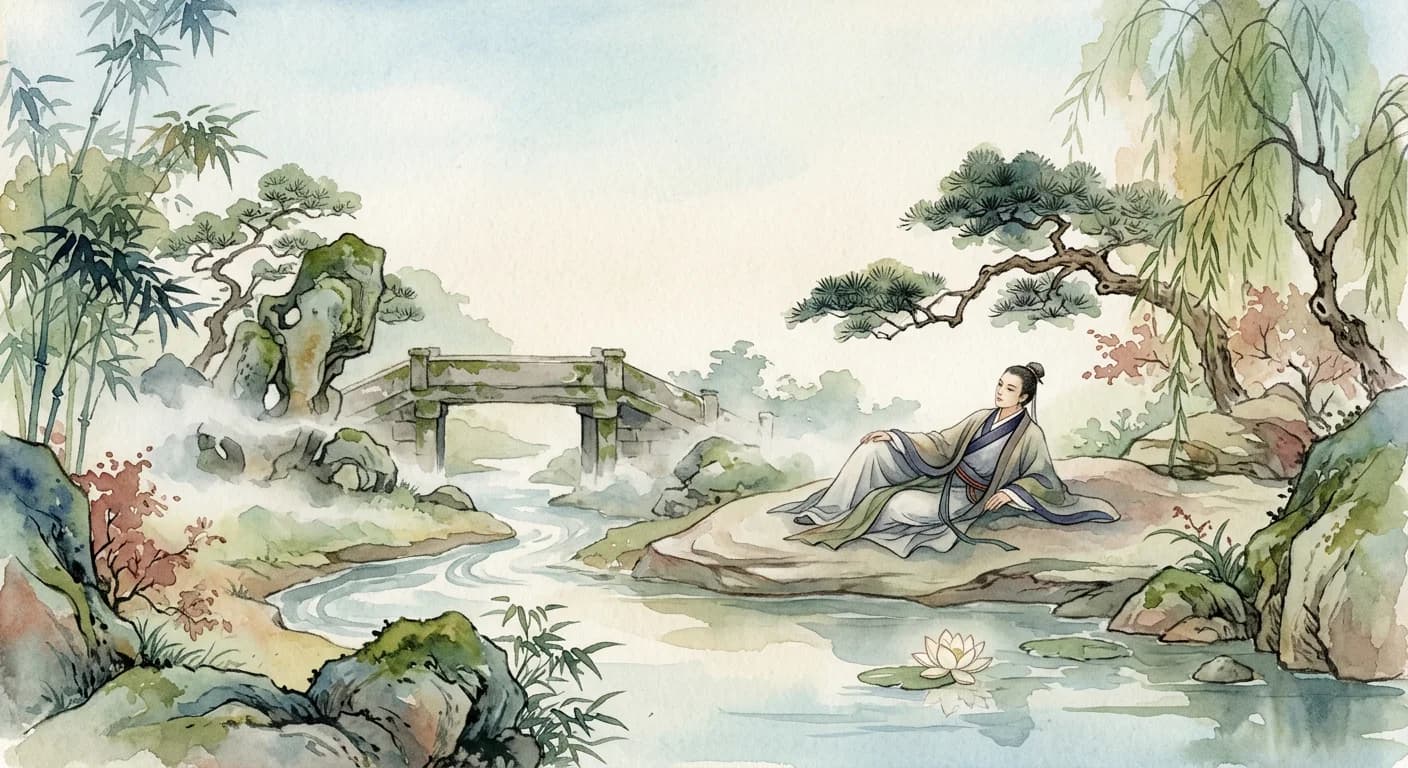
Tǎngpíng
/TANG-ping/
Meaning
Tǎngpíng, literally 'lying flat,' embodies a profound societal quietude in contemporary China, signifying a conscious withdrawal from the relentless, often soul-crushing, demands of hyper-competition. It's a deliberate act of rejecting the societal blueprint of constant striving, endless work hours, and material accumulation, opting instead for a simpler, less stressful existence. This phenomenon represents a reclamation of personal agency, prioritizing mental peace and well-being over the exhausting pursuit of externally defined success, thus becoming a subtle yet potent form of resistance against systemic pressures.
Literal Translation
lie flat
The Story Behind the Word
The emergence of 'tǎngpíng' is deeply rooted in China's rapid economic development and its accompanying social pressures. For decades, the narrative of 'hard work leads to success' fueled an intense competitive environment, from education (gaokao) to career (996 work culture). 'Tǎngpíng' arises as a counter-narrative, a collective sigh of exhaustion from a generation facing soaring housing prices, stagnant wages, and immense performance expectations. It reflects a growing disillusionment with the 'Chinese Dream' as previously defined, revealing a shift towards valuing personal well-being and a critique of a meritocracy perceived as increasingly rigged or unfulfilling. This word signifies a fundamental questioning of the societal contract and the perceived cost of 'progress.'
Experience It
Rejecting Overtime Culture
After another 12-hour day, twenty-something Wei decided he'd had enough. When his manager asked him to stay late for an 'urgent project,' Wei politely declined, saying, 'I'm tǎngpíng tonight.' He went home, cooked a simple meal, and read a book, consciously choosing rest over endless striving.
Scaling Back Ambitions
Li Ming once dreamed of becoming a famous entrepreneur, but the relentless pressure and cutthroat competition wore him down. He decided to embrace tǎngpíng, taking a less demanding job that paid enough for his basic needs, and spending his free time pursuing hobbies he genuinely enjoyed, finding peace in his scaled-back ambitions.
The Deeper Meaning
Tǎngpíng illuminates a profound re-evaluation of 'success' and 'meaning' in a hyper-capitalist context. It challenges the inherent value placed on ceaseless production and consumption, suggesting that true well-being might lie in moderation, contentment, and the rejection of an externally imposed definition of a 'good life.' It subtly echoes ancient Taoist principles of non-action (wu wei) and aligning with natural flow, albeit in a distinctly modern, socio-economic context.
Did You Know?
The 'tǎngpíng' phenomenon gained so much traction that it was officially criticized by state media, highlighting the government's concern over its potential impact on productivity and societal ambition.
How It's Used
The term is used to describe a personal attitude or lifestyle choice, often discussed online in the context of social and economic pressures.