U.
HomeRegionsLanguagesEmotionsCollections
Find Your Word

“The limits of my language mean the limits of my world.”

— Ludwig Wittgenstein, Philosopher

Untranslatable

A curated collection of the world's most beautiful expressions—words that remind us language is humanity's greatest invention.

  • Home
  • Collections
  • Regions
  • Countries
  • Emotions
  • Tags
  • Contexts
  • Finder
  • Europe
  • Asia
  • Americas
  • Africa
  • Middle East
  • About
  • Contact
  • Privacy Policy
  • Terms of Service

2026 © Untranslatable. All rights reserved.

    /
    /
    1. Home
    2. /
    3. Asia
    4. /
    5. 塞翁失马 (sàiwēngshīmǎ)
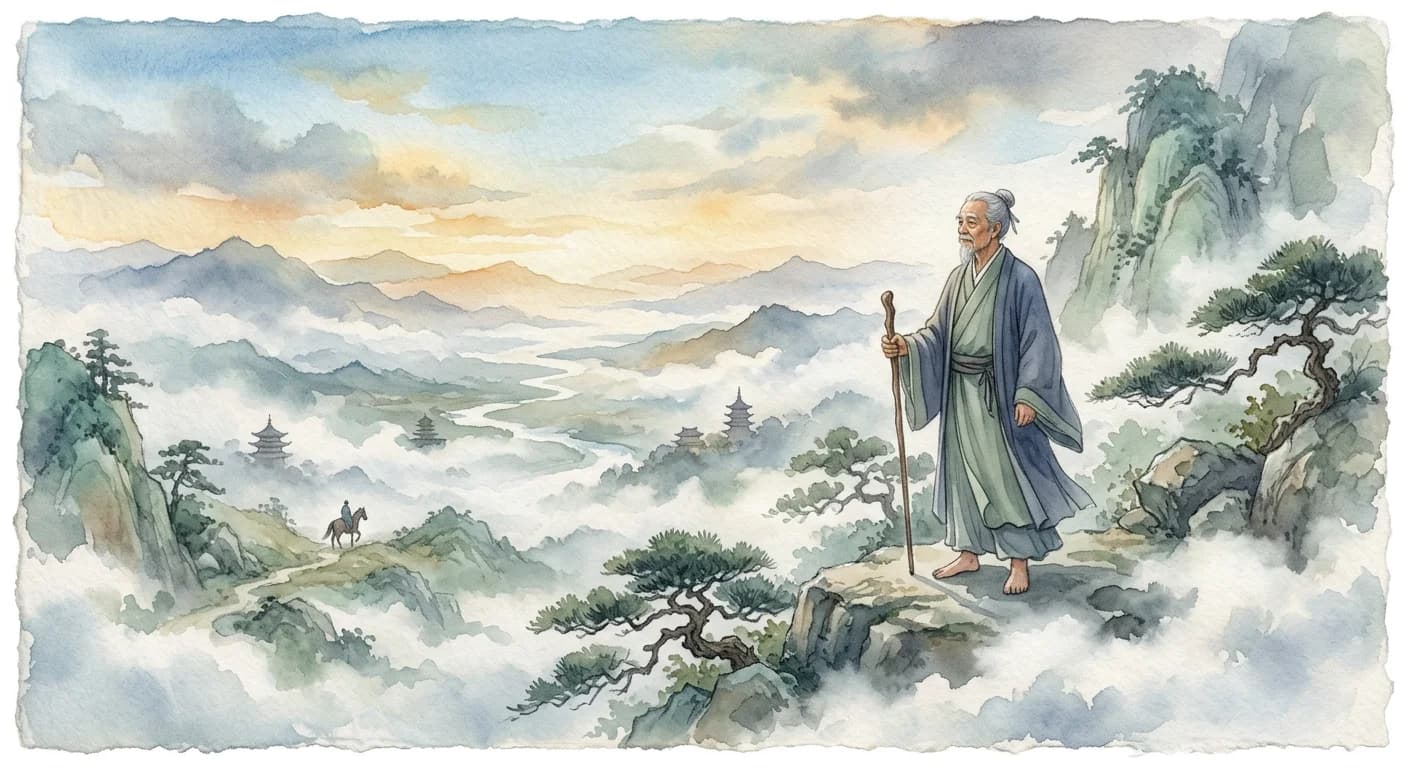
    Artistic representation of 塞翁失马 (sàiwēngshīmǎ)
    Mandarin Chinese•
    🇨🇳China

    塞翁失马 (sàiwēngshīmǎ)

    /sai-weng-shi-ma/

    Meaning

    This ancient Chinese idiom, '塞翁失马' (sàiwēngshīmǎ), vividly illustrates the profound truth that life's events are rarely as straightforward as they appear. An apparent misfortune can unexpectedly blossom into a blessing, just as a moment of triumph might harbor unforeseen challenges. It's a call to embrace equanimity, reminding us that immediate judgments are often premature and that true wisdom lies in patiently observing the unfolding tapestry of fate, recognizing the intricate dance between good and bad.

    Literal Translation

    Old man at the border lost horse

    The Story Behind the Word

    Originating from the ancient text 'Huainanzi' (淮南子) during the Western Han Dynasty, this story reflects a core tenet of Daoist philosophy: the interconnectedness and cyclical nature of all things, where yin and yang are in constant flux. It embodies the Chinese cultural emphasis on resilience, patience, and a long-term perspective, rather than impulsive reactions to transient events. The idiom suggests that human perception of 'good' and 'bad' is often limited and subjective, encouraging a detached, accepting attitude towards destiny, and revealing a worldview where harmony with the natural order (Dao) is paramount. It underscores the belief that even adversity can be a disguised opportunity for growth and transformation.

    Experience It

    Lost Job, New Calling

    Sarah was devastated when she was unexpectedly laid off from her corporate job. For weeks, she felt like a failure. However, this forced her to re-evaluate her passions, leading her to start her own successful pottery studio, a path she would never have considered otherwise. Her friends often remark, '塞翁失马', seeing how her misfortune led to her true calling.

    Missed Flight, Safe Journey

    Li Wei was furious when he missed his early morning flight due to an unexpected traffic jam. He fumed at the airport, convinced his entire trip was ruined. Later that day, he learned that his original flight had experienced a severe mechanical issue and was delayed for hours, narrowly avoiding a potential crisis. He then realized the 'misfortune' had actually protected him, a true '塞翁失马' moment.

    The Deeper Meaning

    This idiom distills a fundamental Daoist understanding of change and balance. It teaches that dualities like good and bad are not absolute but relative and transient, always transforming into their opposites. It advocates for non-attachment to outcomes and cultivating a calm, adaptive mindset, recognizing that life's unpredictable flow often contains hidden wisdom and opportunities for those who can see beyond immediate appearances.

    Did You Know?

    The full story often includes the lost horse returning with a wild mare, the son breaking his leg riding the mare (a misfortune), but then being exempt from military conscription due to the injury (a blessing).

    How It's Used

    Used to advise someone against overreacting to a perceived bad event or a good event, reminding them that the situation may change and what appears negative might turn out to be positive, and vice versa.

    Emotions
    acceptance,hope,peace
    Context
    daily life
    🇨🇳China

    by Dr. Kenji Tanaka·Written Mar 10, 2026·Updated Apr 3, 2026

    Related Words

    Explore more
    Dolce far nienteItalian

    Dolce far niente captures the profound joy and effortless pleasure derived from simply existing without obligation or purpose. It's the art of savoring moments of pure, unadulterated idleness – lying in the sun, watching the clouds drift, or enjoying a leisurely coffee – not as a break from work, but as a valuable state in itself. This 'sweetness of doing nothing' is a conscious embrace of stillness and contentment, allowing the soul to breathe and the senses to fully engage with the present.

    Wabi-sabiJapanese

    Wabi-sabi is the profound appreciation for the ephemeral, the imperfect, and the incomplete aspects of existence. It is about discovering beauty in the subtle textures of age, the unique character of flaws, and the gentle decay that marks the passage of time. This philosophy encourages a quiet acceptance of impermanence and a mindful connection to the natural world, finding elegance in simplicity and authenticity.

    IkigaiJapanese

    Ikigai is more than just a reason to get out of bed; it's a deeply personal and evolving sense of purpose that brings genuine fulfillment and joy to one's life. It represents the sweet spot where your passions, talents, needs of the world, and what you can be paid for beautifully converge. Discovering your ikigai often leads to a life lived with intentionality, resilience, and a profound connection to one's contributions. It's the intrinsic motivation that fuels a meaningful existence, regardless of external circumstances.

    NunchiKorean

    Nunchi is the sophisticated, almost telepathic, ability to instantly grasp the unspoken dynamics of any social situation, anticipating others' thoughts and feelings, and then responding with impeccable grace and timing. It's an acute form of social intuition, allowing one to navigate complex interpersonal landscapes by reading subtle cues like body language, tone, and context. Possessing good nunchi means effortlessly understanding the underlying emotional currents and adjusting one's behavior to maintain harmony and effectiveness, often without a single word exchanged.