U.
HomeRegionsLanguagesEmotionsCollections
Find Your Word

“The limits of my language mean the limits of my world.”

— Ludwig Wittgenstein, Philosopher

Untranslatable

A curated collection of the world's most beautiful expressions—words that remind us language is humanity's greatest invention.

  • Home
  • Collections
  • Regions
  • Countries
  • Emotions
  • Tags
  • Contexts
  • Finder
  • Europe
  • Asia
  • Americas
  • Africa
  • Middle East
  • About
  • Contact
  • Privacy Policy
  • Terms of Service

2026 © Untranslatable. All rights reserved.

    /
    /
    1. Home
    2. /
    3. Asia
    4. /
    5. Siu yeh
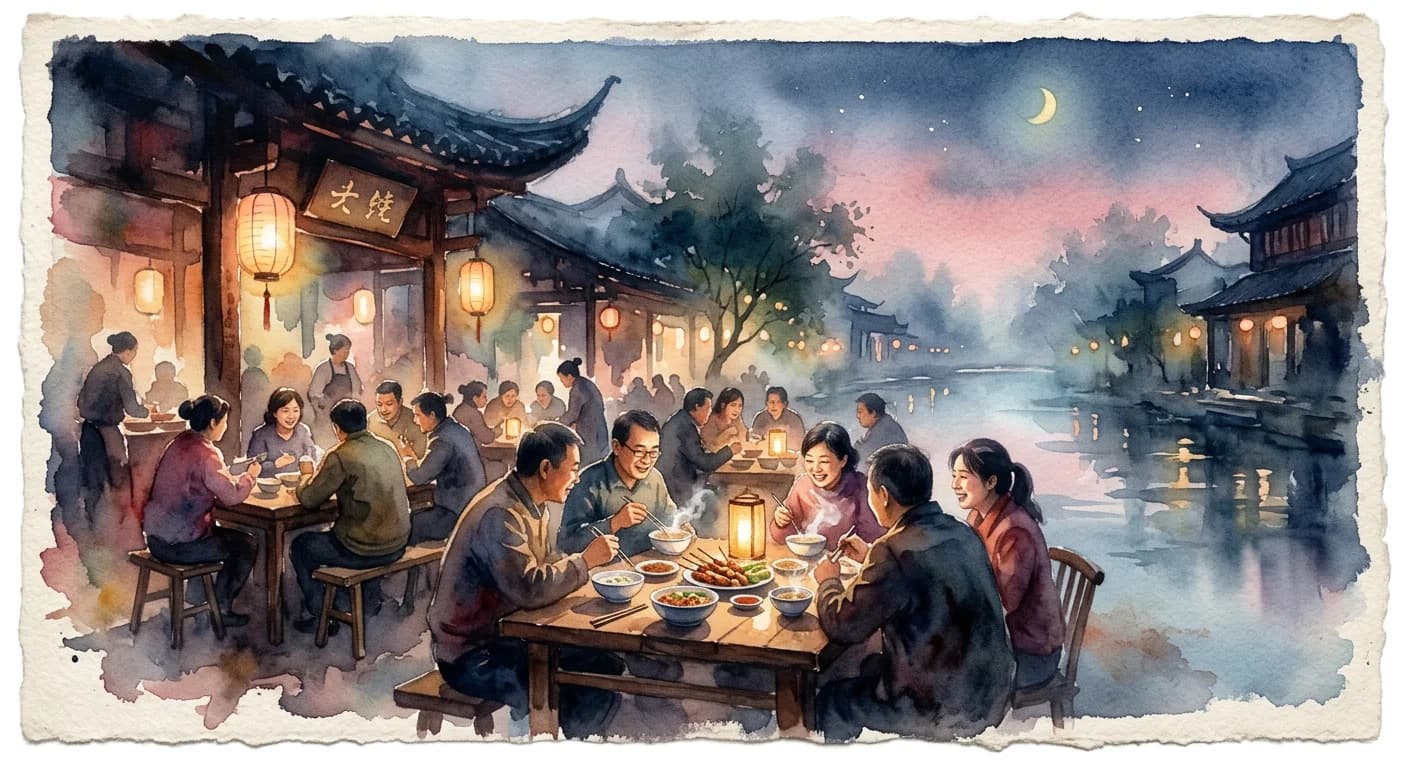
    Artistic representation of Siu yeh
    Cantonese Chinese•
    🇨🇳China

    Siu yeh

    /SYOO YEH/

    Meaning

    Siu yeh is the cherished Cantonese tradition of indulging in a late-night supper, transcending mere sustenance to become a vibrant social ritual. It's an invitation to unwind after the day’s demands, gathering with friends or family over steaming bowls of congee, savory noodles, or dim sum. This convivial act fosters deep connection and shared relaxation, offering a comforting pause from the urban rush and reinforcing bonds through food and conversation in the quiet hours.

    Literal Translation

    late night (siu yeh)

    The Story Behind the Word

    The practice of siu yeh is deeply woven into the fabric of Cantonese society, reflecting a culture that values both hard work and communal leisure. Historically, Hong Kong and Guangzhou were bustling port cities with long working hours, making late-night sustenance a necessity for many. This utilitarian need evolved into a cherished social custom, a time when the day's stresses are shed, and relationships are nurtured. It speaks to a philosophy where food is not just fuel, but a central pillar of social interaction and an expression of care. The availability of diverse, delicious, and often affordable food late into the night, coupled with a dense urban environment conducive to impromptu gatherings, solidified siu yeh's place as a cultural cornerstone, embodying a collective desire for comfort and connection.

    Experience It

    Post-Work Wind-Down

    After a grueling shift, Mei and her colleagues head to their favorite dai pai dong. They order an array of stir-fried dishes and cold beers, the clatter of chopsticks and lively chatter melting away the day's stress, transforming exhaustion into shared camaraderie through siu yeh.

    Family Reunion Comfort

    Visiting from overseas, Uncle Chan insists on a siu yeh outing with his nieces and nephews. Over bowls of piping hot wonton noodles, they catch up, laugh, and reminisce, the late hour and familiar flavors strengthening their family ties in a uniquely comforting way.

    The Deeper Meaning

    Siu yeh embodies the Cantonese philosophy of 'slow living' within a fast-paced world. It's a deliberate act of carving out time for human connection and simple pleasures, recognizing that even amidst relentless urban rhythms, mental and emotional well-being are paramount. It underscores the belief that life's richness is found not just in productivity, but in shared moments of unhurried enjoyment and sustenance.

    Did You Know?

    Siu yeh spots often specialize in specific late-night comfort foods like congee, street-style noodles, or even BBQ skewers, creating a distinct gastronomic subculture within Cantonese cuisine.

    How It's Used

    Typically used to describe going out for or having a late-night meal with friends or family, often after social activities or work.

    Emotions
    belonging,comfort,joy,serenity
    Contexts
    dining,family,friendship,relaxation
    🇨🇳China

    by Dr. Kenji Tanaka·Written Mar 10, 2026·Updated Apr 3, 2026

    Related Words

    Explore more
    SobremesaSpanish

    Sobremesa is the cherished, often extended period immediately following a meal, particularly lunch or dinner, where diners remain seated at the table to enjoy conversation, coffee, and digest not just the food, but the company itself. It’s a dedicated time for unhurried social bonding, storytelling, and shared laughter, transforming a simple meal into a profound communal experience. Far from just clearing the dishes, sobremesa is an integral part of Spanish social life, often lasting for hours.

    Wabi-sabiJapanese

    Wabi-sabi is the profound appreciation for the ephemeral, the imperfect, and the incomplete aspects of existence. It is about discovering beauty in the subtle textures of age, the unique character of flaws, and the gentle decay that marks the passage of time. This philosophy encourages a quiet acceptance of impermanence and a mindful connection to the natural world, finding elegance in simplicity and authenticity.

    IkigaiJapanese

    Ikigai is more than just a reason to get out of bed; it's a deeply personal and evolving sense of purpose that brings genuine fulfillment and joy to one's life. It represents the sweet spot where your passions, talents, needs of the world, and what you can be paid for beautifully converge. Discovering your ikigai often leads to a life lived with intentionality, resilience, and a profound connection to one's contributions. It's the intrinsic motivation that fuels a meaningful existence, regardless of external circumstances.

    NunchiKorean

    Nunchi is the sophisticated, almost telepathic, ability to instantly grasp the unspoken dynamics of any social situation, anticipating others' thoughts and feelings, and then responding with impeccable grace and timing. It's an acute form of social intuition, allowing one to navigate complex interpersonal landscapes by reading subtle cues like body language, tone, and context. Possessing good nunchi means effortlessly understanding the underlying emotional currents and adjusting one's behavior to maintain harmony and effectiveness, often without a single word exchanged.