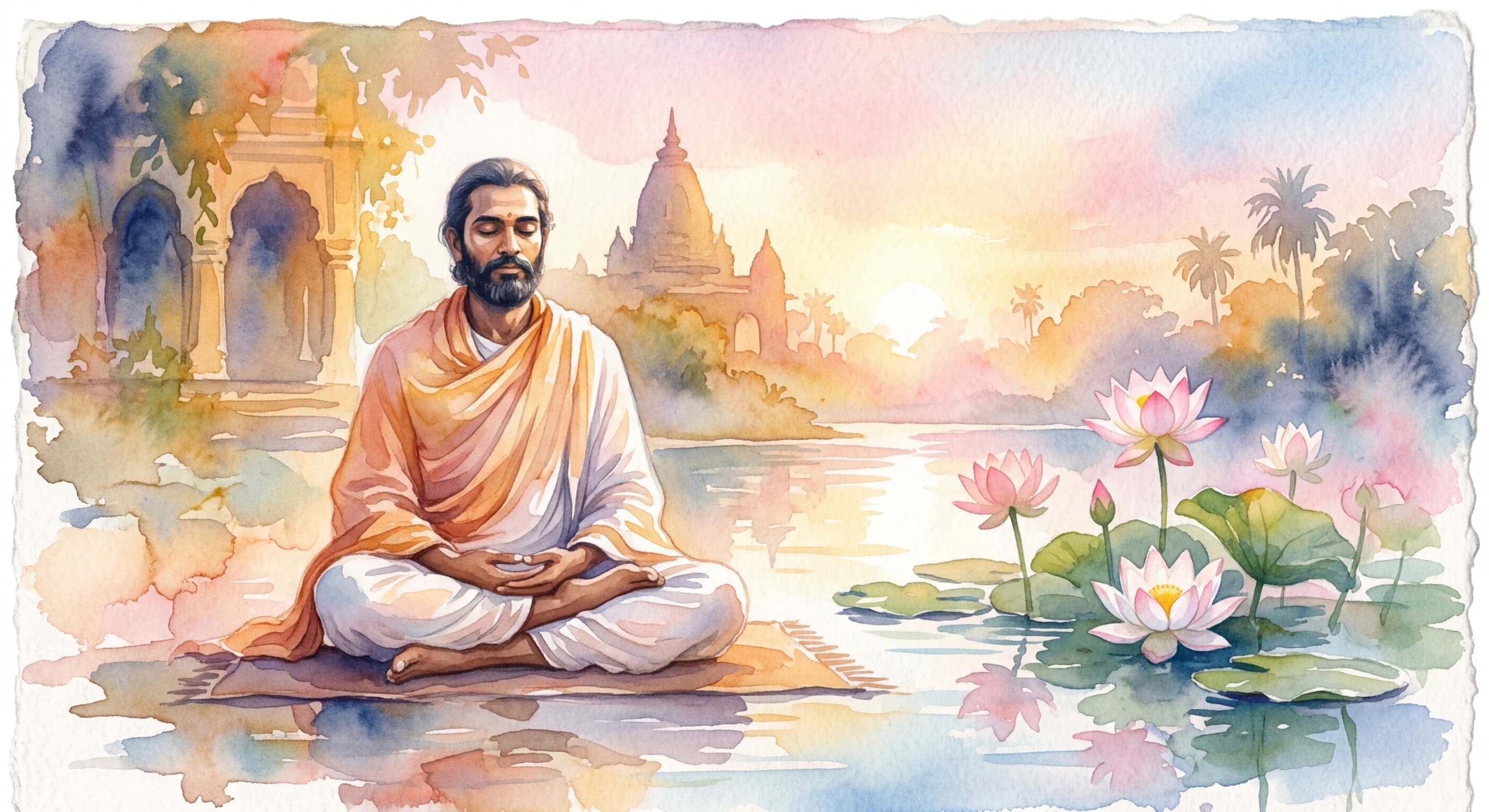
Brahmacharya
/BRAHM-uh-chur-yuh/
Meaning
Brahmacharya transcends mere celibacy, representing a profound commitment to spiritual evolution through comprehensive self-control. It is a disciplined way of life where one consciously directs all energies – physical, mental, and sensory – towards higher spiritual goals, rather than allowing them to be dissipated by worldly desires. This conscious redirection fosters inner purity, mental clarity, and unwavering focus, considered essential for unlocking one's true potential and achieving ultimate liberation. It's about mastering the self to become one with the divine.
Literal Translation
conduct befitting Brahman/the divine
The Story Behind the Word
The concept of Brahmacharya is deeply embedded in the ancient Vedic traditions of India, forming one of the four ashramas (stages of life) – the student stage – where celibacy and diligent study were paramount. Its existence reveals a worldview that places spiritual advancement and self-realization at the apex of human endeavor, often prioritizing inner purity and discipline over material or sensory indulgence. This word reflects a civilization that has historically valued asceticism, philosophical inquiry, and the pursuit of dharma (righteous conduct) as core tenets of a meaningful life. It underscores the belief that true freedom and wisdom are attained through mastery of the self, not through external possessions or fleeting pleasures. It's a foundational pillar in yoga, Ayurveda, and various spiritual practices, guiding individuals towards a life of purpose and profound inner peace.
Experience It
The Aspiring Yogi
Rohan, an aspiring yogi, practices Brahmacharya not just by abstaining from sexual relationships, but by consciously choosing wholesome food, limiting screen time, and dedicating his mornings to meditation and study. He channels his youthful energy into selfless service and intellectual pursuits, seeking inner clarity for his spiritual journey.
The Dedicated Scholar
A young student in a traditional gurukul lives a life of Brahmacharya, focusing entirely on his studies and spiritual lessons. He avoids distractions, maintains a simple diet, and practices humility, understanding that this disciplined phase is crucial for building a strong foundation for future wisdom and ethical living.
The Deeper Meaning
Brahmacharya reflects a profound philosophical insight into the nature of human energy and consciousness. It posits that energy, often expended through sensory gratification, can be conserved and transmuted into spiritual power (ojas). This redirection of vital force is believed to elevate one's awareness, sharpen intellect, and accelerate the journey towards moksha (liberation), revealing a worldview where self-mastery is the key to ultimate freedom and union with the divine.
Did You Know?
While often associated with celibacy, Mahatma Gandhi famously interpreted Brahmacharya as complete control over all senses, even extending to the palate and thoughts, viewing it as essential for true non-violence (Ahimsa).
How It's Used
Used in spiritual and philosophical contexts, particularly within yogic and ascetic traditions, to describe a lifestyle of disciplined conduct and sensory control aimed at spiritual advancement.