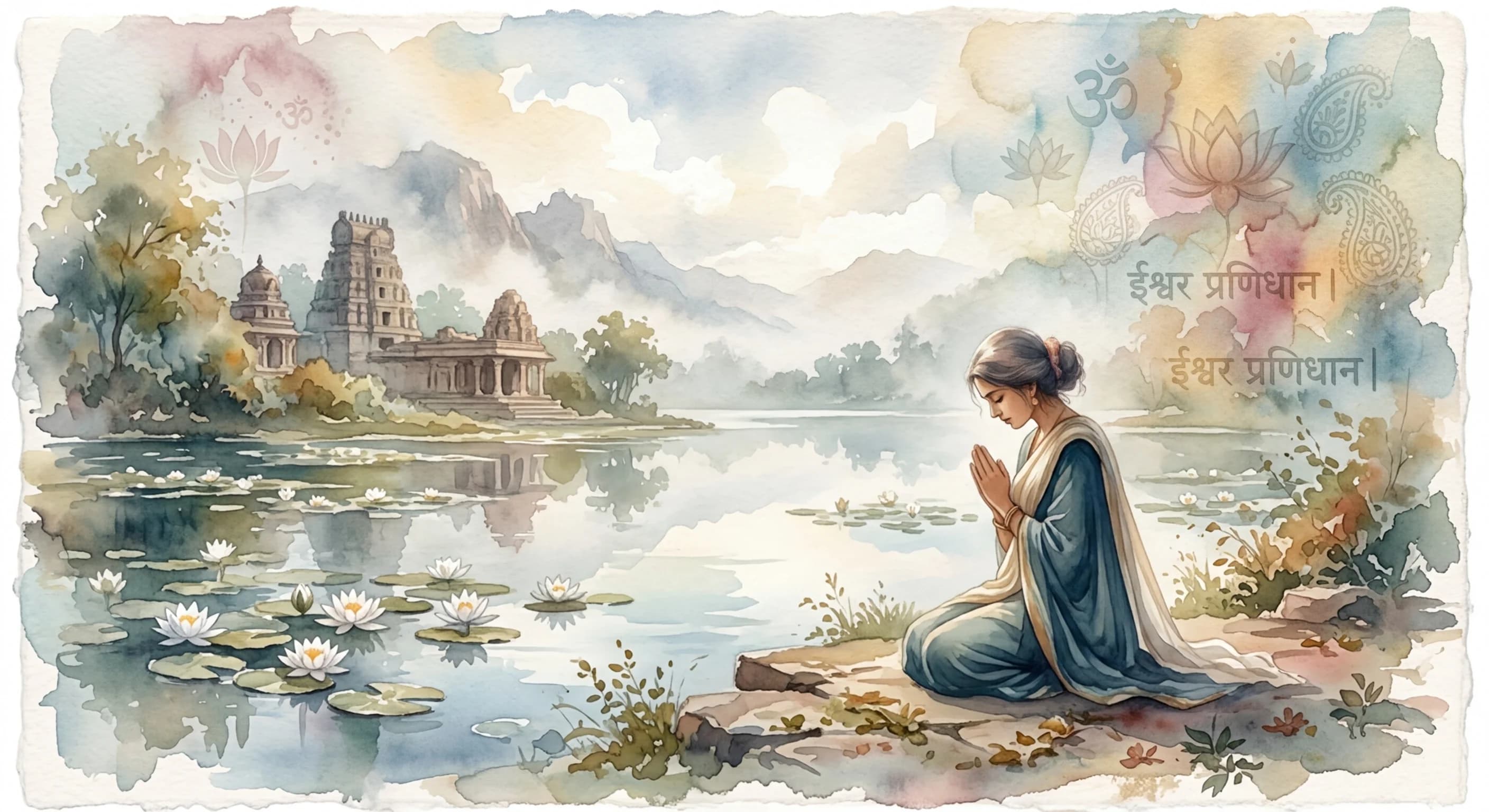
Ishvara Pranidhana
/ISH-vah-rah prah-nih-DAH-nah/
Meaning
Ishvara Pranidhana is a profound spiritual practice within Yoga, signifying a complete and active surrender of one's ego, actions, and the results of those actions to a higher, universal consciousness or the Divine. It's not passive resignation, but a conscious, heartfelt offering, cultivating humility and profound trust in the cosmic order. This deep devotion fosters liberation from personal attachments and the endless cycle of desires, guiding the practitioner towards inner peace and ultimate freedom.
Literal Translation
Ishvara (Lord/Supreme Being) + Pranidhana (dedication/surrender/abandonment)
The Story Behind the Word
Ishvara Pranidhana is deeply embedded in the spiritual fabric of India, particularly within the Yoga Darshana (school of philosophy) as articulated by Patanjali in the Yoga Sutras. It's one of the Niyamas, the observances that guide an individual's spiritual conduct. The concept reflects a worldview where the individual self (Jiva) is part of, or can merge with, a greater consciousness (Brahman or Ishvara). This practice acknowledges the limitations of individual will and intellect, encouraging a shift from self-centered striving to a divine-centric existence. It reveals a culture that values spiritual enlightenment, self-transcendence, and the recognition of an underlying unity in the universe, emphasizing devotion as a powerful path to moksha (liberation).
Experience It
Facing an Obstacle
A yogi, striving for years to master a difficult asana, repeatedly fails. Instead of succumbing to frustration, she dedicates her practice and its outcome to Ishvara, releasing her attachment to success. She continues her effort with renewed focus, not for personal achievement, but as an offering, finding peace in the process itself.
Navigating Daily Life
A householder faces unexpected financial difficulties. Rather than falling into despair, he performs his duties diligently, offering the fruits of his labor and his worries to a higher power. He trusts that the universe will provide, finding inner calm amidst the external turmoil, allowing him to act without anxiety.
The Deeper Meaning
This word reveals a philosophy where individual ego and its desires are seen as primary sources of suffering. By surrendering to a higher principle, one transcends the limitations of the individual self, moving towards a state of non-attachment and egolessness. It posits that true freedom comes not from controlling the world, but from aligning oneself with a greater, universal order, fostering profound humility and interconnectedness.
Did You Know?
While often associated with a personal God, Ishvara in Ishvara Pranidhana can also represent the ideal, pure consciousness or the cosmic law, making it accessible even to those without a traditional deity.
How It's Used
This term is primarily used within the context of Yoga and Hindu philosophy, particularly in discussions of the eight limbs of Yoga (Ashtanga Yoga) as outlined in Patanjali's Yoga Sutras. It's often contemplated during meditation or as a guiding principle for ethical conduct and spiritual practice.