Chitta
/CHIT-tah/
Meaning
In Sanskrit philosophy, 'chitta' is the dynamic mental field, a vibrant canvas where thoughts, emotions, memories, and aspirations constantly arise and interact. It's the aggregate of our entire inner experience, far beyond mere intellect, encompassing imagination, volition, and the subtle impressions (samskaras) that shape our being. This intricate mental landscape is seen as the seat of both our suffering and our potential for liberation, a crucible for spiritual transformation. Understanding and purifying the 'chitta' is therefore paramount for inner peace and self-realization.
Literal Translation
mind, consciousness, thought
The Story Behind the Word
The concept of 'chitta' is foundational to a vast array of Indian philosophical and spiritual traditions, particularly Yoga, Vedanta, and Buddhism. Its prominence reflects a deep-seated cultural emphasis on introspection and the inner world as the primary locus of human experience and spiritual growth. Unlike Western psychology, which often dissects the mind into distinct faculties, 'chitta' offers a holistic view, integrating cognitive, emotional, and subconscious processes into a unified field. The focus on 'chitta-vritti-nirodha' (the cessation of the fluctuations of the mind) in Patanjali's Yoga Sutras highlights a belief that true liberation comes from mastering this internal landscape, rather than merely engaging with the external world. This conceptualization reveals a culture that views the mind not just as a tool, but as a complex ecosystem that can be cultivated and refined for ultimate freedom.
Experience It
Meditator's Struggle
During a deep meditation session, a practitioner observes an incessant stream of thoughts – worries about work, memories of childhood, plans for dinner – all vying for attention. This chaotic internal chatter represents the 'vrittis' (fluctuations) of her 'chitta', which she strives to calm and bring to a state of stillness.
Artist's Inspiration
An artist, feeling a surge of creative energy, describes how ideas seem to 'emerge' from within, forming vivid images and concepts without conscious effort. This spontaneous flow of imagination and insight is seen as a manifestation of the 'chitta' operating freely, unburdened by mental blocks, allowing new forms to coalesce from its deeper layers.
The Deeper Meaning
The concept of 'chitta' underscores the profound Indian philosophical insight that our inner world is not merely a passive recipient of external stimuli, but an active, dynamic force shaping our reality. It posits that true liberation and lasting happiness are not found in external circumstances, but through the purification and mastery of this internal mental field. This reveals a worldview that places ultimate agency and the path to spiritual freedom firmly within the individual's own consciousness.
Did You Know?
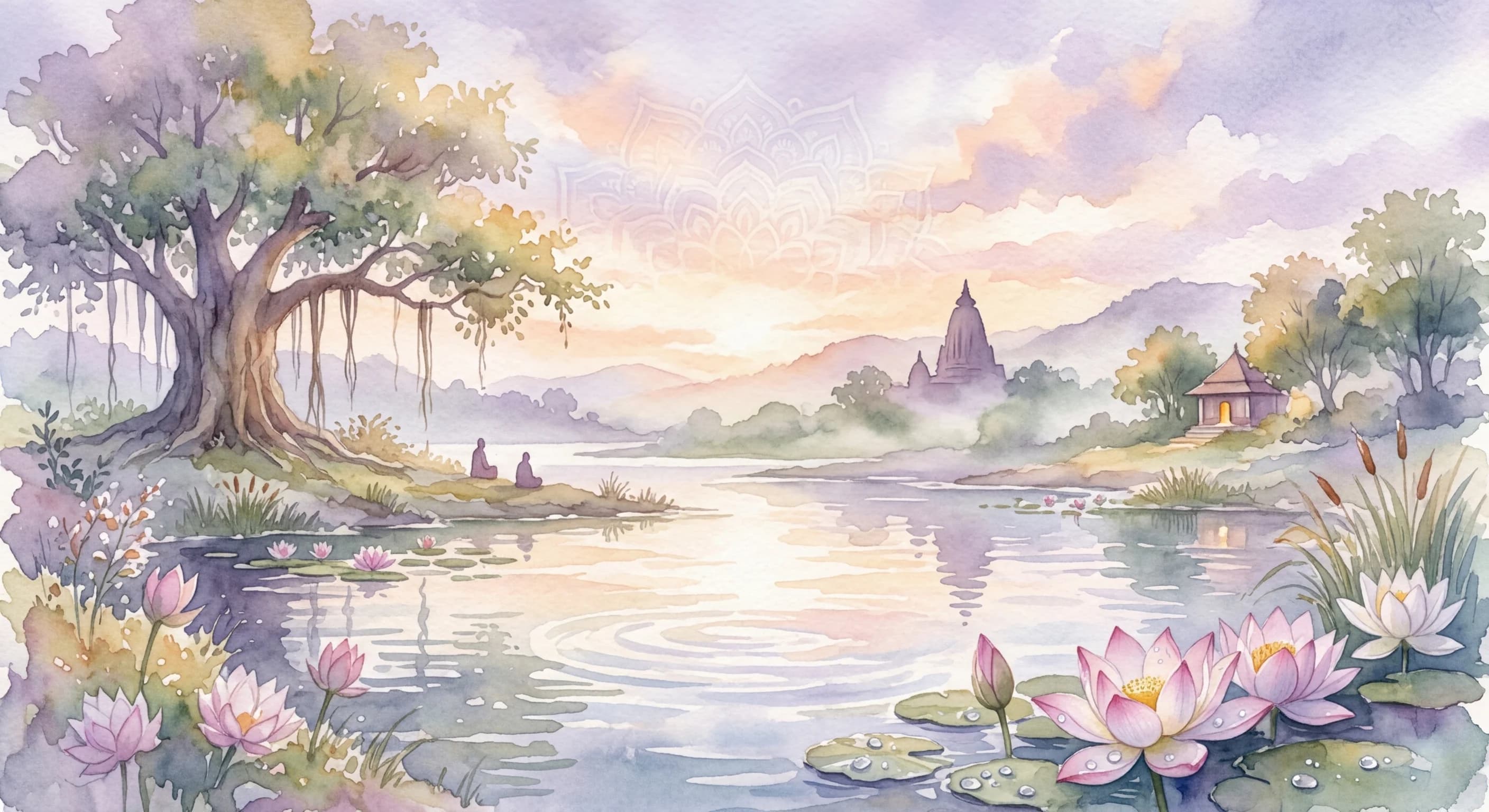
The 'chitta' is often compared to a lake; when its surface is turbulent (full of thoughts), one cannot see the bottom (true self), but when calm, clarity emerges.
How It's Used
Used in philosophical and spiritual contexts, particularly within yoga and meditation traditions, to describe the mind and its functions.