U.
HomeRegionsLanguagesEmotionsCollections
Find Your Word

“The limits of my language mean the limits of my world.”

— Ludwig Wittgenstein, Philosopher

Untranslatable

A curated collection of the world's most beautiful expressions—words that remind us language is humanity's greatest invention.

  • Home
  • Collections
  • Regions
  • Countries
  • Emotions
  • Tags
  • Contexts
  • Finder
  • Europe
  • Asia
  • Americas
  • Africa
  • Middle East
  • About
  • Contact
  • Privacy Policy
  • Terms of Service

2026 © Untranslatable. All rights reserved.

    /
    /
    1. Home
    2. /
    3. Asia
    4. /
    5. Gunas
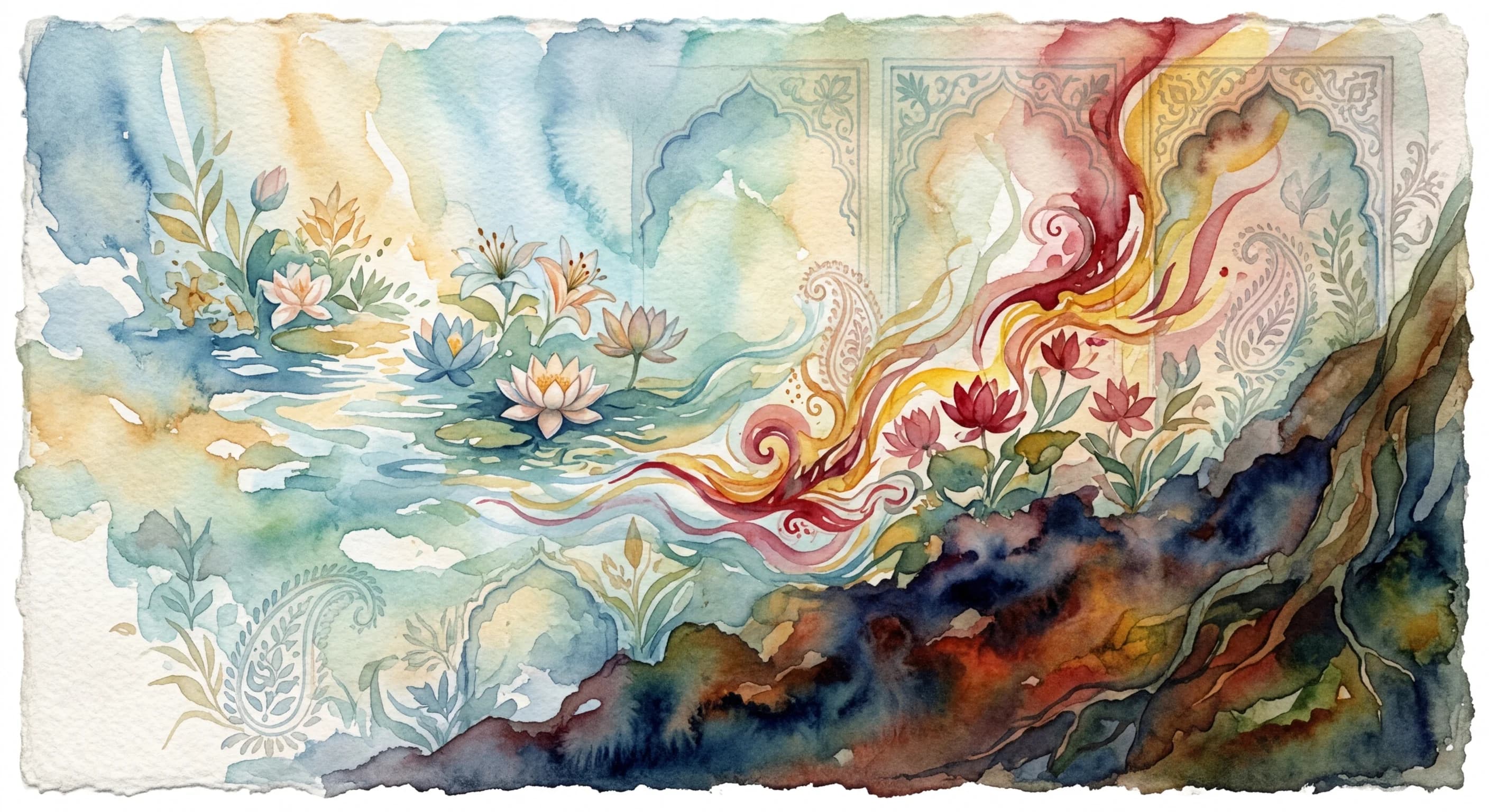
    Artistic representation of Gunas
    Sanskrit•
    🇮🇳India

    Gunas

    /GOO-nahs/

    Meaning

    In Hindu philosophy, 'Gunas' are the three fundamental energetic qualities—Sattva (purity, harmony), Rajas (passion, activity), and Tamas (inertia, darkness)—that ceaselessly interweave to form the fabric of all existence, from the cosmos to our individual minds and bodies. These aren't static categories but dynamic forces, constantly shifting and influencing our thoughts, emotions, and actions. Understanding their intricate dance is key to self-awareness, allowing one to discern the subtle currents shaping behavior and to consciously cultivate a more balanced and spiritually aligned state of being.

    Literal Translation

    qualities, characteristics, attributes

    The Story Behind the Word

    The concept of Gunas is an ancient and foundational pillar within Hindu thought, deeply embedded in texts like the Bhagavad Gita and the Samkhya philosophy, predating much of Western philosophical tradition. Its existence reflects a profound Indian worldview that sees the universe not as a collection of fixed entities, but as a dynamic interplay of inherent qualities. This framework provides a sophisticated lens through which to understand human nature, motivation, and the very structure of reality, emphasizing that even seemingly disparate phenomena share a common energetic root. It reveals a culture focused on inner exploration and the subtle mechanics of consciousness, aiming to transcend or harmonize these universal forces for spiritual liberation.

    Experience It

    Morning Routine Gunas

    Waking up feeling refreshed and motivated to meditate (Sattva), then rushing through breakfast to tackle a demanding work project with intense focus (Rajas), only to crash on the couch later, scrolling mindlessly through social media (Tamas).

    Project Team Dynamics

    A team leader calmly guides a complex project with clear vision (Sattva). A proactive team member passionately drives new initiatives and debates ideas vigorously (Rajas). Another team member procrastinates, resists change, and spreads cynicism (Tamas).

    The Deeper Meaning

    The Gunas reveal a worldview that posits a fundamental unity underlying all diversity, suggesting that even our most complex psychological states and the vastness of the cosmos are expressions of these three basic energies. It champions the idea that self-mastery comes from understanding these inherent qualities, not by eradicating them, but by consciously elevating Sattva to achieve clarity, balance, and ultimately, transcendence from their binding influence.

    Did You Know?

    The three Gunas are often metaphorically likened to the primary colors, which, when mixed in different proportions, create the entire spectrum of visible light, representing the diversity of existence.

    How It's Used

    The term 'gunas' is primarily used in philosophical and spiritual discussions, particularly within Hinduism, Buddhism, and Yoga traditions. It's employed to describe the constituent elements of nature and their influence on consciousness and behavior.

    Emotions
    peace,serenity
    Contexts
    daily life,philosophy,spirituality
    🇮🇳India

    by Anya Petrova·Written Mar 10, 2026·Updated Apr 3, 2026

    Related Words

    Explore more
    Dolce far nienteItalian

    Dolce far niente captures the profound joy and effortless pleasure derived from simply existing without obligation or purpose. It's the art of savoring moments of pure, unadulterated idleness – lying in the sun, watching the clouds drift, or enjoying a leisurely coffee – not as a break from work, but as a valuable state in itself. This 'sweetness of doing nothing' is a conscious embrace of stillness and contentment, allowing the soul to breathe and the senses to fully engage with the present.

    Wabi-sabiJapanese

    Wabi-sabi is the profound appreciation for the ephemeral, the imperfect, and the incomplete aspects of existence. It is about discovering beauty in the subtle textures of age, the unique character of flaws, and the gentle decay that marks the passage of time. This philosophy encourages a quiet acceptance of impermanence and a mindful connection to the natural world, finding elegance in simplicity and authenticity.

    IkigaiJapanese

    Ikigai is more than just a reason to get out of bed; it's a deeply personal and evolving sense of purpose that brings genuine fulfillment and joy to one's life. It represents the sweet spot where your passions, talents, needs of the world, and what you can be paid for beautifully converge. Discovering your ikigai often leads to a life lived with intentionality, resilience, and a profound connection to one's contributions. It's the intrinsic motivation that fuels a meaningful existence, regardless of external circumstances.

    NunchiKorean

    Nunchi is the sophisticated, almost telepathic, ability to instantly grasp the unspoken dynamics of any social situation, anticipating others' thoughts and feelings, and then responding with impeccable grace and timing. It's an acute form of social intuition, allowing one to navigate complex interpersonal landscapes by reading subtle cues like body language, tone, and context. Possessing good nunchi means effortlessly understanding the underlying emotional currents and adjusting one's behavior to maintain harmony and effectiveness, often without a single word exchanged.