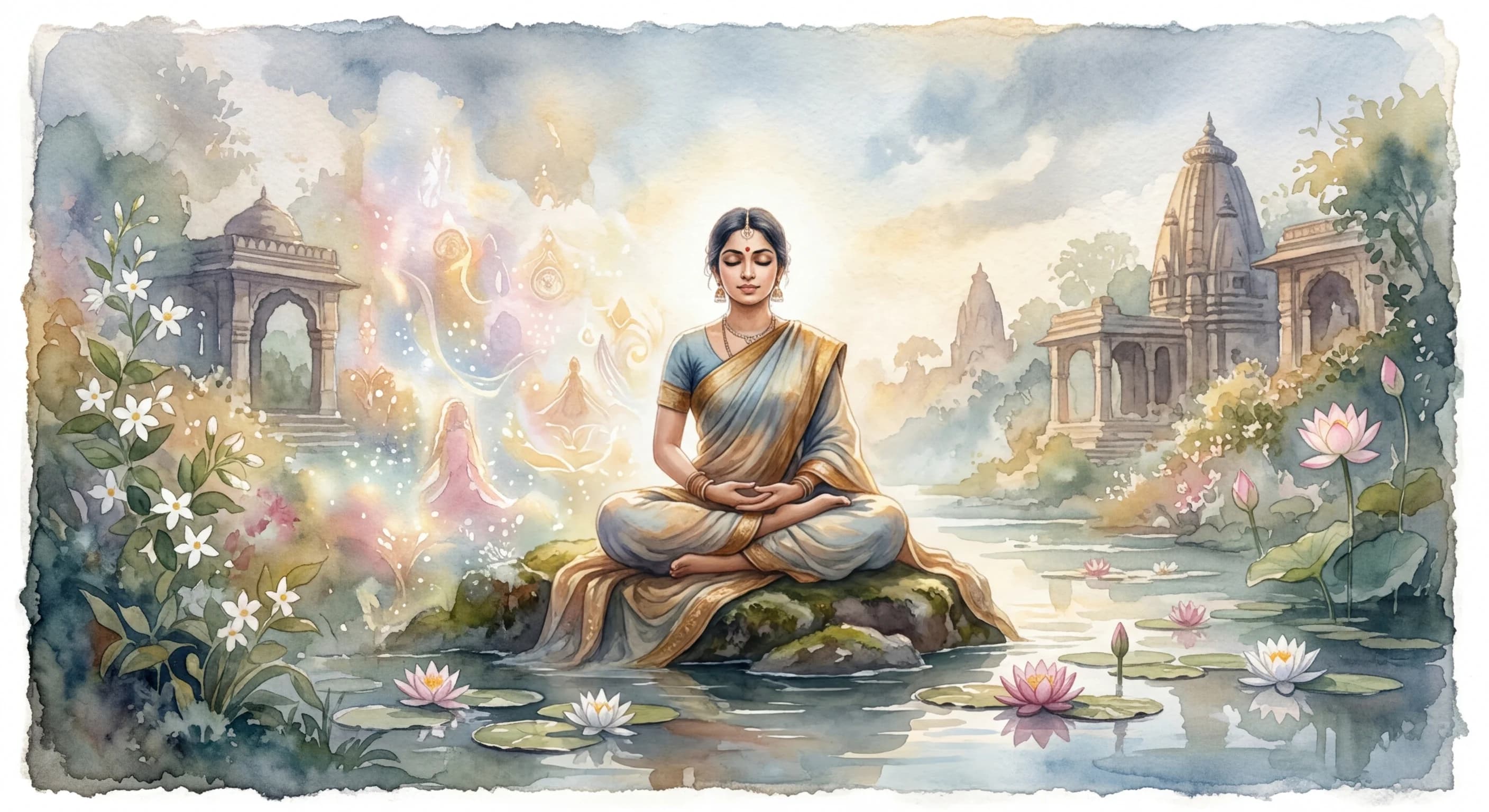
Viveka
/vih-VEH-ka/
Meaning
Viveka is the profound, intuitive wisdom to distinguish between the ephemeral and the eternal, the illusory and the real. It's not mere intellectual analysis, but a deep clarity of perception that pierces through the veil of worldly attachments and superficial desires. This cultivated insight serves as a spiritual compass, guiding one towards self-realization and liberation by revealing the true, unchanging nature of existence amidst the flux of phenomena. It empowers an individual to transcend suffering by recognizing and detaching from temporary truths.
Literal Translation
Discernment, discrimination, wisdom
The Story Behind the Word
In Indian philosophical traditions, particularly Vedanta and Yoga, Viveka is considered an indispensable tool for spiritual progress, a foundational virtue for anyone seeking moksha (liberation) or nirvana. Its prominence reflects a worldview deeply concerned with the transient nature of material existence and the pursuit of ultimate truth. The concept is rooted in ancient Vedic texts and further elaborated in the Upanishads, Bhagavad Gita, and Yoga Sutras. It highlights the Indian emphasis on introspection, self-inquiry, and the belief that true happiness and freedom lie not in external acquisitions, but in discerning the unchanging self (Atman) from the ever-changing non-self (Anatman). This word reveals a culture that values profound inner wisdom over worldly knowledge, seeing it as the key to transcending the cycle of birth and death (samsara).
Experience It
Choosing True Happiness
A young professional, after achieving significant career success, felt an underlying emptiness. Through introspection and the cultivation of Viveka, she discerned that her pursuit of external accolades was a transient satisfaction, realizing true fulfillment lay in inner peace and service to others, rather than endless material accumulation.
Navigating Emotional Turmoil
During a period of intense grief, an individual used Viveka to distinguish between the temporary pain of loss and the eternal, unchanging essence of love that transcended the physical presence. This discernment allowed them to process their emotions without being consumed by them, recognizing the impermanence of sorrow.
The Deeper Meaning
Viveka underscores a profoundly dualistic yet ultimately unifying philosophy: the world of phenomena is real in its own way, but only the ultimate reality is eternally true. It suggests that suffering arises from mistaking the temporary for the permanent, and that true freedom comes from consistently applying this discerning wisdom. This perspective encourages a life of mindful awareness, constant self-reflection, and a detachment from outcomes, focusing instead on the intrinsic value of every moment and the underlying truth of existence.
Did You Know?
Viveka is often personified as a sharp sword in spiritual allegories, symbolically cutting through the bonds of ignorance and illusion, revealing the path to liberation.
How It's Used
Viveka is a concept discussed in philosophical and spiritual texts, particularly within Hinduism and Buddhism. It's often invoked in teachings aimed at guiding individuals towards self-realization and enlightenment.