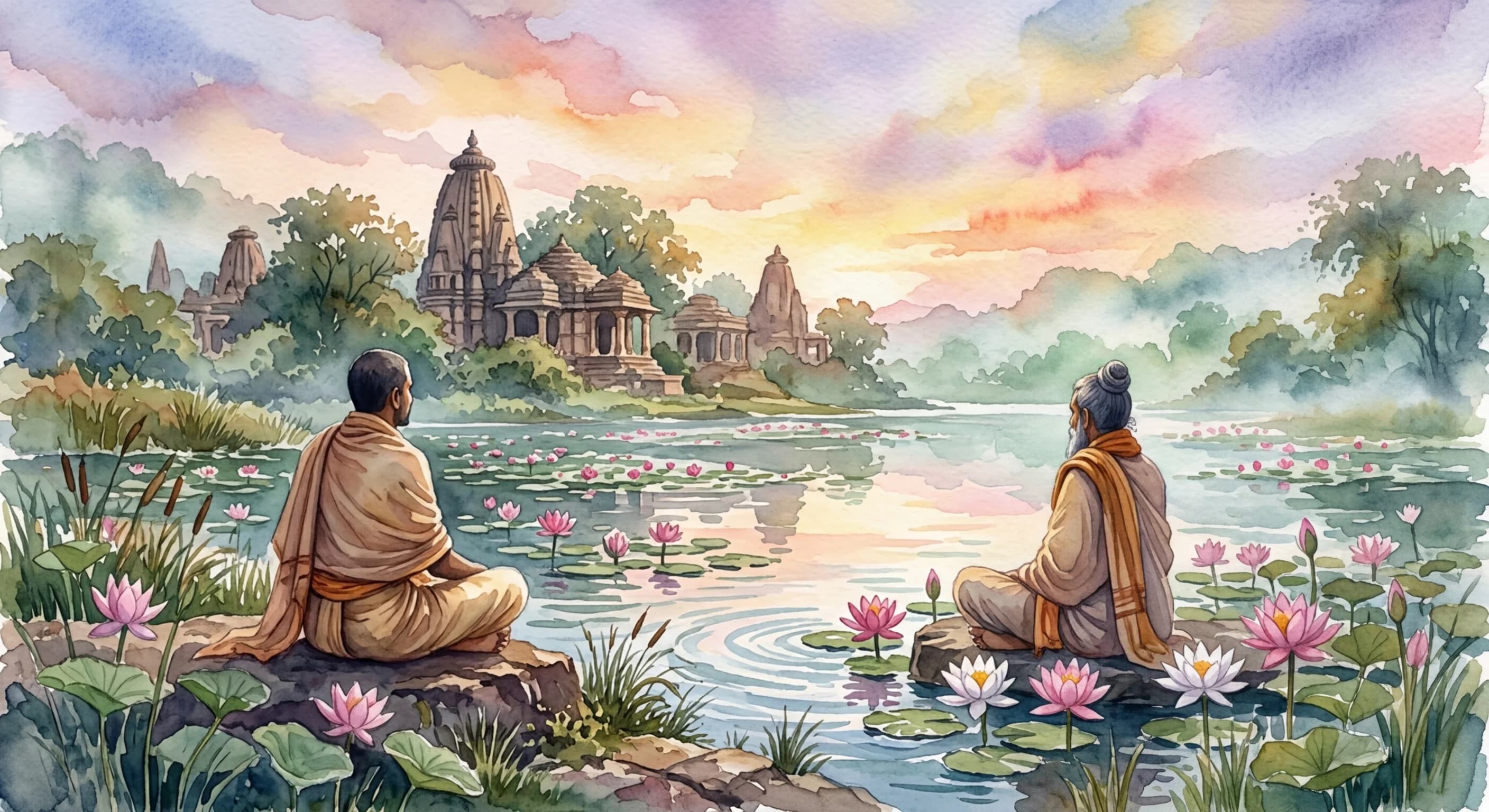
Mumukshutva
/moo-MOOK-shut-vuh/
Meaning
Mumukshutva is not merely a desire, but an unyielding, burning aspiration for ultimate spiritual freedom from the cycle of birth, death, and suffering (samsara). It signifies a profound inner turning, where the individual's entire being is consumed by an intense longing for moksha, or liberation. This deep-seated yearning transcends intellectual understanding, becoming the primary driving force behind all spiritual endeavors, austerities, and the relentless pursuit of self-realization and union with the absolute truth. It is the spiritual readiness that precedes true enlightenment.
Literal Translation
Desire for liberation
The Story Behind the Word
Mumukshutva is a cornerstone of classical Indian philosophy, particularly within the Advaita Vedanta tradition, which posits the ultimate oneness of the individual soul (Atman) with the universal consciousness (Brahman). Its existence reflects a worldview deeply concerned with the transient nature of material existence and the inherent suffering within samsara. The concept underpins the entire spiritual architecture of Hinduism, emphasizing that true freedom lies not in worldly gains but in transcendence. It highlights a culture where spiritual evolution is paramount, and the pursuit of ultimate truth is considered life's highest purpose. This word reveals a civilization that has historically valued inner realization over external achievements, viewing human life as a precious opportunity for spiritual awakening.
Experience It
The Ascetic's Renunciation
A successful merchant, despite his wealth and family, felt an unshakeable emptiness. One day, he renounced his luxurious life, gave away his possessions, and sought a guru in the Himalayas. His mumukshutva was so profound that worldly attachments simply ceased to hold meaning for him.
Scholar's Deep Dive
A young scholar, initially drawn to philosophy for intellectual challenge, found himself increasingly restless with mere academic understanding. He began meditating for hours daily, his mumukshutva driving him to not just know about Brahman, but to experience it directly, leading him to intense spiritual practices beyond his studies.
The Deeper Meaning
This word encapsulates a philosophy that views human existence as fundamentally oriented towards transcendence. It suggests that true happiness and fulfillment lie beyond the material realm and the ego-driven self. Mumukshutva implies a profound understanding of suffering (dukkha) and impermanence, leading to a radical re-evaluation of life's priorities from worldly pursuits to the ultimate spiritual goal of moksha. It champions self-inquiry and spiritual discipline as the path to ultimate freedom.
Did You Know?
Mumukshutva is considered one of the four essential qualifications (Sadhanasampat) for a serious spiritual seeker in Advaita Vedanta, without which true liberation is deemed impossible.
How It's Used
This term is primarily used in Hindu philosophical and spiritual contexts, particularly in discussions related to Vedanta and Yoga, to describe the state of a seeker's spiritual readiness and intense desire for liberation.