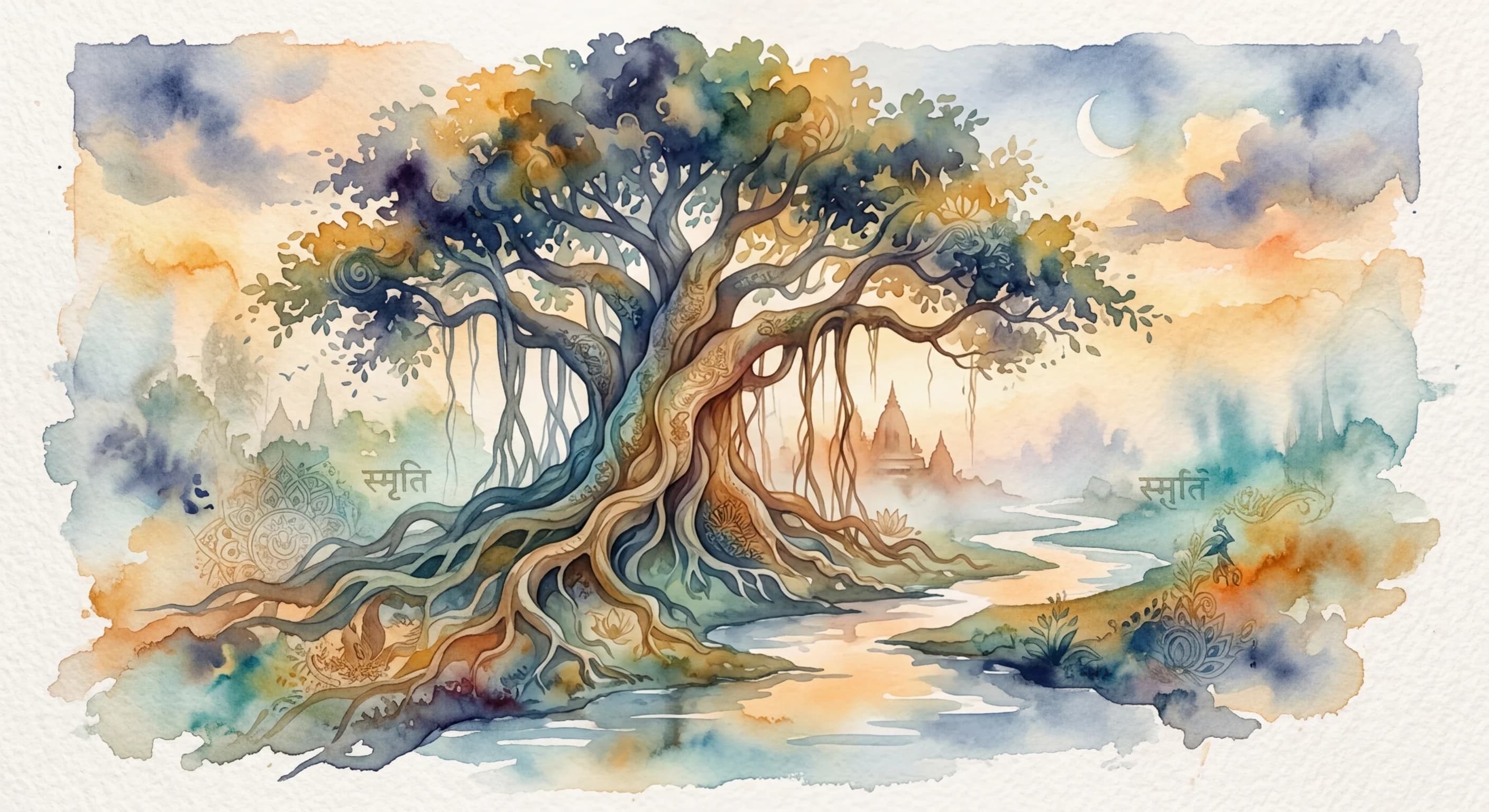
Smriti
/SMRI-tee/
Meaning
Smriti, literally "that which is remembered," embodies the vast ocean of traditional Hindu knowledge, meticulously preserved and transmitted across generations. Unlike the divinely revealed Shruti, Smriti comprises human-authored scriptures like the Puranas, Dharmashastras, and epics, serving as a living repository of ethical frameworks, social norms, and philosophical insights. It is the accumulated wisdom that guides daily life, dharma, and societal structure, reflecting India's enduring cultural memory and intellectual heritage.
Literal Translation
that which is remembered
The Story Behind the Word
The concept of Smriti is fundamental to understanding the dynamic nature of Hindu tradition. It exists because ancient Indian civilization recognized the need for adaptable yet authoritative guidance beyond direct divine revelation. While Shruti (Vedas) provides foundational truths, Smriti offers practical applications, interpretations, and elaborations that evolve with societal needs, yet remain rooted in core principles. This framework reveals a culture that values both immutable truth and the wisdom accrued through human experience and intellectual endeavor. It highlights a unique balance between tradition and interpretation, allowing for continuity while accommodating change, and emphasizing that wisdom is not static but a living, remembered heritage passed down through gurus and texts. It underscores the importance of memory, lineage, and scholarly interpretation in shaping an enduring way of life.
Experience It
Consulting Ancient Wisdom
A young student of dharma, grappling with a complex ethical dilemma, turns to his guru. The guru advises him to study the Smriti texts, specifically the Manusmriti and Mahabharata, to find precedents and guidance on righteous conduct in similar situations.
Debate on Social Customs
During a village council meeting, there's a discussion about updating a long-standing social custom. One elder argues that while the custom isn't directly from Shruti, it's deeply ingrained in their Smriti—the remembered traditions passed down—and should be respected as a pillar of their community's identity.
The Deeper Meaning
Smriti reveals a profound philosophical understanding of knowledge as a layered construct. It posits that while ultimate truth may be divinely revealed (Shruti), its application and interpretation in the human realm require the accumulated wisdom of generations. This distinction underscores the value of human intellect, reason, and cultural memory in shaping a moral and ethical society, demonstrating that spiritual guidance is both transcendent and immanent, rooted in both revelation and remembrance.
Did You Know?
While often associated with ancient texts, the concept of Smriti also includes the remembered teachings of revered sages and spiritual masters, showcasing a continuous, living tradition of wisdom transmission.
How It's Used
Smriti is used in religious and philosophical discourse in Hinduism to refer to specific categories of sacred texts and the knowledge they contain. It is invoked when discussing the authority and content of scriptures that are derived from tradition rather than direct revelation.