Ashrama
/AH-shruh-muh/
Meaning
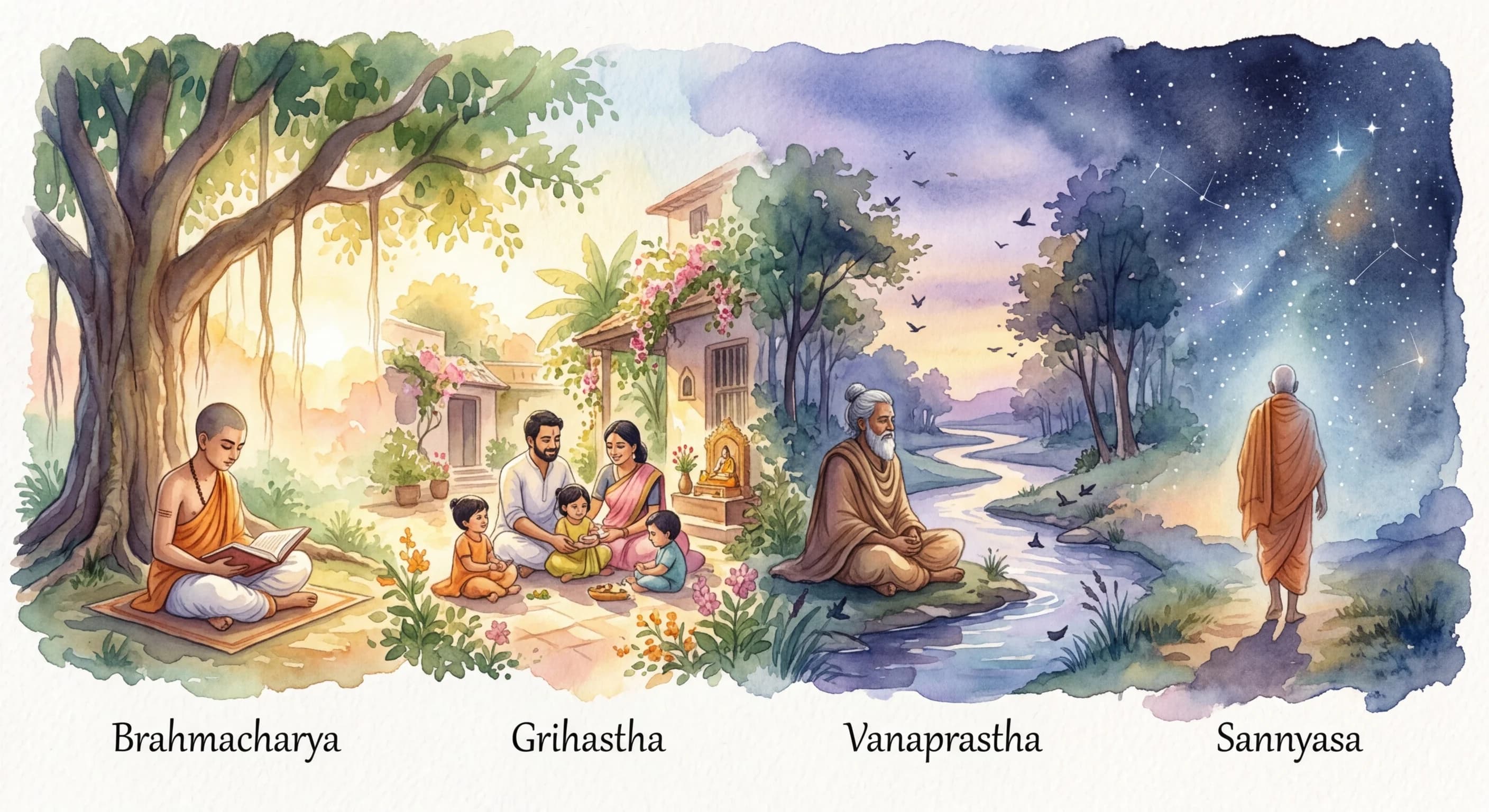
Ashrama delineates the four prescribed stages of life in ancient Hindu tradition, each a meticulously crafted phase for spiritual and personal evolution. Starting with Brahmacharya (student life) focused on learning and discipline, it progresses to Grihastha (householder) dedicated to family and societal duties. The journey continues with Vanaprastha (retirement) for reflection and gradual detachment, culminating in Sannyasa (renunciation) for ultimate liberation. This intricate framework isn't merely a timeline, but a profound philosophical blueprint guiding individuals towards self-realization and a life of profound purpose.
Literal Translation
abode, dwelling, resting place
The Story Behind the Word
The concept of Ashrama is deeply embedded in the Vedic tradition, reflecting a highly structured and purposeful approach to life that emerged from ancient Hindu societal and spiritual thought. It provided a societal blueprint for maintaining dharma (righteous conduct) across different age groups, ensuring that individuals contributed to society while also pursuing personal spiritual growth. This framework reveals a worldview where life is not a linear, aimless progression, but a cyclical journey with defined responsibilities and opportunities for spiritual advancement at each turn. It emphasizes the importance of balancing worldly duties with ultimate spiritual goals, suggesting that true liberation is achieved through a disciplined and phased approach to existence. The Ashrama system helped to maintain social order and individual well-being by clearly outlining expectations and providing a path for inner transformation, reflecting a culture that valued both communal harmony and individual enlightenment.
Experience It
Embracing Grihastha Dharma
After completing his studies and marrying, Rohan fully embraced his Grihastha Ashrama. He dedicated himself to his family, raising his children with strong values, and contributing to his community through his work, understanding these responsibilities as essential steps on his spiritual path.
Transition to Vanaprastha
Having seen his children settled, Mrs. Sharma decided it was time to transition into Vanaprastha. She began to gradually withdraw from active family management, spending more time in meditation and studying scriptures, preparing her mind for deeper spiritual pursuits.
The Deeper Meaning
Ashrama reveals a profound cyclical understanding of time and purpose, where life is a structured journey towards spiritual liberation rather than a singular, linear experience. It underscores the belief that every stage of life, with its unique duties and challenges, serves as a vital stepping stone towards ultimate self-realization and detachment from worldly attachments, emphasizing purposeful living at every turn.
Did You Know?
While traditionally for men, the principles of Ashrama have been adapted in modern interpretations to include women and to reflect a more flexible, internal progression of life stages rather than strict societal mandates.
How It's Used
Used in discussions of Hindu philosophy, sociology, and spiritual life to describe the ideal progression of a person's life stages.