U.
HomeRegionsLanguagesEmotionsCollections
Find Your Word

“The limits of my language mean the limits of my world.”

— Ludwig Wittgenstein, Philosopher

Untranslatable

A curated collection of the world's most beautiful expressions—words that remind us language is humanity's greatest invention.

  • Home
  • Collections
  • Regions
  • Countries
  • Emotions
  • Tags
  • Contexts
  • Finder
  • Europe
  • Asia
  • Americas
  • Africa
  • Middle East
  • About
  • Contact
  • Privacy Policy
  • Terms of Service

2026 © Untranslatable. All rights reserved.

    /
    /
    1. Home
    2. /
    3. Asia
    4. /
    5. Nhậu
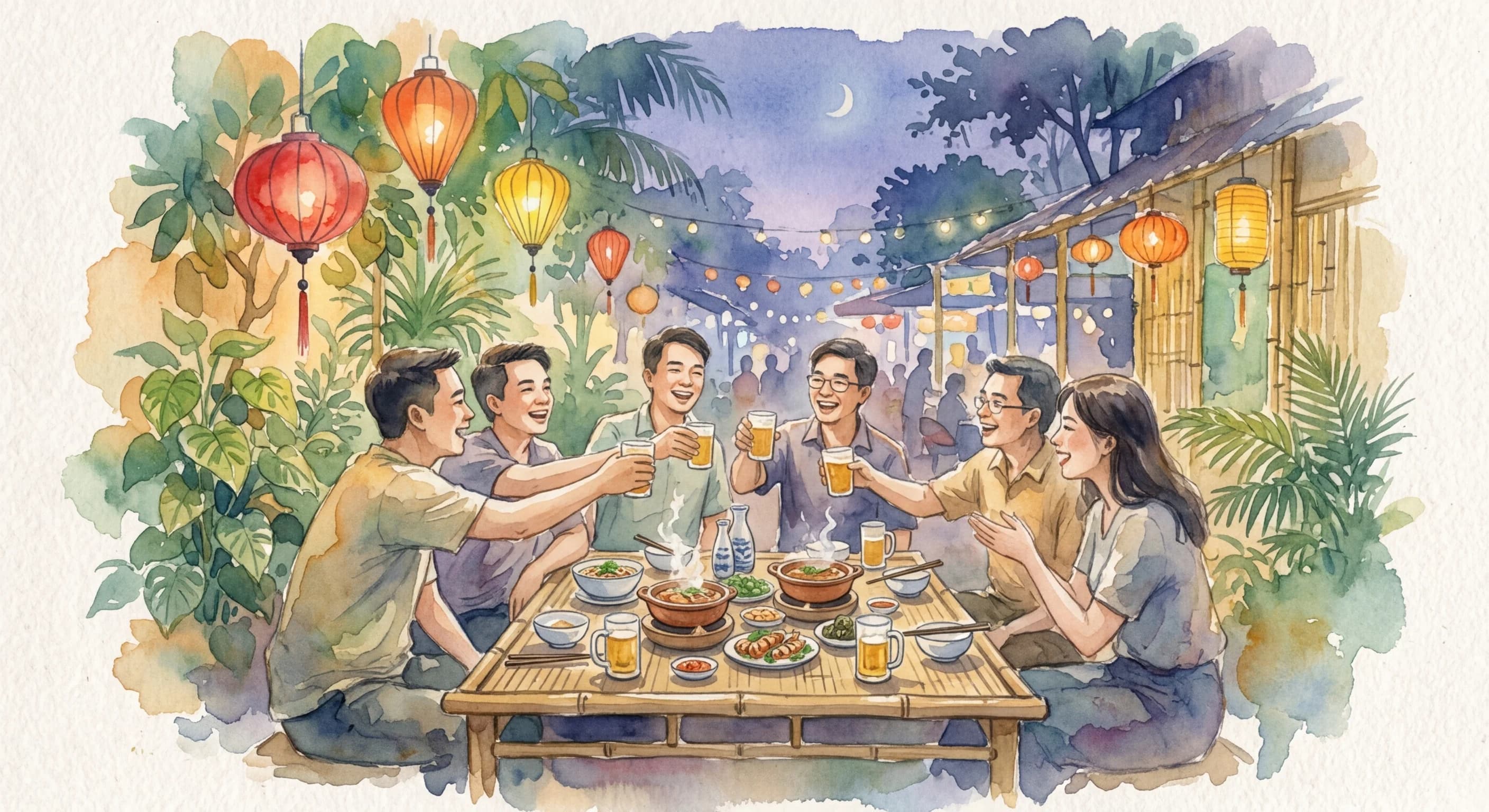
    Artistic representation of Nhậu
    Vietnamese•
    🇻🇳Vietnam

    Nhậu

    /N'yow/

    Meaning

    Nhậu transcends mere drinking; it's a vibrant Vietnamese social ritual centered on communal enjoyment of food and alcoholic beverages, typically beer or potent rice wine. It embodies a spontaneous spirit where friends, colleagues, or family gather to unwind, exchange stories, and fortify their bonds. This act fosters an atmosphere of genuine camaraderie and relaxation, transforming simple meals into cherished opportunities for deep connection and shared joy, reflecting a profound cultural value placed on togetherness and informal social interaction.

    Literal Translation

    To drink alcohol or eat snacks while drinking

    The Story Behind the Word

    Nhậu is deeply rooted in Vietnam's communal culture, where relationships and social harmony are paramount. Historically, shared meals and drinks were crucial for community building in agrarian societies, fostering mutual support. It reflects the Vietnamese emphasis on collective identity over individualism, where personal well-being is often intertwined with social connections. The spontaneous nature of nhậu also speaks to a cultural adaptability and a desire for immediate, unscripted human connection, providing an essential outlet for stress and a platform for maintaining the intricate web of social obligations and friendships that define Vietnamese society. It's a testament to the idea that life's joys are best experienced and celebrated together.

    Experience It

    Post-Work Unwind

    After a long day at the office, a group of colleagues spontaneously decides to 'đi nhậu.' They find a bustling sidewalk eatery, order a few plates of grilled seafood, and share rounds of cold beer, laughing loudly as they recount office anecdotes and discuss weekend plans, shedding the day's stress with each sip.

    Family Reunion Joy

    During a family gathering, the uncles and male cousins set up a small table in the garden. They begin to 'nhậu' with homemade rice wine and plates of various snacks. This informal setting allows for boisterous storytelling, sharing family updates, and reinforcing generational ties in a relaxed, joyful atmosphere.

    The Deeper Meaning

    Nhậu reveals a core Vietnamese philosophy that collective well-being and strong social fabric are vital for individual happiness. It underscores the belief that life's challenges and triumphs are best navigated and celebrated within a supportive community, emphasizing presence, shared experience, and the continuous nurturing of relationships over solitary pursuits or strict adherence to schedules. It's a practical manifestation of 'sống chậm' – living slowly and savoring moments with others.

    Did You Know?

    The phrase 'một hai ba dzô!' (one two three cheers!) is an iconic part of nhậu culture, often shouted before bottoms-up, symbolizing collective enthusiasm and unity.

    How It's Used

    Used to describe the act of gathering with friends or colleagues to drink alcohol and eat food, often in a relaxed and informal setting.

    Emotions
    belonging,joy,serenity
    Contexts
    celebration,dining,friendship,relaxation
    🇻🇳Vietnam

    by Dr. Kenji Tanaka·Written Mar 10, 2026·Updated Apr 3, 2026

    Related Words

    Explore more
    SobremesaSpanish

    Sobremesa is the cherished, often extended period immediately following a meal, particularly lunch or dinner, where diners remain seated at the table to enjoy conversation, coffee, and digest not just the food, but the company itself. It’s a dedicated time for unhurried social bonding, storytelling, and shared laughter, transforming a simple meal into a profound communal experience. Far from just clearing the dishes, sobremesa is an integral part of Spanish social life, often lasting for hours.

    Wabi-sabiJapanese

    Wabi-sabi is the profound appreciation for the ephemeral, the imperfect, and the incomplete aspects of existence. It is about discovering beauty in the subtle textures of age, the unique character of flaws, and the gentle decay that marks the passage of time. This philosophy encourages a quiet acceptance of impermanence and a mindful connection to the natural world, finding elegance in simplicity and authenticity.

    IkigaiJapanese

    Ikigai is more than just a reason to get out of bed; it's a deeply personal and evolving sense of purpose that brings genuine fulfillment and joy to one's life. It represents the sweet spot where your passions, talents, needs of the world, and what you can be paid for beautifully converge. Discovering your ikigai often leads to a life lived with intentionality, resilience, and a profound connection to one's contributions. It's the intrinsic motivation that fuels a meaningful existence, regardless of external circumstances.

    NunchiKorean

    Nunchi is the sophisticated, almost telepathic, ability to instantly grasp the unspoken dynamics of any social situation, anticipating others' thoughts and feelings, and then responding with impeccable grace and timing. It's an acute form of social intuition, allowing one to navigate complex interpersonal landscapes by reading subtle cues like body language, tone, and context. Possessing good nunchi means effortlessly understanding the underlying emotional currents and adjusting one's behavior to maintain harmony and effectiveness, often without a single word exchanged.