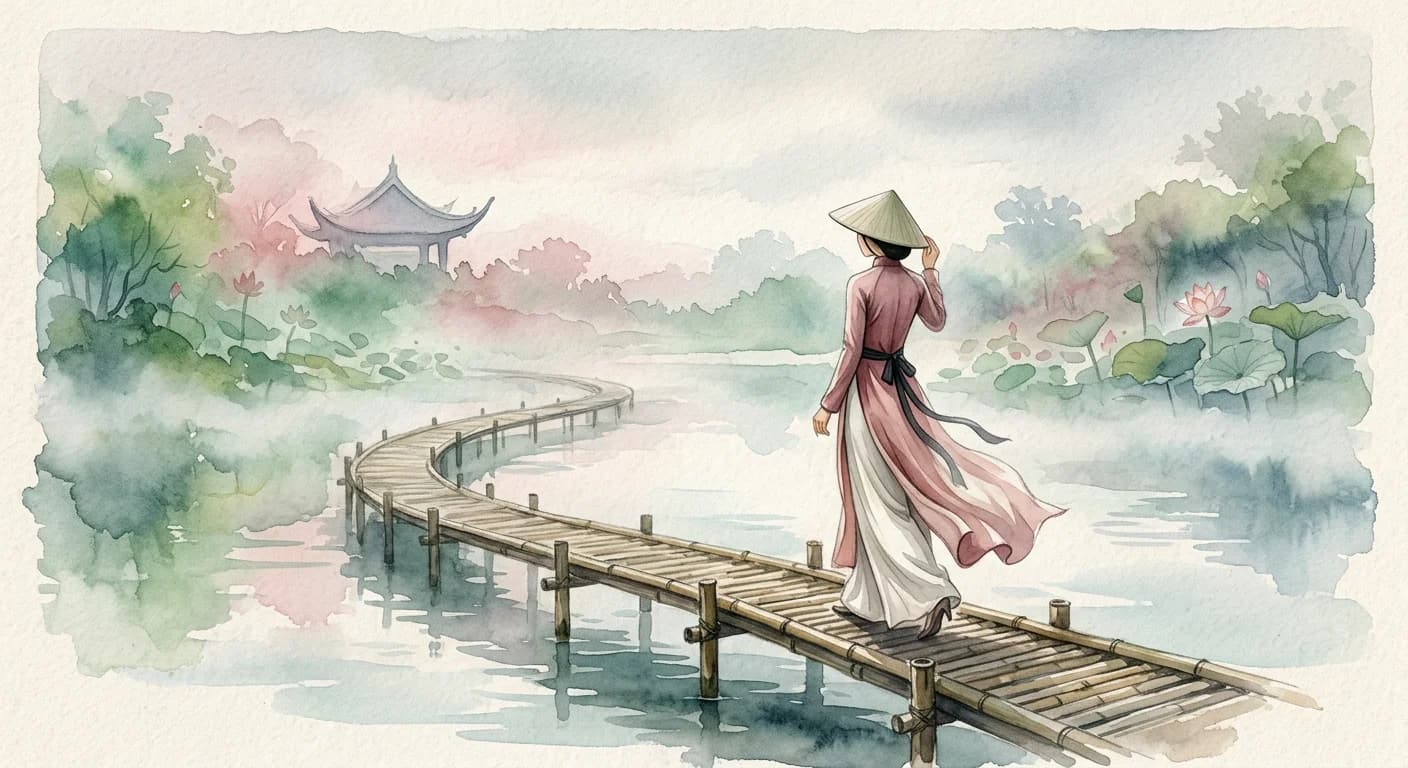
Thanh thoát
/tahn-twaht/
Meaning
“Thanh thoát” captures a sublime quality of effortless elegance and refined grace, often manifesting in a person's demeanor, movements, or artistic expression. It describes a subtle charm and sophistication that is inherently natural and captivating, devoid of any pretense or ostentation. This term evokes the image of a gentle breeze, a flowing silk, or a perfectly executed dance, embodying a delicate balance of inner purity and outward poise that creates a profound sense of aesthetic pleasure and admiration. It's an understated beauty that speaks volumes without needing to be loud.
Literal Translation
Clear/Pure/ thanh - thoát/escape/light/free
The Story Behind the Word
The concept of "thanh thoát" is deeply rooted in Vietnamese aesthetic sensibilities, which often value subtlety, harmony, and an intrinsic connection to nature. Influenced by Buddhist and Confucian philosophies, Vietnamese culture traditionally reveres qualities like inner peace, humility, and a refined spirit over overt displays of wealth or power. This word reflects a preference for beauty that is not merely superficial but stems from a person's character and inner cultivation. It's an ideal often associated with the gracefulness of Vietnamese women, the delicate movements of traditional dance, or the serene lines of classical art, revealing a world view that finds beauty in balance, restraint, and an almost ethereal lightness of being.
Experience It
Dancer's Grace
During the traditional Apsara dance, her every movement was imbued with "thanh thoát." Her hands flowed like water, her bare feet barely seemed to touch the stage, creating an illusion of weightlessness that captivated the entire audience.
Poet's Demeanor
Even in casual conversation, the elderly poet carried himself with an undeniable "thanh thoát." His words were chosen with care, his gestures gentle, reflecting a lifetime of contemplation and a profound inner peace that radiated outward.
The Deeper Meaning
This word reveals a deep philosophical appreciation for an integrated self where inner purity ("thanh") manifests as effortless freedom and grace ("thoát"). It suggests that true elegance is not an external adornment but an emanation of a cultivated spirit, reflecting a worldview that values harmony between one's internal state and external presentation, emphasizing authenticity and natural beauty over artificiality.
Did You Know?
Did you know that "thanh thoát" is often used to describe the ideal characteristics of a lotus flower – pure, elegant, and rising gracefully above muddy waters?
How It's Used
Used to describe people (especially women), their movements, speech, art, or even objects that possess an elegant and refined quality.