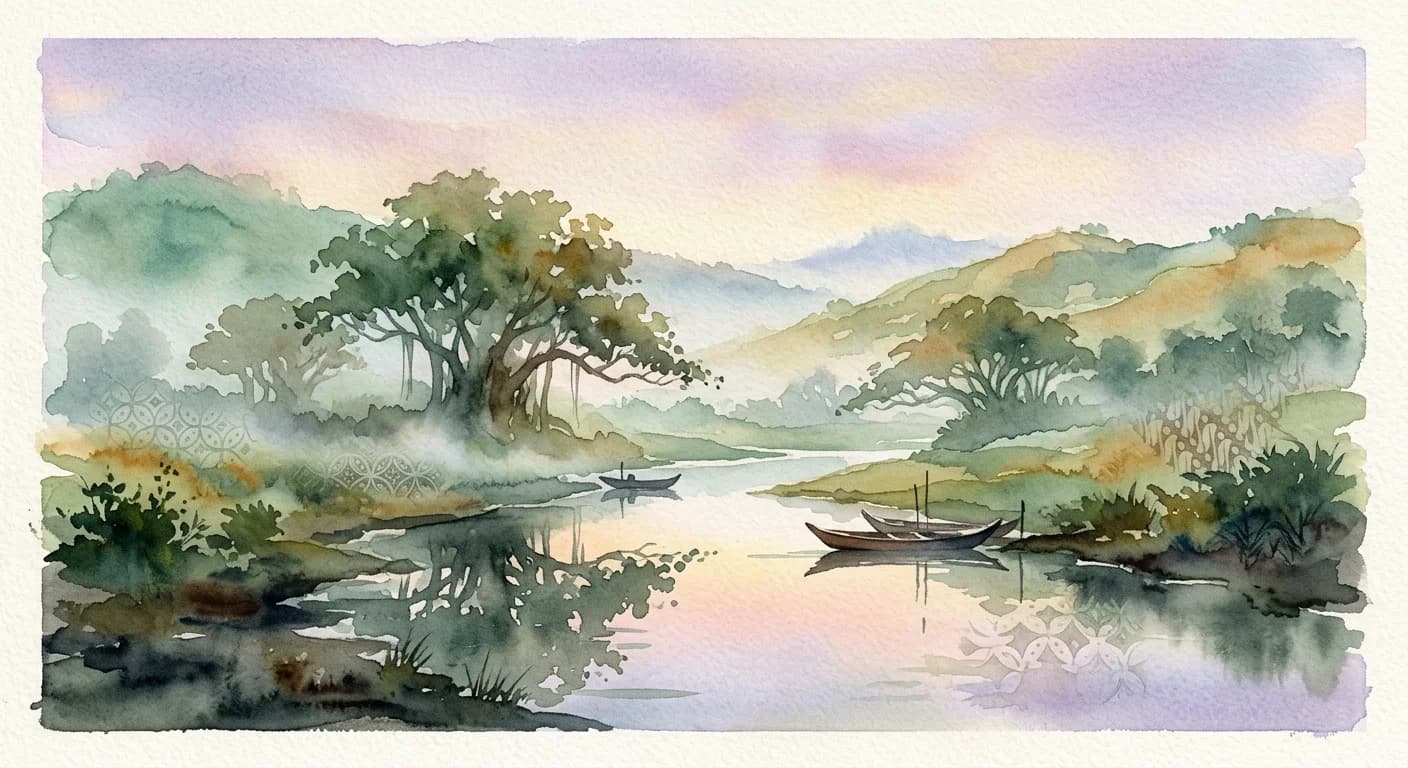
Asri
/AH-sree/
Meaning
Asri describes a state of pristine natural beauty and profound serenity, evoking a landscape that is not merely attractive but inherently pure, clean, and untouched by the harshness of human interference. It captures a deep appreciation for the inherent goodness and tranquility found in nature, suggesting a harmonious balance that is both visually pleasing and spiritually calming. This term implies a pure, almost sacred, aesthetic quality, where the environment exudes a sense of natural order and peacefulness that resonates deeply within the observer. It's the feeling of harmony and untouched grace that makes a place truly restorative.
Literal Translation
Beautiful, natural, pristine
The Story Behind the Word
The existence of 'asri' in Indonesian culture reflects a profound connection to and reverence for nature, deeply rooted in animistic beliefs and agrarian traditions that predate major religions. For many Indonesians, particularly in rural areas, nature is not just a resource but a living entity imbued with spiritual significance. The concept of 'asri' embodies the ideal state of this natural world – clean, balanced, and untouched – which is seen as a reflection of divine order and a source of well-being. It underscores a worldview where harmony with nature is paramount, and the preservation of such pristine environments is a cultural imperative, often linked to spiritual purity and prosperity. This word reveals a cultural appreciation for an unadulterated environment as a fundamental aspect of a good life.
Experience It
Mountain Retreat
After a long trek, they arrived at a hidden waterfall, its waters crystal clear and surrounded by lush, untouched foliage. 'This place is truly asri,' she whispered, feeling an immediate sense of peace wash over her, the air cool and clean.
Village Garden
The old woman's garden, though small, was perfectly maintained with traditional herbs and vibrant flowers, free from any litter or artificial adornment. Visitors often commented on how 'asri' it felt, a tranquil haven reflecting her calm spirit.
What Gets Lost in Translation
English speakers might translate 'asri' simply as 'beautiful' or 'natural,' missing the crucial nuance of inherent purity and untouched serenity. It's not just about aesthetics; 'asri' implies a state of being in perfect, clean balance, free from clutter or disturbance. It's less about human-centric beauty and more about the intrinsic, undisturbed grace of an environment.
Across Cultures
While direct equivalents are rare, Japanese concepts like 'wabi-sabi' (finding beauty in imperfection and transience, often linked to nature) or 'yūgen' (a profound, mysterious sense of the beauty of the universe) share a similar reverence for natural aesthetics, though 'asri' focuses more on pristine harmony. The Maori concept of 'kaitiakitanga' (guardianship of the natural environment) reflects a similar value for unspoiled nature, though it emphasizes responsibility rather than an aesthetic state.
The Deeper Meaning
'Asri' reveals a worldview that values inherent purity and balance in nature as the ultimate form of beauty and well-being. It suggests that true harmony stems from an environment uncorrupted by human excesses, where the natural order can flourish undisturbed. This concept underpins a philosophy of respect for the environment, viewing it not just as a backdrop but as an active, vital force that profoundly influences human spirit and health.
Did You Know?
The term 'asri' is often incorporated into place names, especially for housing developments or resorts, to evoke an image of natural beauty and peaceful living, even if the actual environment is less pristine.
How It's Used
Used to describe natural landscapes like forests, mountains, beaches, or even well-maintained traditional gardens, emphasizing their untouched and naturally beautiful state. It can also describe a person's inner beauty or a harmonious atmosphere.