U.
HomeRegionsLanguagesEmotionsCollections
Find Your Word

“The limits of my language mean the limits of my world.”

— Ludwig Wittgenstein, Philosopher

Untranslatable

A curated collection of the world's most beautiful expressions—words that remind us language is humanity's greatest invention.

  • Home
  • Collections
  • Regions
  • Countries
  • Emotions
  • Tags
  • Contexts
  • Finder
  • Europe
  • Asia
  • Americas
  • Africa
  • Middle East
  • About
  • Contact
  • Privacy Policy
  • Terms of Service

2026 © Untranslatable. All rights reserved.

    /
    /
    1. Home
    2. /
    3. Asia
    4. /
    5. Mala
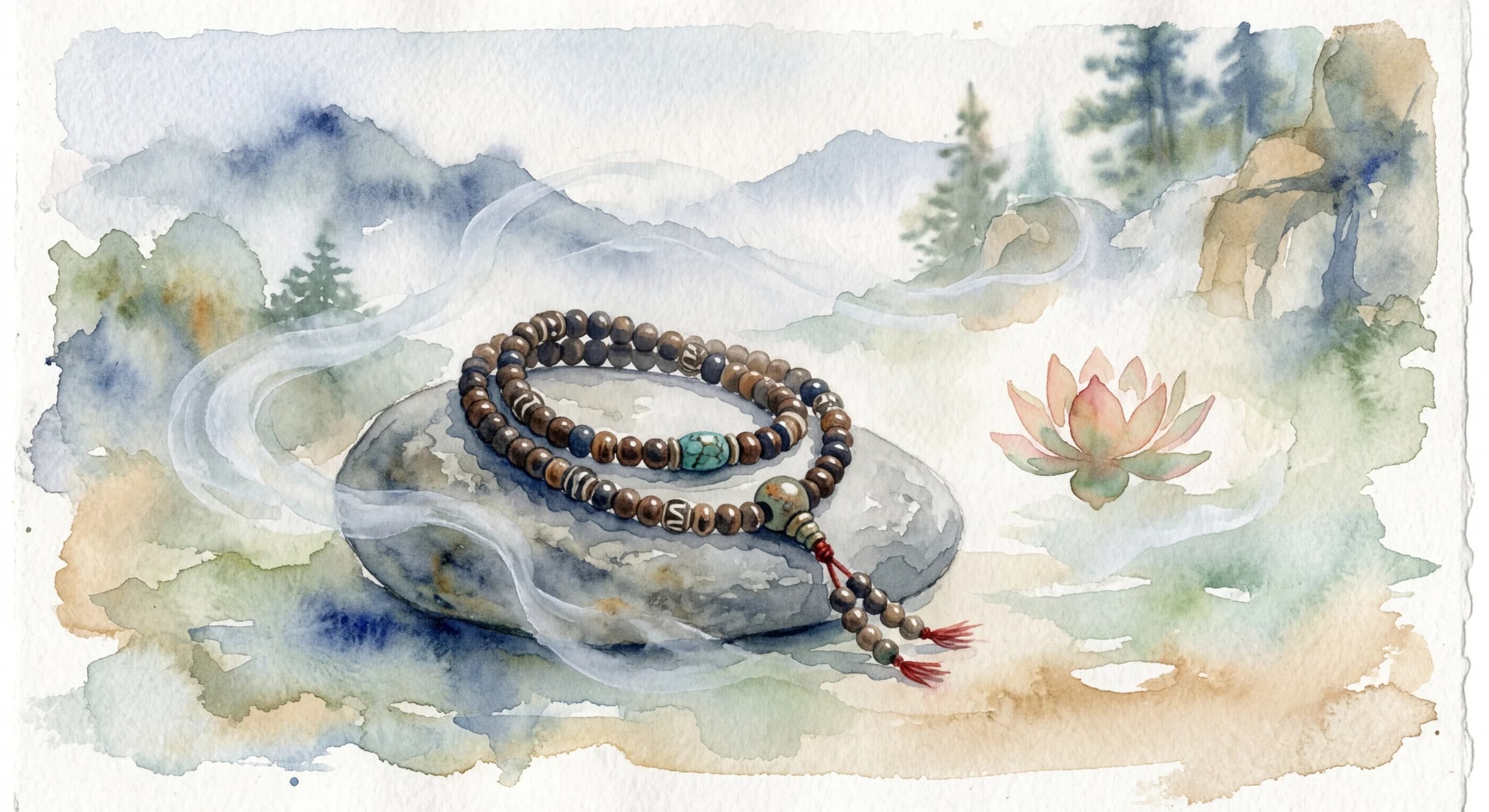
    Artistic representation of mala
    Tibetan•
    🇨🇳China

    Mala

    /MAH-lah/

    Meaning

    In Tibetan Buddhism, a 'mala' is far more than a simple rosary; it is a profound spiritual companion, a string of 108 beads meticulously crafted to aid in the accumulation of merit and the cultivation of mindfulness. Each bead, often made from sacred woods, seeds, or semi-precious stones, serves as a tactile marker for the recitation of mantras, guiding the practitioner through repetitive prayers and affirmations. With every touch, every mantra, the mala becomes imbued with the user's devotion, transforming into a tangible record of their journey towards enlightenment and a conduit for spiritual energy.

    Literal Translation

    Garland

    The Story Behind the Word

    The 'mala' is central to the daily spiritual practice of Tibetan Buddhists, embodying the principle of accumulating positive karma and purifying negative actions through diligent recitation. Its existence reflects a worldview where spiritual progress is a tangible, measurable endeavor, and where sacred objects serve as powerful aids in focusing the mind and intention. The act of using a mala fosters discipline, patience, and unwavering devotion, tenets deeply embedded in Tibetan Buddhist philosophy. The materiality of the mala, often crafted from specific materials like bodhi seeds or sandalwood, connects the practitioner directly to the natural and sacred world, reinforcing the interconnectedness of all phenomena and the path to liberation.

    Experience It

    Morning Meditation Ritual

    As the first rays of dawn touched the monastery window, Lama Tenzin settled onto his cushion. His well-worn mala, smooth from decades of use, rested in his left hand as he began the rhythmic chant of 'Om Mani Padme Hum,' each bead marking a silent step on his path of compassion.

    Pilgrim's Devotion

    Braving the biting Himalayan wind, a solitary pilgrim prostrated herself before the Jokhang Temple. With each full-body prostration, her fingers instinctively moved a bead on her mala, a silent prayer echoing her unwavering faith and dedication to the sacred journey.

    The Deeper Meaning

    The mala encapsulates the Buddhist philosophy of incremental accumulation and the power of focused repetition. It teaches that profound spiritual transformation is achieved not through singular grand gestures, but through consistent, mindful effort. Each bead, each mantra, is a step towards purifying the mind and realizing ultimate truth, emphasizing that the path to enlightenment is a journey of many small, deliberate acts of intention and devotion.

    Did You Know?

    The traditional 108 beads on a mala are said to represent the 108 worldly desires in Buddhism, or the 108 names of Buddha, guiding the practitioner beyond these attachments.

    How It's Used

    Used by practitioners of Tibetan Buddhism during meditation and prayer to count recitations of mantras, prostrations, or other repetitive spiritual practices.

    Emotions
    comfort,gratitude,peace,serenity
    Contexts
    relaxation,solitude,spirituality
    🇨🇳China

    by Dr. Kenji Tanaka·Written Mar 10, 2026·Updated Apr 3, 2026

    Related Words

    Explore more
    Dolce far nienteItalian

    Dolce far niente captures the profound joy and effortless pleasure derived from simply existing without obligation or purpose. It's the art of savoring moments of pure, unadulterated idleness – lying in the sun, watching the clouds drift, or enjoying a leisurely coffee – not as a break from work, but as a valuable state in itself. This 'sweetness of doing nothing' is a conscious embrace of stillness and contentment, allowing the soul to breathe and the senses to fully engage with the present.

    Wabi-sabiJapanese

    Wabi-sabi is the profound appreciation for the ephemeral, the imperfect, and the incomplete aspects of existence. It is about discovering beauty in the subtle textures of age, the unique character of flaws, and the gentle decay that marks the passage of time. This philosophy encourages a quiet acceptance of impermanence and a mindful connection to the natural world, finding elegance in simplicity and authenticity.

    IkigaiJapanese

    Ikigai is more than just a reason to get out of bed; it's a deeply personal and evolving sense of purpose that brings genuine fulfillment and joy to one's life. It represents the sweet spot where your passions, talents, needs of the world, and what you can be paid for beautifully converge. Discovering your ikigai often leads to a life lived with intentionality, resilience, and a profound connection to one's contributions. It's the intrinsic motivation that fuels a meaningful existence, regardless of external circumstances.

    NunchiKorean

    Nunchi is the sophisticated, almost telepathic, ability to instantly grasp the unspoken dynamics of any social situation, anticipating others' thoughts and feelings, and then responding with impeccable grace and timing. It's an acute form of social intuition, allowing one to navigate complex interpersonal landscapes by reading subtle cues like body language, tone, and context. Possessing good nunchi means effortlessly understanding the underlying emotional currents and adjusting one's behavior to maintain harmony and effectiveness, often without a single word exchanged.