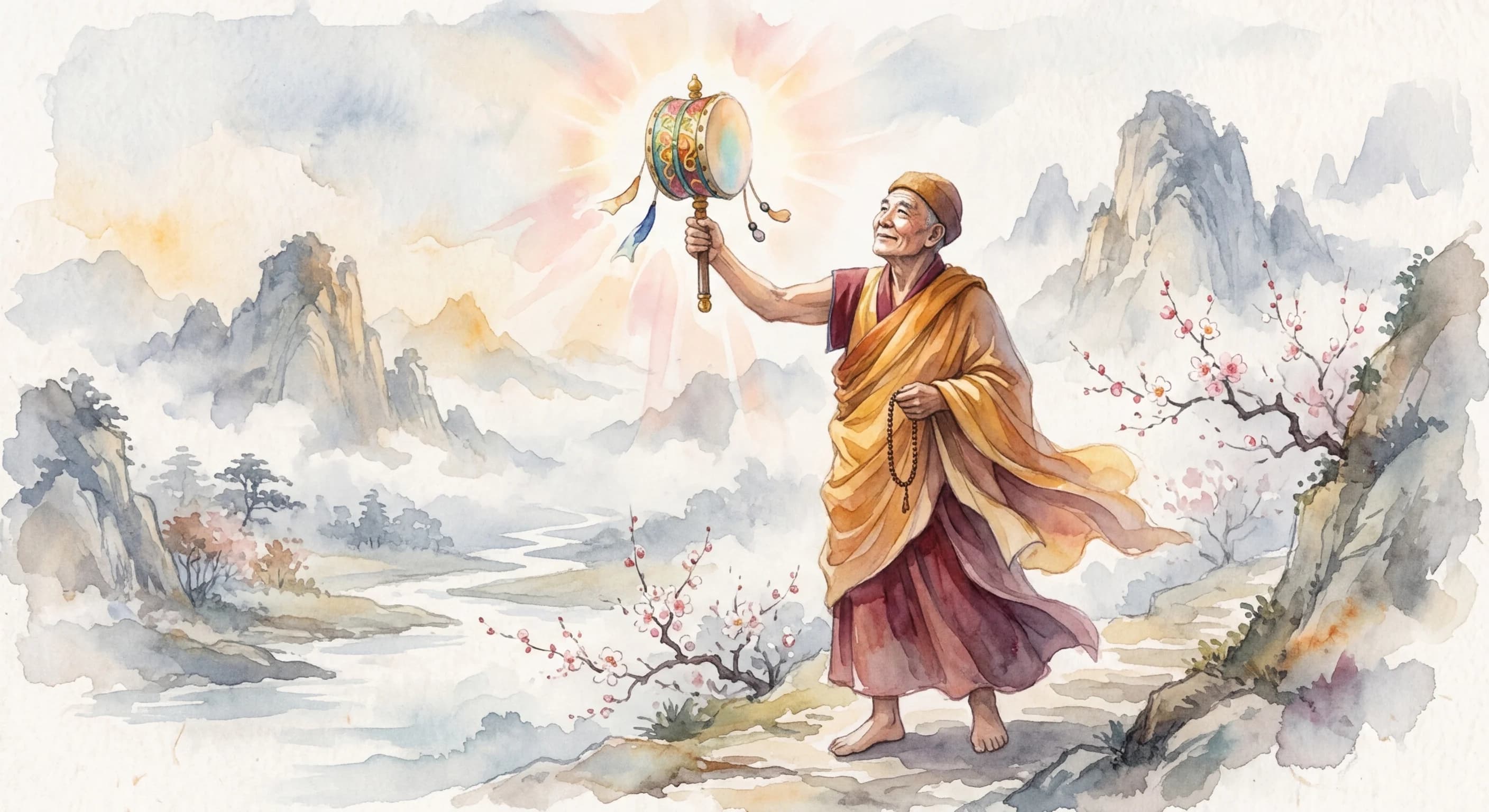
Damaru
/dah-mah-roo/
Meaning
The damaru is far more than a simple hand-drum; it is a profound ritual implement in Tibetan Buddhism, embodying the primordial sound of creation and the cyclical nature of existence. Its distinct, rhythmic clatter, produced by two small beads striking its heads, symbolizes the ceaseless interplay of wisdom and compassion. This sacred instrument is believed to purify the environment, summon enlightened beings, and remind practitioners of the inherent impermanence of all phenomena, guiding them towards spiritual awakening.
Literal Translation
drum
The Story Behind the Word
The damaru's significance is deeply interwoven with the fabric of Tibetan Buddhist cosmology and practice. Its origin is often linked to ancient Indian tantric traditions, where similar instruments were used in yogic rituals. In Tibet, it became central to Vajrayana Buddhism, particularly in practices involving wrathful deities and the evocation of powerful energies. The drum's materials, traditionally wood with skin made from human or animal bone (symbolizing the transience of life and the triumph over death), underscore its profound spiritual meaning. It reveals a culture that views sound not just as auditory perception, but as a vibrational force capable of shaping reality, purifying defilements, and facilitating communion with the divine. The damaru's presence signifies a worldview where every ritual object is imbued with symbolic power, serving as a conduit for spiritual transformation and a constant reminder of the path to enlightenment.
Experience It
Monk's Morning Chant
As dawn breaks over the monastery, the head lama begins the morning prayers. He raises a damaru, its sharp, resonant beats cutting through the stillness, marking the rhythm of the ancient chants. Each strike seems to awaken the dormant spirits, inviting them to partake in the sacred ceremony.
Tantric Purification Ritual
During a potent tantric ritual aimed at dispelling negative energies, a practitioner vigorously shakes the damaru. Its staccato rhythm merges with the deep tones of trumpets and gongs, creating a sonic landscape designed to purify the space and the minds of those present, transforming obstacles into wisdom.
The Deeper Meaning
The damaru encapsulates the Buddhist principle of dependent origination and impermanence. Its dual heads represent the union of opposites – samsara and nirvana, wisdom and compassion – while its sound, constantly arising and ceasing, mirrors the transient nature of all existence. It serves as an auditory meditation on the ultimate emptiness of phenomena, urging practitioners to transcend attachment and embrace the flow of life and death as an interconnected dance.
Did You Know?
Traditionally, damarus were sometimes made from two human skullcaps, symbolizing the impermanence of the body and the ultimate triumph over death, transforming a memento mori into an instrument of spiritual power.
How It's Used
Used in Tibetan Buddhist rituals, ceremonies, and spiritual practices, often by monks and practitioners.