Ìkẹ́
/ee-KEH/
Meaning
Ìkẹ́ describes a profound and serene state of inner peace and deep satisfaction, born from quiet contemplation and mindful engagement with existence. It's a spiritual tranquility experienced when one is fully present, whether observing the intricate dance of nature or delving into introspective thought, allowing the mind to settle into a calm devoid of worries. This feeling transcends mere relaxation, fostering a deep connection to oneself and the surrounding world, culminating in a quiet joy and profound appreciation for the present moment.
Literal Translation
peace, calm, quietude
The Story Behind the Word
The concept of Ìkẹ́ is deeply rooted in Yoruba cosmology and philosophy, which emphasizes the interconnectedness of all living things and the importance of inner harmony (ìwà pẹ̀lẹ́). In a culture that values community and social interaction, Ìkẹ́ provides a vital counterpoint, highlighting the necessity of individual spiritual and mental well-being. It reflects a worldview where peace is not merely the absence of conflict, but an active, cultivated state of being that allows one to better contribute to the collective. The Yoruba believe that achieving Ìkẹ́ is essential for personal growth and for maintaining balance in one's life, aligning with the concept of 'àṣẹ' (life force or power) flowing freely when one is at peace. It reveals a people who understand that true strength and wisdom often emerge from stillness and self-reflection, not just outward action.
Experience It
Riverside Reflection
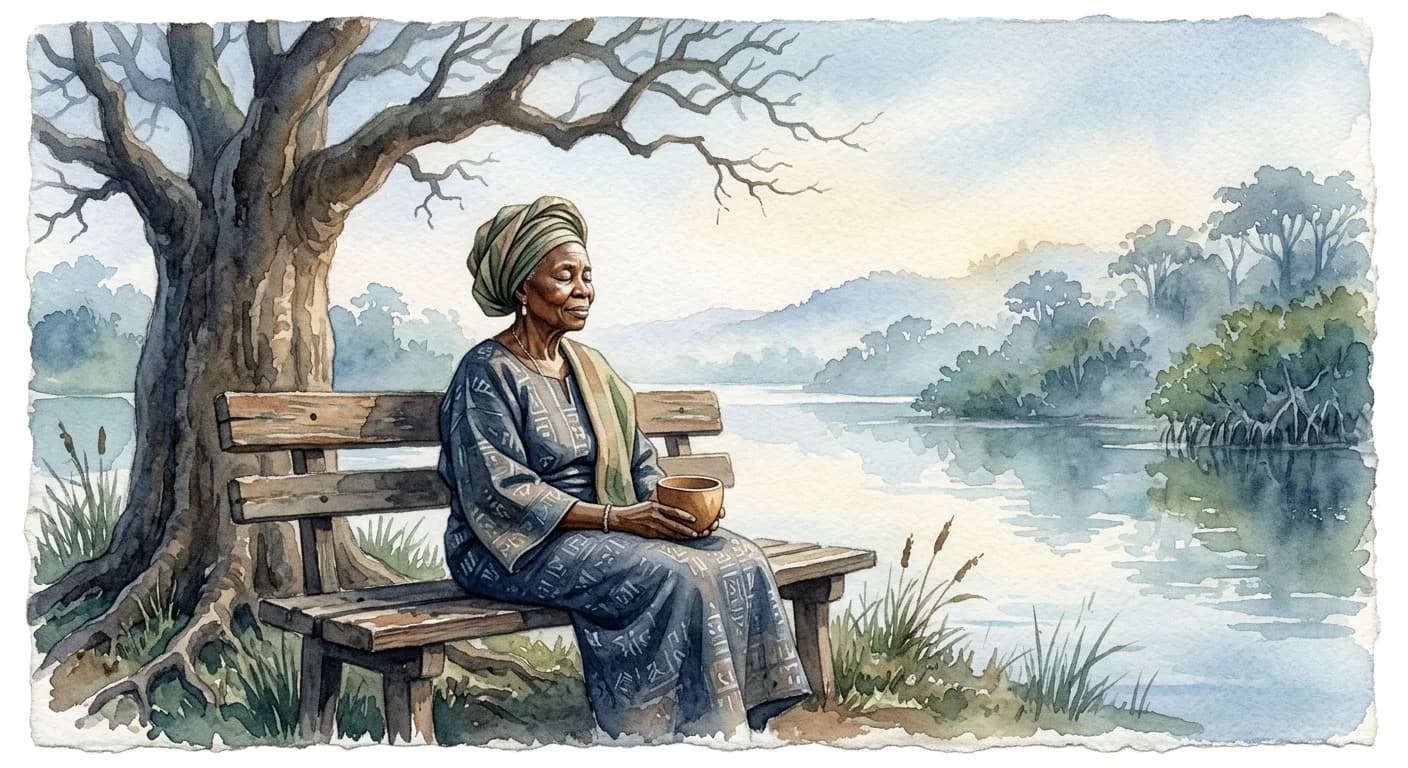
A grandmother sits by the Ogun River, watching the gentle flow of water and the rustling leaves. No words are spoken, yet a profound sense of Ìkẹ́ washes over her, a deep satisfaction in the simple, timeless beauty of nature.
Morning Solitude
After the morning chores, a young man finds a quiet corner in his compound. He closes his eyes, focusing on his breath, and feels the day's anxieties recede, replaced by a calming Ìkẹ́ that prepares him for the day ahead.
The Deeper Meaning
Ìkẹ́ embodies a philosophical stance that inner peace is not a passive gift but an active cultivation. It reveals a worldview that values mindfulness and introspection as pathways to a deeper understanding of self and the universe. This state is seen as fundamental to achieving true happiness and living a balanced life, suggesting that external achievements are secondary to internal harmony and spiritual well-being.
Did You Know?
Ìkẹ́ is often associated with the wisdom of elders, who are seen as having cultivated this inner peace over a lifetime of experience and reflection.
How It's Used
This word is used to describe a state of mental and emotional quietude, often experienced during moments of solitude, reflection, or when appreciating nature.