Chanoyu
/chah-noh-yoh/
Meaning
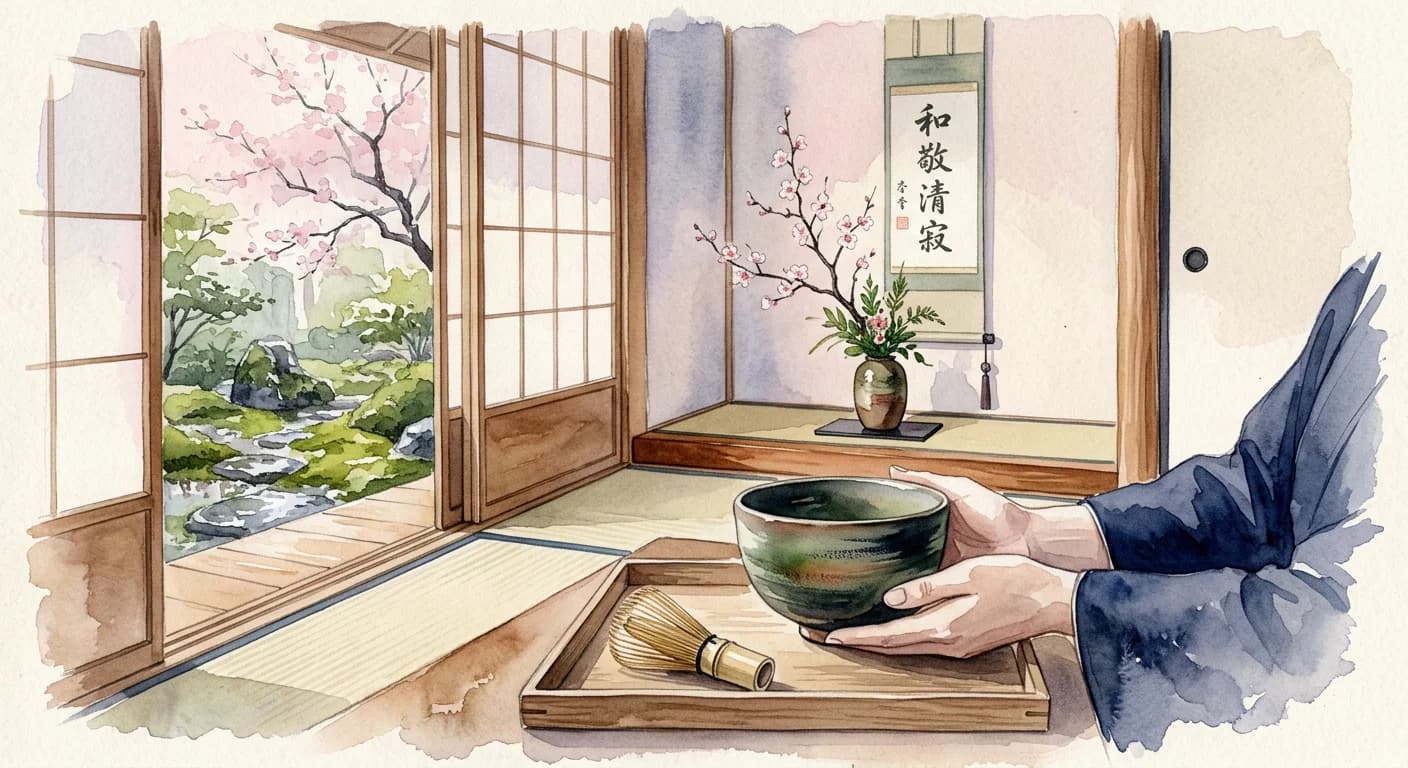
Chanoyu, often translated as "the Way of Tea," is a profound Japanese art form and spiritual practice centered on the ceremonial preparation and presentation of matcha. Far more than just serving a beverage, it is a meticulously choreographed ritual that embodies Zen Buddhist principles of mindfulness, aesthetic appreciation, and harmony. Participants engage in a contemplative dance of movement, sound, and taste, fostering a deep connection to nature, self, and others, and offering a serene respite from the demands of everyday life.
Literal Translation
hot water for tea
The Story Behind the Word
Chanoyu emerged from the confluence of Zen Buddhism and the appreciation for tea brought to Japan from China, evolving into a distinct art form during the Muromachi period (14th-16th centuries). Its development was heavily influenced by figures like Sen no Rikyū, who codified its aesthetic principles of *wabi-sabi* – the beauty of imperfection, impermanence, and simplicity. It exists as a cornerstone of Japanese cultural identity because it encapsulates core values: the pursuit of perfection through discipline, respect for nature and craftsmanship, and the profound beauty found in the ephemeral. It reveals a worldview that prioritizes inner peace, communal harmony, and the mindful appreciation of every moment and object, transforming mundane actions into sacred rituals.
Experience It
A Morning of Tranquility
A young woman, feeling the weight of city life, spent her Saturday morning participating in Chanoyu. As the whisk danced in the bowl and the aroma of matcha filled the air, she felt her anxieties dissolve, finding a rare moment of profound peace and presence.
Honoring a Guest
A master of Chanoyu meticulously prepared tea for an esteemed guest in his traditional tea house. Every graceful movement, every carefully chosen utensil, communicated deep respect and hospitality, creating an unforgettable shared experience of beauty and quiet communion.
The Deeper Meaning
Chanoyu embodies the Japanese aesthetic of *ichi-go ichi-e*, meaning "one time, one meeting." This philosophy emphasizes that every encounter is unique and will never recur, urging participants to cherish each moment fully and approach every interaction with sincere mindfulness and appreciation, recognizing its transient beauty.
Did You Know?
The elaborate gestures in Chanoyu are not arbitrary; each movement, from cleaning utensils to folding the tea cloth, has a specific purpose and is designed to be both efficient and aesthetically pleasing, reflecting a deep respect for the tools and the process.
How It's Used
Chanoyu is used to refer to the formal Japanese tea ceremony, encompassing the entire ritual, its philosophy, and its aesthetic principles. It is practiced in dedicated tea rooms and during various social gatherings and cultural events in Japan.