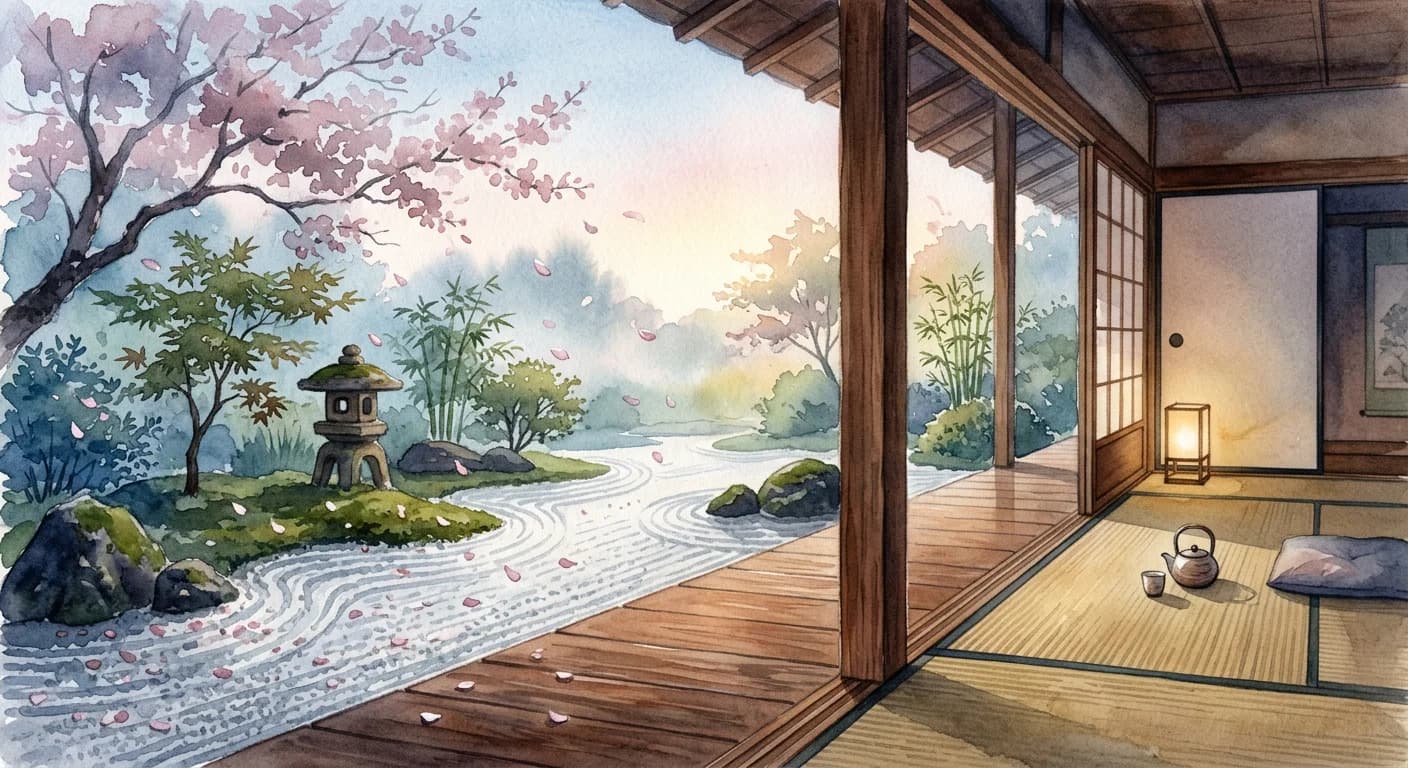
Engawa
/EN-gah-wah/
Meaning
An 'engawa' is a liminal space in traditional Japanese architecture, a veranda-like platform that seamlessly bridges the interior of a home with its exterior garden. More than a mere physical structure, it acts as a transition zone for the senses, allowing one to feel the breeze and hear the garden's sounds while remaining sheltered. It embodies a unique sense of peace and belonging, fostering a gentle, contemplative connection between the domestic realm and the natural world.
Literal Translation
Veranda, porch
The Story Behind the Word
The 'engawa' is a profound reflection of the Japanese aesthetic and philosophical emphasis on harmony with nature and the fluidity between indoor and outdoor spaces. Its existence stems from traditional architectural principles that prioritize natural light, ventilation, and a deep appreciation for seasonal changes. It's not merely an addition but an integral component designed to facilitate a continuous dialogue between human habitation and the surrounding environment, mirroring a worldview where humanity is part of, rather than separate from, nature. This space encourages quiet observation and a mindful engagement with the passing of time, embodying the concept of 'ma' (negative space or interval) and the beauty of impermanence.
Experience It
Morning Tea Contemplation
A grandmother sits on the engawa, sipping green tea as the morning sun filters through the garden bamboo. She watches a robin peck at the dewdrops, feeling the cool breeze on her skin, finding a tranquil start to her day in this perfect blending of home and nature.
Children's Playful Boundary
Children giggle as they chase each other around the engawa, their bare feet feeling the smooth wood. It's their stage, a safe platform from which they observe the koi pond, a playful boundary between their boisterous games and the serene garden.
The Deeper Meaning
The 'engawa' encapsulates the Japanese philosophical notion of 'oku,' which refers to the inner, deeper, and often hidden layers of a space or concept. It suggests that true beauty and meaning are not immediately apparent but are gradually revealed through experience and contemplation, fostering a sense of depth and discovery in the transition from the explicit interior to the expansive exterior.
Did You Know?
Historically, the engawa wasn't always just for sitting; it could also serve as a pathway for servants to move around the house without disturbing the main living areas.
How It's Used
Used to describe the veranda of a traditional Japanese house, often where one might sit to enjoy the garden, drink tea, or observe the changing seasons.