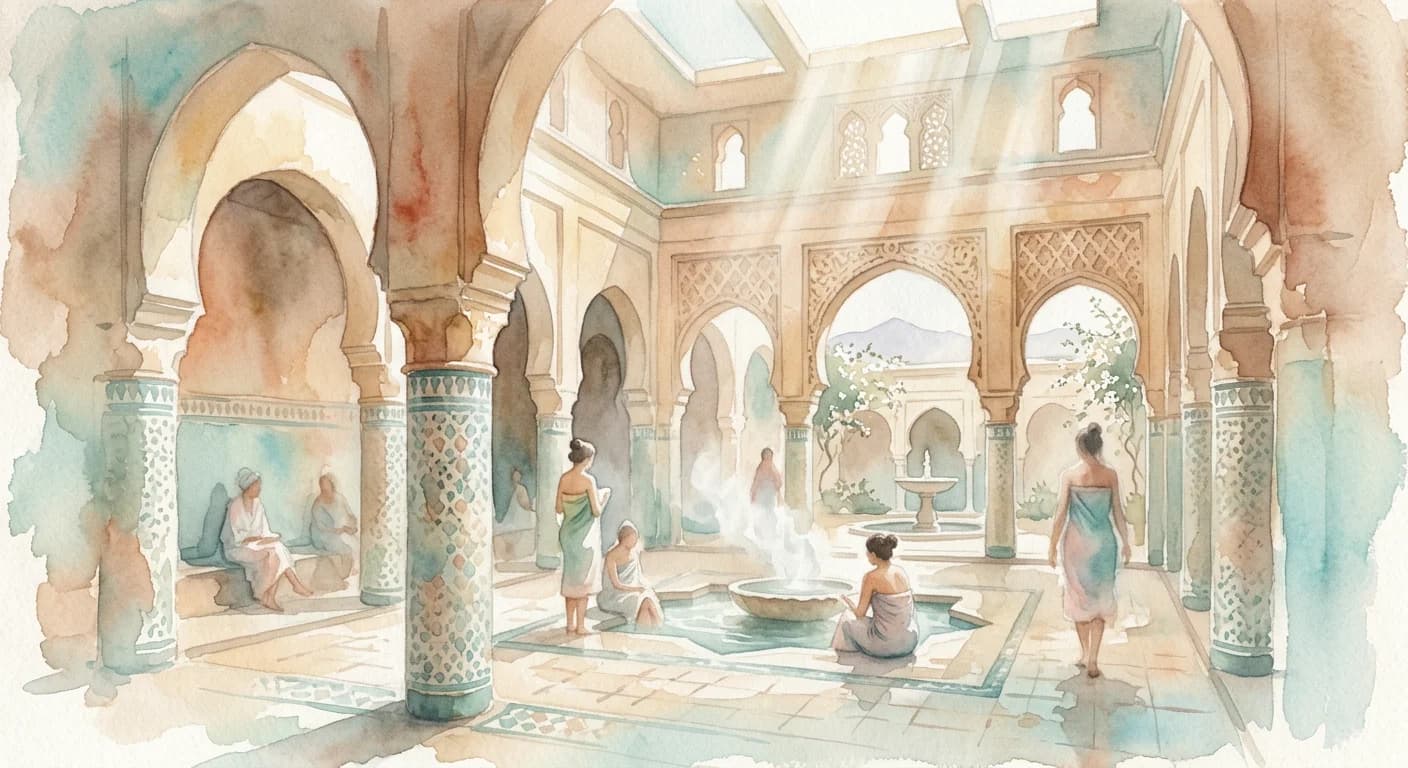
Hammam
/HAH-mahm/
Meaning
A Hammam is far more than a mere bathhouse; it is a venerable institution deeply woven into the cultural tapestry of the Middle East and North Africa. It embodies a holistic ritual of purification, cleansing not only the body but inviting a profound refreshment of the spirit. Within its steamy embrace, accompanied by vigorous scrubbing and communal warmth, it offers a sacred space for social communion, relaxation, and rejuvenation, transcending simple hygiene to become a cherished tradition of self-care and profound fellowship.
Literal Translation
Bathing place
The Story Behind the Word
The Hammam's roots stretch back to Roman and Byzantine bath traditions, but it was profoundly shaped and integrated into Islamic culture, where cleanliness (tahara) is a central tenet of faith. For centuries, it served as a vital public health facility in cities lacking private plumbing, but its role extended much further. It was a social hub, a place for women to gather away from male gaze, for negotiations, for celebrations, and for quiet contemplation. The Hammam reflects a worldview where physical and spiritual purity are intertwined, and where community well-being is fostered through shared ritual and space. Its existence underscores the cultural value placed on collective experience and the restorative power of water and steam.
Experience It
Weekly Hammam Ritual
Aisha gathers her kessa (exfoliating mitt) and black soap, anticipating her weekly visit to the neighborhood hammam. Inside, the warm steam envelops her as she chats softly with other women, sharing stories and laughter amidst the soothing sounds of splashing water and gentle scrubbing, leaving feeling utterly renewed.
Groom's Pre-Wedding Cleanse
Ahmed, on the eve of his wedding, is led by his male relatives to the hammam for a ceremonial cleansing. The steam purifies his body, and the camaraderie of his family and friends marks a significant rite of passage, preparing him spiritually and physically for his new journey.
The Deeper Meaning
The Hammam embodies a philosophy of holistic well-being, where the physical act of cleansing is inseparable from spiritual renewal and social connection. It reveals a cultural understanding that true purity and peace are achieved not in isolation, but through communal participation and a mindful engagement with one's body and surroundings, fostering a sense of belonging and inner tranquility.
Did You Know?
Historically, hammams were often built near mosques, not just for convenience but to provide a place for ritual ablutions (wudu) before prayer, emphasizing the spiritual connection to physical cleanliness.
How It's Used
Used to refer to a public bathhouse, particularly one found in the Middle East and North Africa, and also to the ritualistic bathing process itself. It's a common destination for both locals and tourists seeking a traditional cleansing and cultural experience.