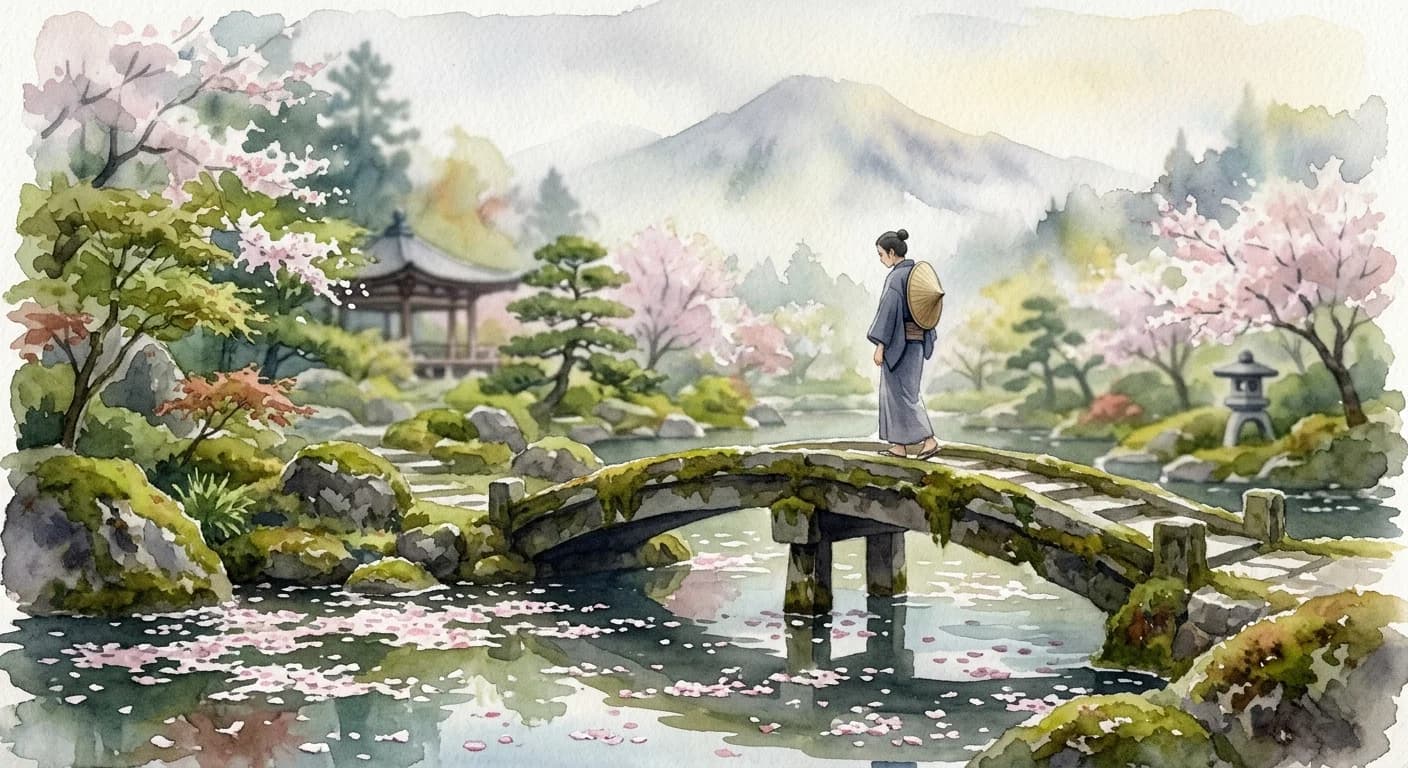
Akirame
/ah-KEE-rah-meh/
Meaning
Akirame transcends mere resignation; it is a profound and active acceptance of life's unchangeable realities. It involves a clear-eyed recognition that some outcomes are beyond one's control, fostering a release from the struggle against the inevitable. This cultivated state of mind allows for a redirection of energy towards what can be influenced, leading to inner peace, resilience, and the capacity to find contentment in the present moment, even amidst disappointment. It's about letting go of attachment to specific, often unrealistic, expectations to embrace a broader, more sustainable path forward.
Literal Translation
The verb form is 'akirameru', often translated as 'to give up', 'to resign oneself', or 'to abandon'. 'Akirame' is the noun form, referring to the state of resignation or acceptance.
The Story Behind the Word
The concept of Akirame is deeply interwoven with Japanese philosophical and religious traditions, particularly Buddhism and its emphasis on impermanence (mujo) and the suffering caused by attachment. Zen Buddhism, in particular, promotes a detached observation of reality. Historically, in a society frequently impacted by natural disasters and strict social hierarchies, the ability to accept one's fate and find peace within limitations became a crucial coping mechanism and a virtue. It reflects a collectivist ethos where individual desires often yield to the greater harmony or unavoidable circumstances, fostering a sense of endurance and quiet strength. This word reveals a worldview that values stoicism, adaptability, and an understanding that true freedom often comes from releasing what cannot be held.
Experience It
Embracing a New Path
After years of dedicated study, Kenji failed to get into his top-choice university. Instead of spiraling into despair, he practiced akirame. He acknowledged his disappointment but accepted the outcome, shifting his focus to excelling at his second-choice school and exploring new opportunities there, finding peace in his adjusted reality.
Accepting Nature's Course
A farmer watched a sudden hailstorm devastate his season's crops. Though heartbroken, he displayed akirame. He didn't rail against the heavens or dwell on what was lost, but calmly began to assess the damage and plan for the next planting season, understanding that some forces are simply beyond human control.
The Deeper Meaning
Akirame underscores a philosophy where wisdom lies in distinguishing between what can and cannot be changed. It promotes an active, rather than passive, form of acceptance, suggesting that true inner strength is found not in constant struggle, but in the intelligent surrender to certain truths. This leads to a more harmonious existence, free from the endless cycle of desire and frustration, and a profound appreciation for the present moment.
Did You Know?
The 'akirame' character (諦) can also mean 'to discern' or 'to clarify,' hinting that true acceptance comes from a clear understanding of reality, not blind surrender.
How It's Used
Used to describe the mental state of accepting a situation, especially when it's difficult or disappointing, and moving forward without excessive struggle.