Byōbu
/BYOH-boo/
Meaning
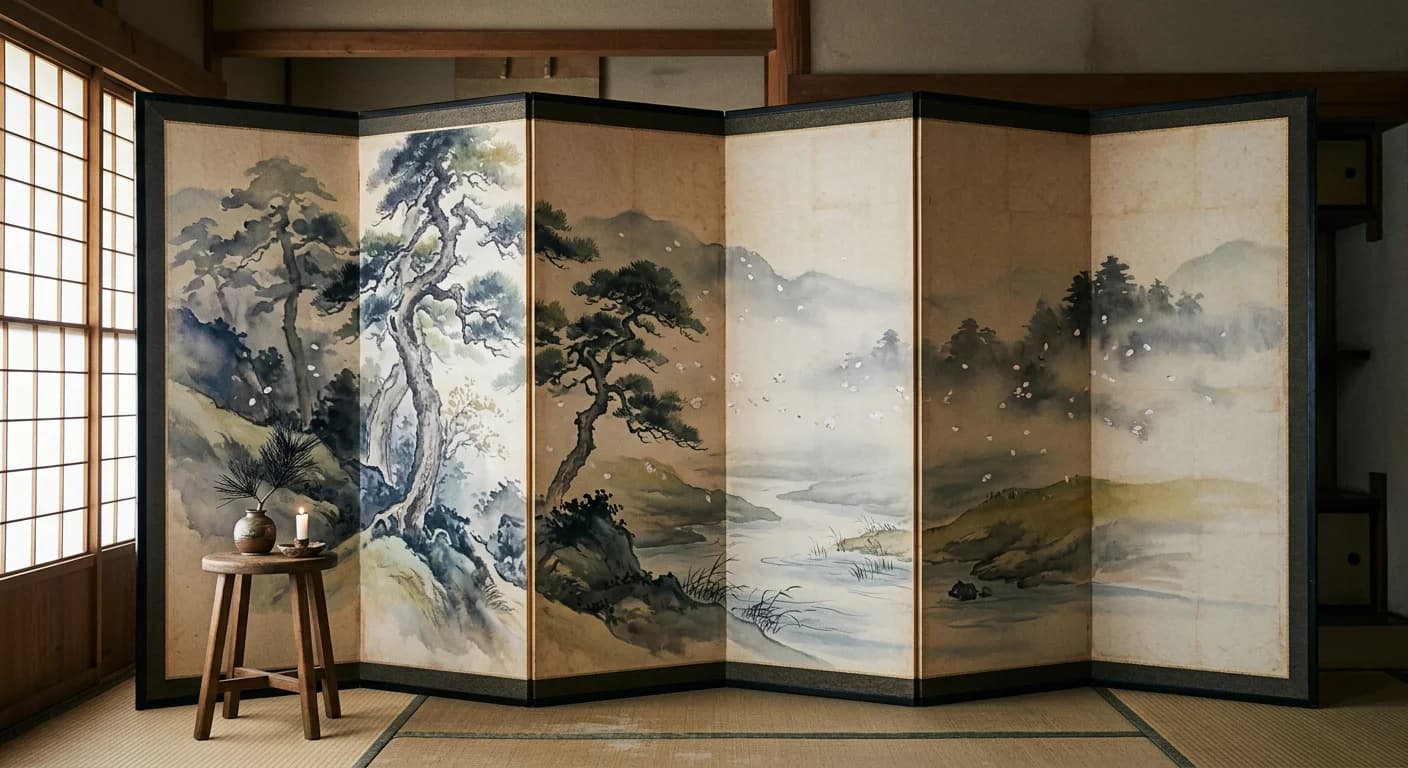
A byōbu is far more than a simple room divider; it is a meticulously crafted Japanese folding screen, often composed of multiple hinged panels that unfold to reveal breathtaking paintings or calligraphy. These exquisite works of art historically served to define spaces, block drafts, and create visually stunning backdrops for significant rituals and gatherings. Each byōbu embodies a profound connection to Japan's artistic heritage, with its intricate designs frequently depicting poetic natural landscapes, mythical narratives, or pivotal historical moments, showcasing unparalleled skill and aesthetic refinement.
Literal Translation
folding screen
The Story Behind the Word
The byōbu's existence is deeply intertwined with Japanese architectural and aesthetic principles, particularly the concept of 'ma' (negative space) and the transient nature of beauty. Originating in China, byōbu were adopted and uniquely developed in Japan from the 8th century, becoming integral to aristocratic homes, temples, and samurai residences. They reflect a culture that values subtle grandeur, the integration of art into daily life, and the ability to transform an environment with elegance and purpose. The byōbu's portability and reconfigurability also speak to a flexible approach to space, allowing for dynamic changes in room layout and atmosphere, embodying both practical utility and profound artistic expression.
Experience It
Tea Ceremony Backdrop
In a quiet tatami room, a four-panel byōbu depicting a serene bamboo grove stands behind the host, subtly framing the tea ceremony. The gentle brushstrokes and muted colors contribute to the tranquil atmosphere, inviting contemplation and setting a respectful tone for the ritual.
Samurai Estate Display
Within the grand hall of a samurai lord's estate, a magnificent gold-leaf byōbu illustrating a battle scene serves as a dramatic focal point. Its vibrant imagery and powerful composition not only impress visitors but also subtly assert the family's strength and martial prowess.
The Deeper Meaning
The byōbu embodies a distinctly Japanese appreciation for spatial fluidity and the integration of art into everyday existence. It reflects a worldview where beauty is not merely an object for contemplation but an active element that shapes environments, influences mood, and defines social interactions, blurring the lines between art, architecture, and daily life.
Did You Know?
Some byōbu were so intricately painted that they were considered 'moving murals,' transforming with the viewer's perspective and the changing light throughout the day.
How It's Used
Byōbu are used as decorative and functional room dividers, backdrops for events, and as significant pieces of Japanese art, often displayed in homes, temples, and museums.