Cenote
/seh-NOH-tay/
Meaning
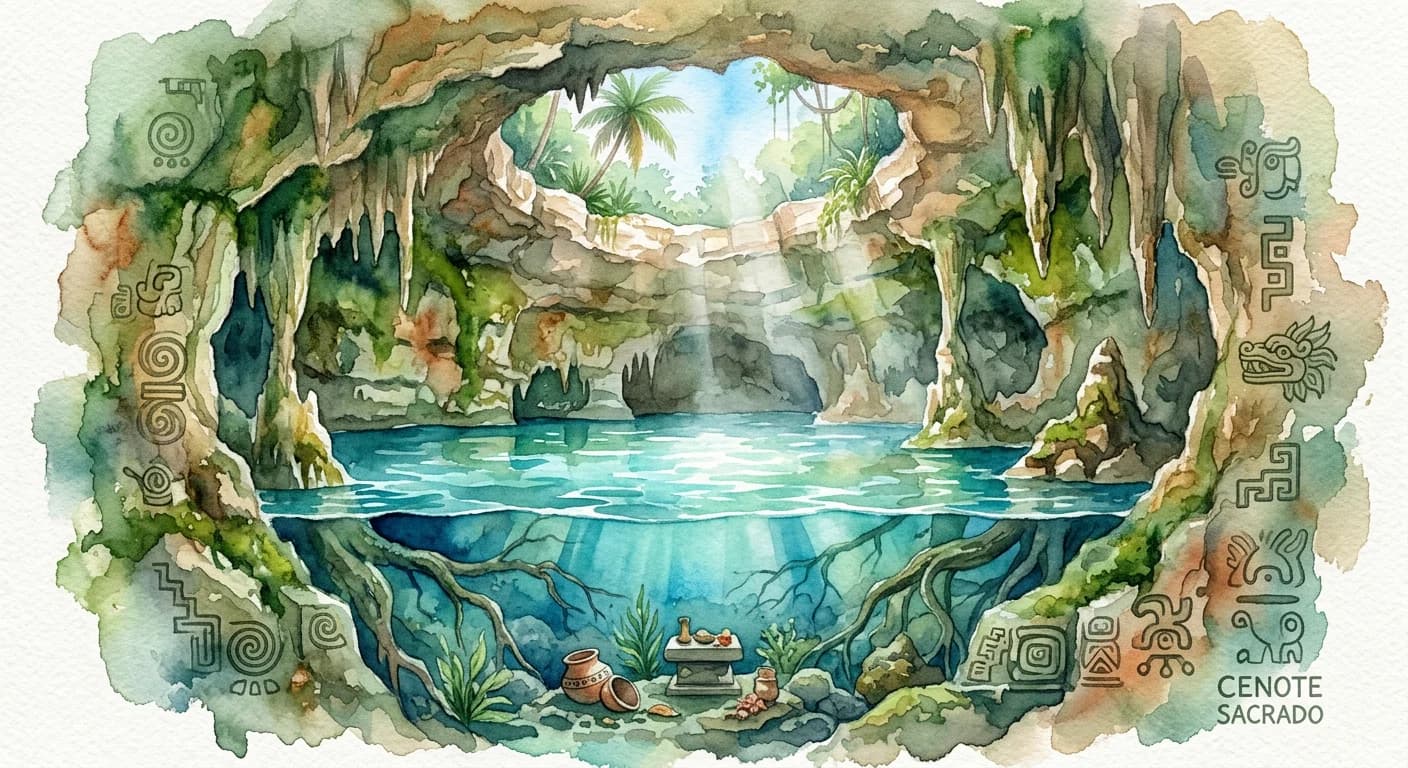
A cenote is far more than a mere water-filled sinkhole; it is a mystical gateway carved by nature into the limestone bedrock of the Yucatán. These subterranean oases, ranging from open-air pools to cavernous underground rivers, served the ancient Maya as vital sources of fresh water in a land devoid of surface rivers. More profoundly, they were revered as sacred portals to Xibalba, the underworld, embodying both life-giving sustenance and profound spiritual mystery.
Literal Translation
The precise literal meaning in Yucatec Maya is debated, but it is widely understood to refer to a natural well or chasm.
The Story Behind the Word
The existence of cenotes shaped the very fabric of Mayan civilization in the Yucatán Peninsula. Without rivers, these natural wells were the sole dependable source of fresh water, making them focal points for settlements and pilgrimage. Their formation, a dramatic collapse of earth revealing hidden waters, imbued them with a profound sacredness; they were seen as direct connections to the earth's powerful, life-sustaining, and destructive forces. This belief led to elaborate rituals, including offerings of precious jade, pottery, and even human sacrifices, particularly in major cenotes like the Sacred Cenote at Chichen Itza, to appease the rain god Chaac and other deities of the underworld. The word 'cenote' thus encapsulates the Mayan worldview where the natural world was alive with spiritual significance, and the boundaries between the physical and divine were permeable.
Experience It
Ancient Ritual Offering
Under the dappled light filtering through the jungle canopy, a Mayan priest stood at the edge of a cenote, chanting. He cast a jade pendant into the deep, still waters, a plea to Chaac for abundant rains to nourish the maize fields.
Tourist's First Glimpse
Emerging from the dense jungle path, Sarah gasped as the shimmering turquoise water of the cenote came into view, its surface reflecting the ancient stalactites hanging from the cavern ceiling. She felt an immediate, awe-inspiring connection to a place steeped in history and natural beauty.
The Deeper Meaning
The cenote embodies a profound philosophy of interconnectedness between life, death, and the sacred. It reveals a worldview where essential resources are not just utilitarian, but divine conduits, linking the tangible world to the spiritual realm. The Maya saw the earth as a living entity, its depths holding both precious life-sustaining water and the mysteries of the underworld, reminding humanity of its place within a grander, cyclical cosmic order.
Did You Know?
The Yucatán Peninsula has an estimated 6,000 cenotes, many of which are interconnected by vast underground river systems, forming one of the most extensive underwater cave networks in the world.
How It's Used
The term 'cenote' is used to refer to these specific geological formations, particularly those found in the Yucatán Peninsula of Mexico. It is also used in contexts discussing Mayan history, mythology, and archaeology, as well as in tourism relating to these natural swimming holes.