U.
HomeRegionsLanguagesEmotionsCollections
Find Your Word

“The limits of my language mean the limits of my world.”

— Ludwig Wittgenstein, Philosopher

Untranslatable

A curated collection of the world's most beautiful expressions—words that remind us language is humanity's greatest invention.

  • Home
  • Collections
  • Regions
  • Countries
  • Emotions
  • Tags
  • Contexts
  • Finder
  • Europe
  • Asia
  • Americas
  • Africa
  • Middle East
  • About
  • Contact
  • Privacy Policy
  • Terms of Service

2026 © Untranslatable. All rights reserved.

    /
    /
    1. Home
    2. /
    3. Asia
    4. /
    5. Hado
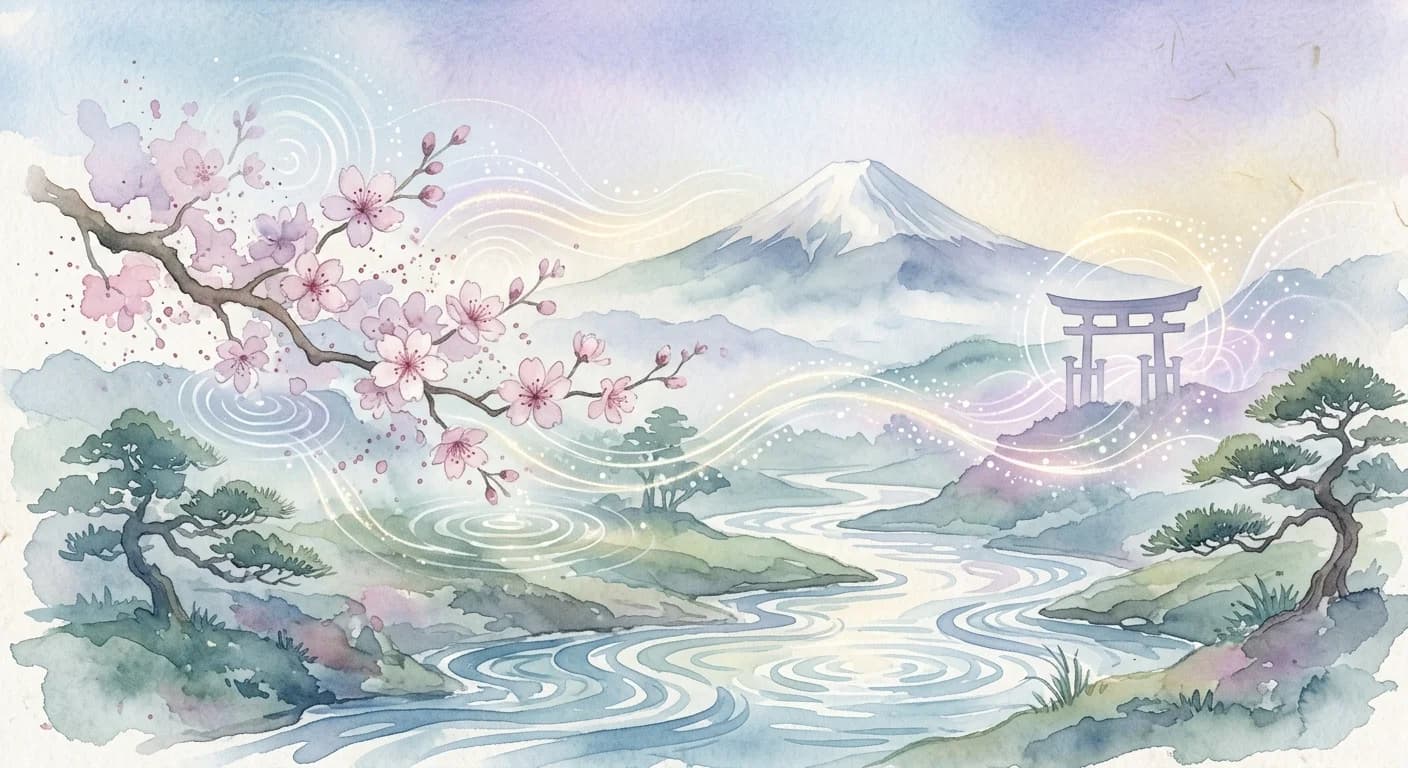
    Artistic representation of Hado
    Japanese•
    🇯🇵Japan

    Hado

    /HAH-doh/

    Meaning

    Hado encapsulates the vibrational essence or resonant frequency that emanates from all phenomena, from living beings to inanimate objects. It's conceived as an informational wave, a subtle energy that carries consciousness and influences its surroundings, connecting the universe in a dynamic, unseen web. This intrinsic 'ripple' is believed to shape reality and well-being, suggesting that by aligning one's own Hado, harmony and positive change can be manifested in the physical world.

    Literal Translation

    wave, ripple, pulse

    The Story Behind the Word

    The concept of Hado is deeply rooted in Japanese animistic traditions and Shinto beliefs, which perceive a spiritual essence or kami in all things. This worldview fosters a profound respect for the interconnectedness of nature and consciousness. While the modern popularization of Hado by figures like Dr. Masaru Emoto (known for his water crystal experiments) is relatively recent, the underlying spiritual inclination to recognize subtle energies and their influence has a long history in Japan, resonating with traditional healing practices and the aesthetic appreciation of natural flows and patterns. It reflects a holistic understanding where the material and immaterial are inextricably linked, and intention can shape reality.

    Experience It

    Healing Garden's Hado

    A master gardener tends to her plants with loving intention, speaking kind words to them daily. Visitors often remark on the extraordinary vitality and beauty of her garden, attributing it to the powerful, positive Hado she cultivates there, which seems to rejuvenate everyone who enters.

    Musical Instrument's Hado

    An old violin, passed down through generations of musicians, has a rich, resonant tone that seems to carry the echoes of its past players. A new owner feels a strong connection to its unique Hado, believing it imbues their music with a depth and emotion that transcends the instrument's physical form.

    The Deeper Meaning

    Hado reveals a worldview rooted in the belief that everything is fundamentally energy and information, interconnected through subtle vibrations. It underscores the profound power of intention, consciousness, and emotion to influence not just personal well-being but also the material world. This philosophy encourages a mindful existence, recognizing the responsibility we hold for the Hado we emit and its impact on the universal web.

    Did You Know?

    Dr. Masaru Emoto's controversial experiments, which claimed water crystals could be altered by human thoughts and intentions, significantly propelled Hado into popular discourse, suggesting that even water has a 'memory' and responds to vibrational energy.

    How It's Used

    The term 'Hado' is often used in discussions related to alternative healing, spiritual practices, and the concept of water's memory, popularized by Dr. Masaru Emoto's work. It's invoked to explain phenomena that are not readily understood by conventional science, emphasizing the interconnectedness of consciousness, matter, and energy.

    Emotions
    peace,serenity,wonder
    Contexts
    nature,relaxation,solitude
    🇯🇵Japan

    by Dr. Kenji Tanaka·Written Mar 14, 2026·Updated Apr 3, 2026

    Related Words

    Explore more
    Dolce far nienteItalian

    Dolce far niente captures the profound joy and effortless pleasure derived from simply existing without obligation or purpose. It's the art of savoring moments of pure, unadulterated idleness – lying in the sun, watching the clouds drift, or enjoying a leisurely coffee – not as a break from work, but as a valuable state in itself. This 'sweetness of doing nothing' is a conscious embrace of stillness and contentment, allowing the soul to breathe and the senses to fully engage with the present.

    Wabi-sabiJapanese

    Wabi-sabi is the profound appreciation for the ephemeral, the imperfect, and the incomplete aspects of existence. It is about discovering beauty in the subtle textures of age, the unique character of flaws, and the gentle decay that marks the passage of time. This philosophy encourages a quiet acceptance of impermanence and a mindful connection to the natural world, finding elegance in simplicity and authenticity.

    IkigaiJapanese

    Ikigai is more than just a reason to get out of bed; it's a deeply personal and evolving sense of purpose that brings genuine fulfillment and joy to one's life. It represents the sweet spot where your passions, talents, needs of the world, and what you can be paid for beautifully converge. Discovering your ikigai often leads to a life lived with intentionality, resilience, and a profound connection to one's contributions. It's the intrinsic motivation that fuels a meaningful existence, regardless of external circumstances.

    NunchiKorean

    Nunchi is the sophisticated, almost telepathic, ability to instantly grasp the unspoken dynamics of any social situation, anticipating others' thoughts and feelings, and then responding with impeccable grace and timing. It's an acute form of social intuition, allowing one to navigate complex interpersonal landscapes by reading subtle cues like body language, tone, and context. Possessing good nunchi means effortlessly understanding the underlying emotional currents and adjusting one's behavior to maintain harmony and effectiveness, often without a single word exchanged.