U.
HomeRegionsLanguagesEmotionsCollections
Find Your Word

“The limits of my language mean the limits of my world.”

— Ludwig Wittgenstein, Philosopher

Untranslatable

A curated collection of the world's most beautiful expressions—words that remind us language is humanity's greatest invention.

  • Home
  • Collections
  • Regions
  • Countries
  • Emotions
  • Tags
  • Contexts
  • Finder
  • Europe
  • Asia
  • Americas
  • Africa
  • Middle East
  • About
  • Contact
  • Privacy Policy
  • Terms of Service

2026 © Untranslatable. All rights reserved.

    /
    /
    1. Home
    2. /
    3. Middle East
    4. /
    5. Hamam
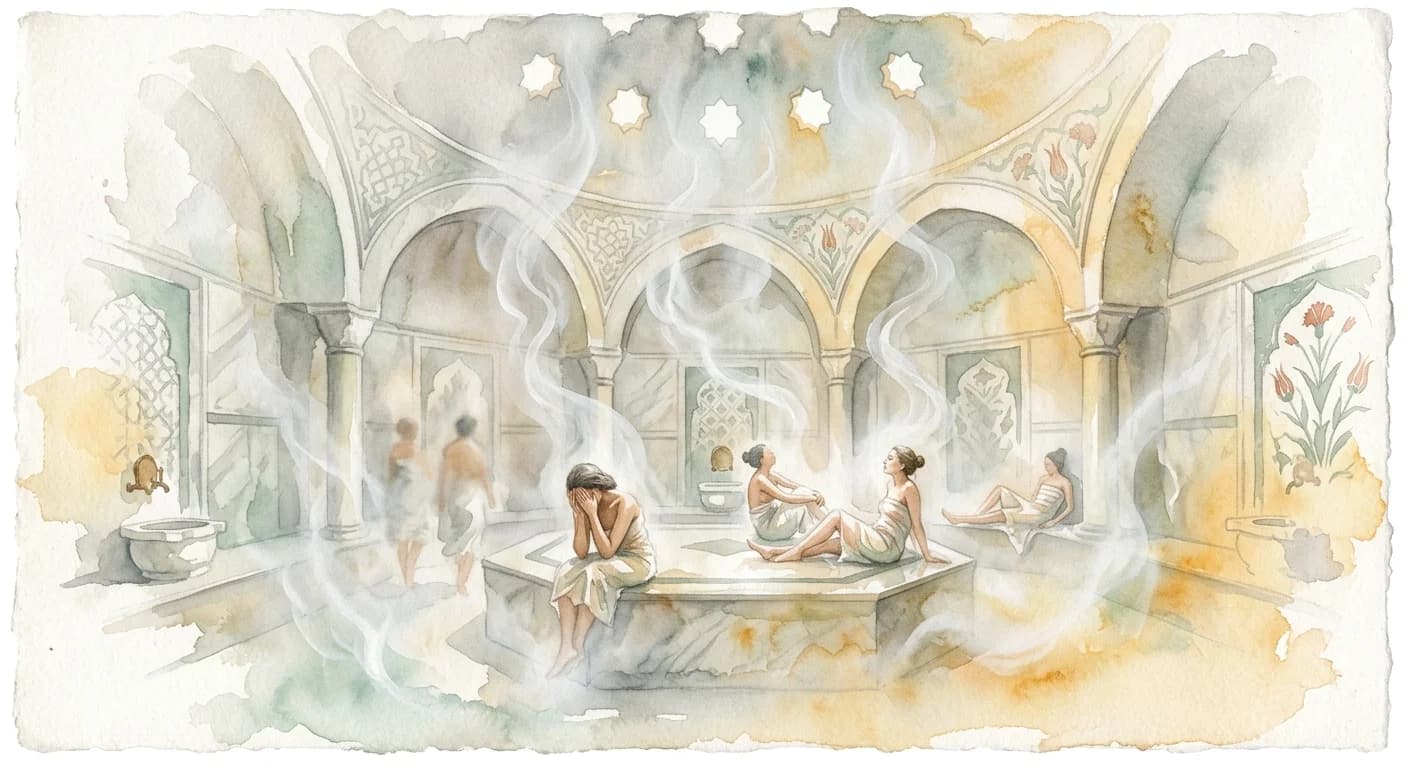
    Artistic representation of Hamam
    Turkish•
    🇲🇦Morocco🇹🇷Turkey

    Hamam

    /hah-MAHM/

    Meaning

    A Hamam is far more than a mere bathhouse; it's a centuries-old institution deeply woven into the fabric of Ottoman and Islamic culture, serving as a sanctuary for ritual purification, deep relaxation, and vibrant social communion. Within its steamy, marble-clad chambers, one undergoes a transformative process of scrubbing and massage, emerging not just physically cleansed but spiritually renewed. It offers a tranquil escape from daily life, fostering a unique blend of personal rejuvenation and community bonding.

    Literal Translation

    Bathhouse

    The Story Behind the Word

    The Hamam's origins trace back to Roman baths, adapted and enhanced by Islamic principles emphasizing hygiene (taharah) and spiritual purity. Its prevalence in Ottoman society reflects a worldview where cleanliness was paramount, not just for health, but as a prerequisite for prayer and a sign of respect. Beyond its practical function, the Hamam served as a vital social hub, particularly for women who had limited public spaces for gathering. It was a place for gossip, matchmaking, celebrating special occasions like bridal baths (gelin hamamı), and forging community ties. This institution reveals a culture that valued communal well-being, ritual, and a holistic approach to physical and spiritual health, where the body was a vessel to be honored and purified.

    Experience It

    A Bride's Purification

    Weeks before her wedding, Ayşe gathered her closest female relatives and friends for her 'gelin hamamı.' Amidst laughter and lively chatter, she was ritually cleansed and pampered, symbolizing her transition into a new life chapter, surrounded by the loving support of her community.

    Weekly Male Gathering

    Every Friday after work, Mehmet and his friends would unwind at the neighborhood Hamam. The steam would loosen their muscles and minds, allowing for uninhibited conversation, chess games, and the sharing of stories, solidifying their bonds before the weekend.

    The Deeper Meaning

    The Hamam embodies a philosophy where the body is not merely a physical entity but a spiritual vessel requiring regular purification and care. It reflects a holistic view of well-being, where physical cleanliness, mental tranquility, and social connection are intertwined and essential for a balanced life, echoing Islamic teachings on purity and community.

    Did You Know?

    Historically, Hamams played a crucial role in Ottoman urban planning, often built alongside mosques, schools, and markets, forming the heart of community life.

    How It's Used

    Used to refer to a traditional Turkish bathhouse or steam room, common in Turkey and surrounding regions.

    Emotions
    belonging,comfort,serenity
    Contexts
    daily life,relaxation,social interaction,travel
    🇲🇦Morocco🇹🇷Turkey

    by Sofia Rossi·Written Mar 14, 2026·Updated Apr 3, 2026

    Related Words

    Explore more
    SobremesaSpanish

    Sobremesa is the cherished, often extended period immediately following a meal, particularly lunch or dinner, where diners remain seated at the table to enjoy conversation, coffee, and digest not just the food, but the company itself. It’s a dedicated time for unhurried social bonding, storytelling, and shared laughter, transforming a simple meal into a profound communal experience. Far from just clearing the dishes, sobremesa is an integral part of Spanish social life, often lasting for hours.

    UbuntuZulu/Xhosa

    Ubuntu is a profound African philosophy that translates to 'I am because we are,' signifying that an individual's humanity is inextricably linked to the humanity of others. It embodies the belief that our existence and well-being are deeply intertwined with the community. This concept emphasizes compassion, reciprocity, dignity, and the understanding that true fulfillment is found not in isolation, but through collective flourishing and mutual support. It's a call to recognize and affirm the humanity in everyone, fostering a sense of interconnectedness.

    TarofPersian

    Tarof is a deeply ingrained Iranian social custom, a delicate dance of politeness and deference where individuals engage in an elaborate exchange of offers and refusals. It's a performative humility, a way of showing respect and avoiding imposing, often involving multiple cycles of insistence and polite decline before a genuine acceptance or refusal is reached. This intricate ritual governs interactions from sharing food to paying bills, creating a nuanced social ballet.

    TarabArabic

    Tarab is far more than mere enjoyment; it's a profound, almost spiritual communion with music, where the performer and audience become one in a shared emotional journey. It signifies a state of ecstatic enchantment, a deep emotional surrender that transcends the self, leading to a transformative experience. This intense connection often manifests as spontaneous vocalizations, tears, or even physical swaying, as the music penetrates the soul and evokes a powerful release of feeling. It's a moment of pure, unadulterated musical rapture.