Iqamah
/ih-KAH-mah/
Meaning
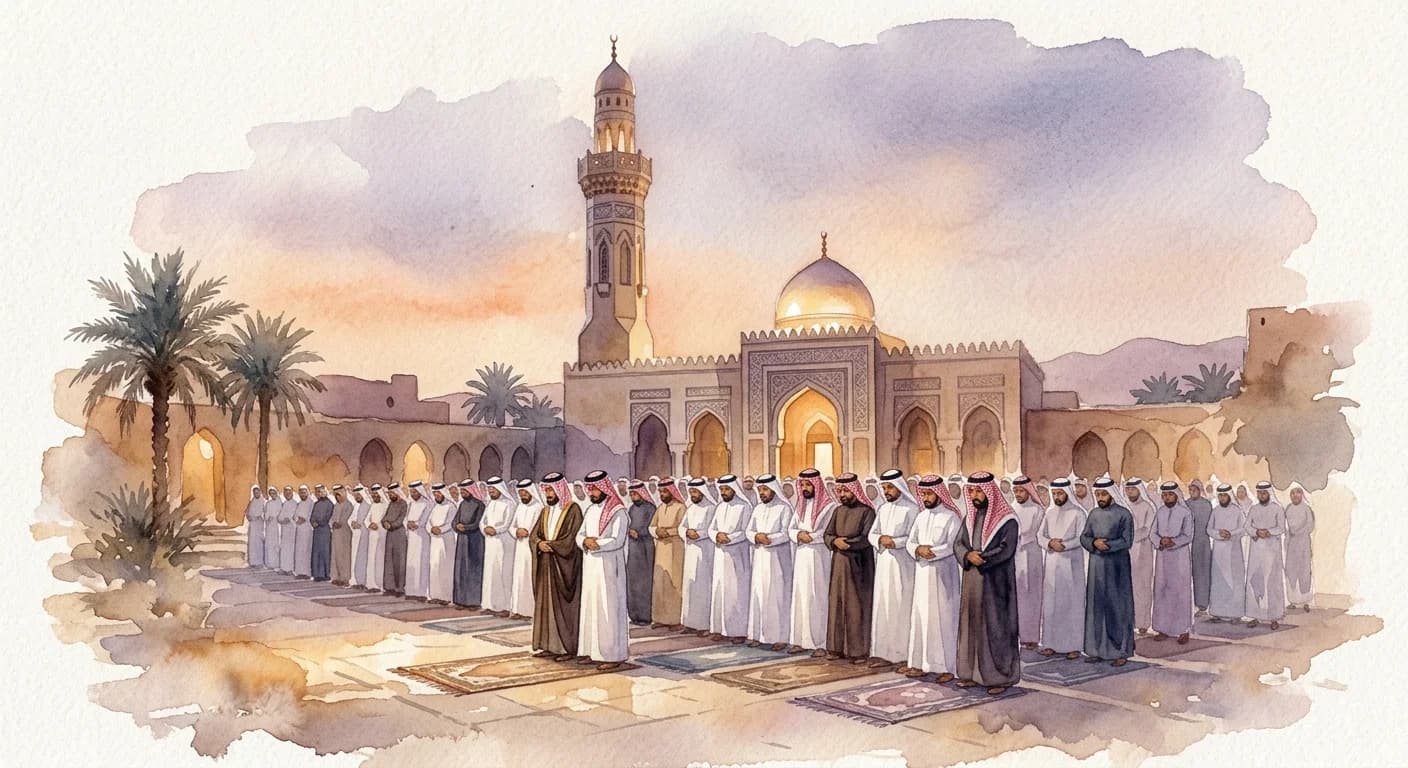
Iqamah is the profound, second call to prayer, echoing through a mosque only when the congregation has gathered, poised for devotion. It's a concise, urgent pronouncement, distinct from the lengthier adhan, serving as the final summons that transforms anticipation into immediate, collective worship. This intimate announcement signals the precise moment to align bodies and souls, fostering a palpable sense of communal readiness and spiritual unity before the divine presence.
Literal Translation
establishment, setting up, standing up
The Story Behind the Word
The Iqamah's existence underscores the Islamic emphasis on congregational prayer (salat al-jama'ah) as a cornerstone of community life and individual piety. Historically, it emerged from the need for a practical signal to begin prayer once people were physically present, distinct from the Adhan which calls them to the mosque. Its brevity and the fact that it's recited within the prayer space, often by the imam or a designated individual, highlights an internal, collective readiness rather than an external call. It reflects a culture where spiritual acts are deeply communal, emphasizing order, unity, and a shared, synchronized devotion. The Iqamah reveals a worldview where time is punctuated by sacred duties, and where the transition from the mundane to the spiritual is marked by clear, audible signals that bind the community together.
Experience It
Awaiting the Imam
The worshippers had settled into neat rows, their whispers filling the mosque. Suddenly, the Imam stepped forward, a hush falling over the room. His voice then resonated, clear and strong, reciting the Iqamah, signaling the imminent start of their collective prayer.
Rush to Join
Running late, Ahmed rushed into the mosque, heart pounding. Just as he entered the prayer hall, he heard the distinct, rapid recitation of the Iqamah. He quickly found a spot, knowing he had arrived just in time to join the congregational prayer.
The Deeper Meaning
The Iqamah encapsulates the philosophy of collective readiness and spiritual discipline. It signifies that true devotion is not just an individual act, but a synchronized communal experience, where every participant aligns their intention and action at a precise, divinely appointed moment. It reflects a worldview valuing order, unity, and the shared pursuit of closeness to the Creator.
Did You Know?
Unlike the Adhan, which can be heard from outside the mosque, the Iqamah is primarily for those already inside, acting as a direct, internal signal to 'stand up' and commence prayer.
How It's Used
Recited by the muezzin or prayer leader just before the congregational prayer begins, signaling that it is time to form ranks and commence the prayer.