U.
HomeRegionsLanguagesEmotionsCollections
Find Your Word

“The limits of my language mean the limits of my world.”

— Ludwig Wittgenstein, Philosopher

Untranslatable

A curated collection of the world's most beautiful expressions—words that remind us language is humanity's greatest invention.

  • Home
  • Collections
  • Regions
  • Countries
  • Emotions
  • Tags
  • Contexts
  • Finder
  • Europe
  • Asia
  • Americas
  • Africa
  • Middle East
  • About
  • Contact
  • Privacy Policy
  • Terms of Service

2026 © Untranslatable. All rights reserved.

    /
    /
    1. Home
    2. /
    3. Asia
    4. /
    5. Kakemono
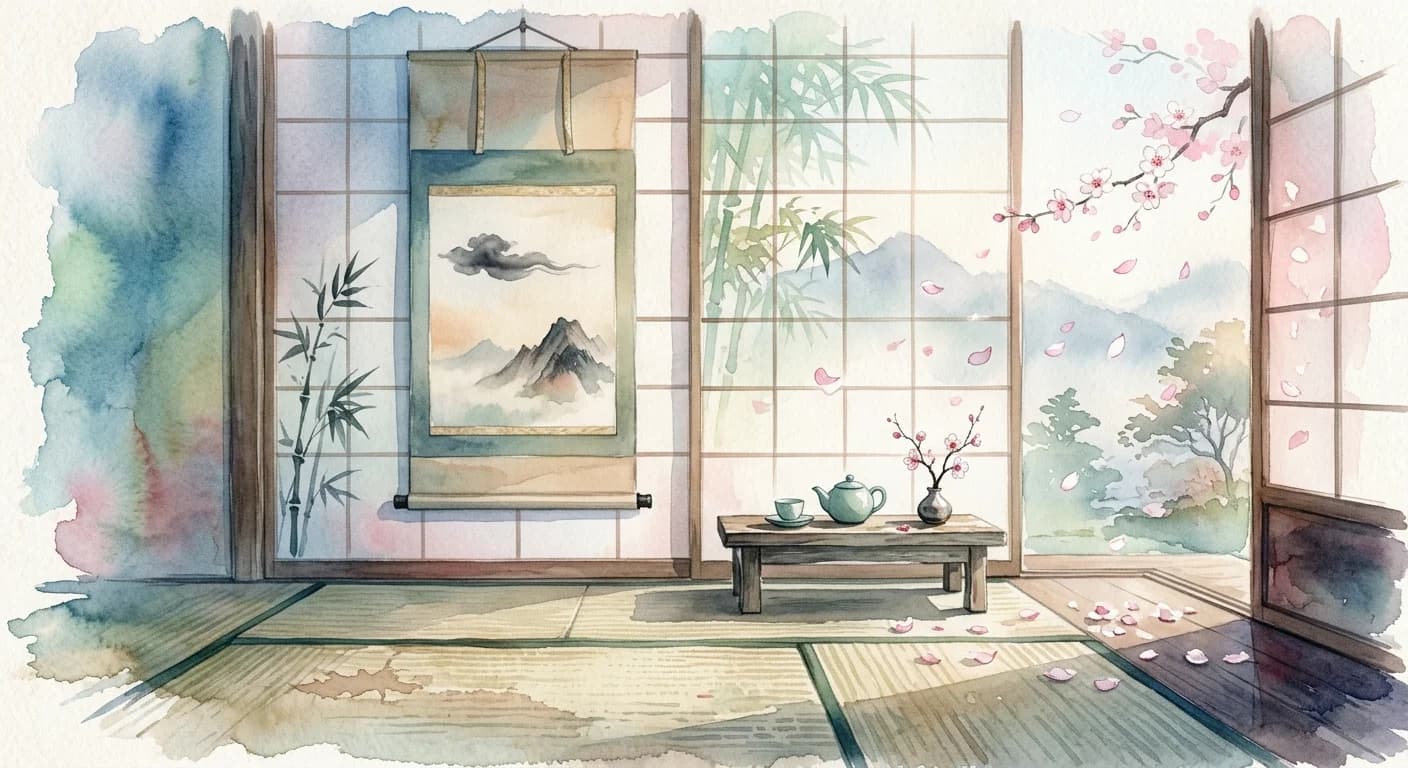
    Artistic representation of Kakemono
    Japanese•
    🇯🇵Japan

    Kakemono

    /kah-keh-moh-noh/

    Meaning

    A kakemono is a Japanese hanging scroll, far more than mere decoration; it's a profound aesthetic statement embodying the transient beauty of art. Unfurled for specific seasons or occasions, it crafts an intimate, contemplative experience between viewer and artwork, transforming the space it inhabits. Its ability to be rolled and stored underscores the impermanence of the moment and the cherished beauty found in ephemeral displays, a concept deeply woven into Japanese cultural sensibilities.

    Literal Translation

    hanging thing

    The Story Behind the Word

    The kakemono's origins trace back to China, arriving in Japan with Buddhism, where it evolved from religious iconography to a versatile art form. It became central to the tea ceremony (chanoyu), where its contents would be chosen to reflect the season, the guests, or the specific theme of the gathering, fostering a shared aesthetic experience. This practice highlights a core Japanese value: the appreciation of the subtle, the seasonal, and the temporary. The act of selecting, displaying, and then carefully storing a kakemono reflects a reverence for art not as a permanent fixture, but as a living element that breathes with the rhythm of life and nature, inviting mindful engagement and reflection.

    Experience It

    Seasonal Display

    As autumn leaves began to turn, Hiroshi carefully unrolled a kakemono depicting vibrant maple trees by a flowing stream. He hung it in his tokonoma, transforming his living room into a sanctuary that perfectly mirrored the beauty unfolding just outside his window, inviting quiet contemplation over green tea.

    Tea Ceremony Focus

    For the tea ceremony, Master Kenji chose a kakemono featuring a single, stark calligraphic character for 'emptiness.' Its profound simplicity guided the guests' minds towards introspection, setting a meditative tone for the entire gathering and deepening their appreciation for the present moment.

    The Deeper Meaning

    The kakemono encapsulates the Japanese aesthetic philosophy of 'wabi-sabi' – the appreciation of beauty that is imperfect, impermanent, and incomplete. Its temporary display emphasizes 'mono no aware,' the poignant awareness of the transience of things, and the gentle melancholy at their passing. It encourages a deep, mindful engagement with the present moment and the subtle shifts of nature and emotion.

    Did You Know?

    Some kakemono are double-sided, allowing for different art or calligraphy to be displayed simply by flipping the scroll, adding to their versatility and seasonal adaptability.

    How It's Used

    Used to refer to Japanese hanging scrolls, often found in traditional homes, temples, or art galleries, especially when discussing Japanese art, interior design, or cultural practices.

    Emotions
    peace,serenity,wonder
    Contexts
    dining,nature,relaxation,seasons
    🇯🇵Japan

    by Dr. Kenji Tanaka·Written Mar 14, 2026·Updated Apr 3, 2026

    Related Words

    Explore more
    Dolce far nienteItalian

    Dolce far niente captures the profound joy and effortless pleasure derived from simply existing without obligation or purpose. It's the art of savoring moments of pure, unadulterated idleness – lying in the sun, watching the clouds drift, or enjoying a leisurely coffee – not as a break from work, but as a valuable state in itself. This 'sweetness of doing nothing' is a conscious embrace of stillness and contentment, allowing the soul to breathe and the senses to fully engage with the present.

    Wabi-sabiJapanese

    Wabi-sabi is the profound appreciation for the ephemeral, the imperfect, and the incomplete aspects of existence. It is about discovering beauty in the subtle textures of age, the unique character of flaws, and the gentle decay that marks the passage of time. This philosophy encourages a quiet acceptance of impermanence and a mindful connection to the natural world, finding elegance in simplicity and authenticity.

    IkigaiJapanese

    Ikigai is more than just a reason to get out of bed; it's a deeply personal and evolving sense of purpose that brings genuine fulfillment and joy to one's life. It represents the sweet spot where your passions, talents, needs of the world, and what you can be paid for beautifully converge. Discovering your ikigai often leads to a life lived with intentionality, resilience, and a profound connection to one's contributions. It's the intrinsic motivation that fuels a meaningful existence, regardless of external circumstances.

    NunchiKorean

    Nunchi is the sophisticated, almost telepathic, ability to instantly grasp the unspoken dynamics of any social situation, anticipating others' thoughts and feelings, and then responding with impeccable grace and timing. It's an acute form of social intuition, allowing one to navigate complex interpersonal landscapes by reading subtle cues like body language, tone, and context. Possessing good nunchi means effortlessly understanding the underlying emotional currents and adjusting one's behavior to maintain harmony and effectiveness, often without a single word exchanged.